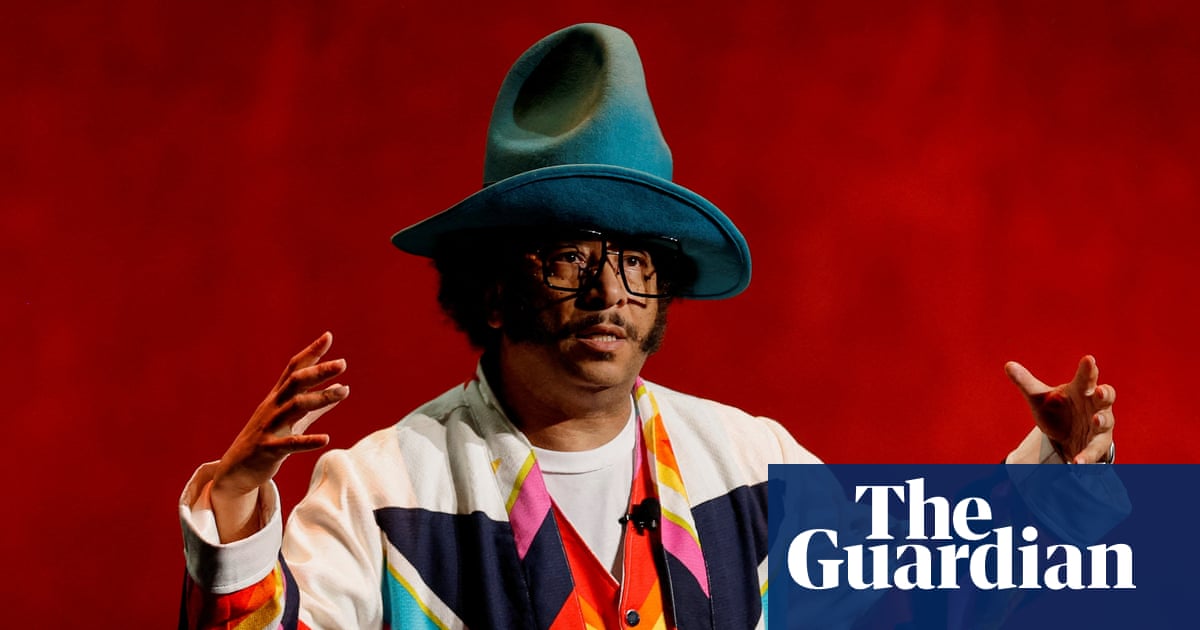
Boots Riley’s latest film, I Love Boosters, isn’t just a heist movie—it’s a radical reimagining of capitalism’s contradictions, framed as a dark comedy about shoplifting as survival. The Oakland-born filmmaker, already known for his subversive hip-hop roots with the Coup and his satirical debut Sorry to Bother You, has turned his sharpest critique into a visual spectacle. But the film’s release coincides with a national reckoning over retail theft, where Riley’s argument—that boosting is a symptom of systemic failure, not a cause—is both provocative and increasingly urgent. As stores like Walgreens blame shoplifting for closures while internal documents reveal profit struggles, Riley’s work forces a question: If capitalism thrives on theft, why punish the poor for playing by its rules?
The film’s theatrical release is set for May 22, 2026, with a limited rollout in major markets including New York, Los Angeles, and Oakland—Riley’s hometown—before expanding nationally. Distribution rights were secured through a joint deal with Neon and Annapurna Pictures, marking Riley’s first major studio collaboration since I’m a Virgo (2021), which premiered on HBO Max. The partnership was announced in January 2026, with Riley personally negotiating terms to ensure creative control over the film’s marketing, which includes a campaign centered on the tagline: *“Theft is built into the system. Who’s really stealing from whom?”*
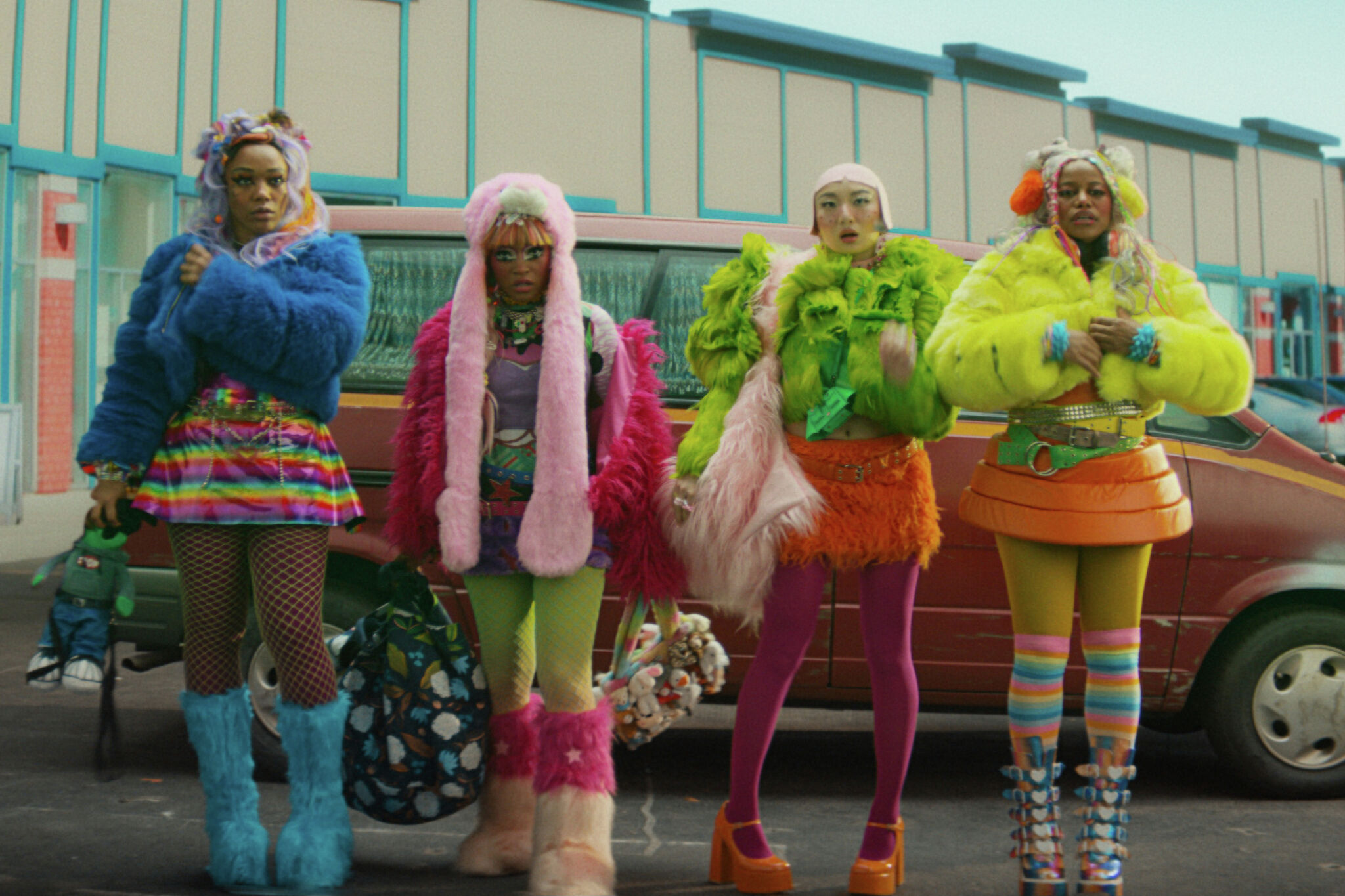
Keke Palmer stars as Corvette, a fashion designer drowning in debt who leads the Velvet Gang, an all-female crew that shoplifts from high-end Oakland retailers to redistribute goods to her community. The film’s villain, Demi Moore’s haute couturier Christie Smith, embodies capitalism’s cruelty: she styles herself in monochrome while selling color to the masses, treating fashion as a tool of control. Riley’s genius lies in wrapping this critique in a package that’s equal parts Looney Tunes chaos and Michel Gondry-esque whimsy. The result? A movie that’s as funny as it is furious, with practical effects (including a stop-motion car chase in a mall) that feel like a love letter to analog rebellion.
“Theft is not outside of capitalism; it’s what capitalism was built on—and not even, like, metaphorically.”
—Boots Riley, interview with Slant Magazine, May 18, 2026
Riley’s collaboration with Palmer, who also served as a producer on the film, has drawn comparisons to his earlier work with Danny Glover in Sorry to Bother You. Palmer, known for her activism in organizations like the Black Women’s Blueprint, brought her own perspective to the role, emphasizing the film’s themes of economic justice. “This isn’t just a story about stealing—it’s about who gets to take what and why,” Palmer told Variety in a preview interview. “Corvette isn’t a criminal; she’s a survivor in a system that’s rigged against her.”
Demi Moore, who plays Christie Smith, described her character as “a mirror held up to the fashion industry’s hypocrisy.” Moore, a longtime advocate for labor rights, noted that the film’s script forced her to confront her own complicity in capitalism’s structures. “I’ve spent my career selling beauty, but Christie is about the ugliness beneath it,” she said in a statement released by the film’s production company, Riot Cinema, Riley’s independent banner.
From Hip-Hop to Hollywood: How Boots Riley Turned Theft Into a Political Allegory
Riley’s career has always been a collision of art and activism. As a rapper with the Coup, he mocked corporate greed on albums like Kill My Landlord (1998) and Genocide & Juice (2001), blending satire with Marxist critique. His directorial debut, Sorry to Bother You (2018), skewered telemarketing capitalism with surreal absurdity, while his limited series I’m a Virgo (2021) explored the commodification of Black identity. But I Love Boosters marks his most explicit confrontation with retail theft—a phenomenon that’s become a political football, with conservatives blaming it for economic woes and progressives debating whether boosting is resistance or desperation.
The film’s development began in 2022, with Riley initially pitching the project as a documentary about Oakland’s boosting culture. After conducting interviews with boosters, retailers, and community organizers, he shifted to fiction, arguing that a satirical approach could reach broader audiences. The script was finalized in 2024, with Riley workshopping scenes with Palmer and Moore over a six-month period. Funding for the film came from a mix of private investors, including Participant Media and Kickstarter backers, with Riley personally contributing $200,000 from his own profits to ensure the project’s independence.

Keke Palmer’s involvement was secured after Riley screened early footage of the stop-motion sequences, which Palmer described as “visually stunning and politically urgent.” Moore joined the project after Riley sent her a rough cut of the film’s opening heist, which she called “a masterclass in turning theft into theater.” The cast also includes Tessa Thompson as a rival booster-turned-cop and Lakeith Stanfield in a cameo as a disillusioned retail manager, adding layers to the film’s critique of systemic complicity.
The film’s production faced challenges, including a three-week delay in Oakland due to a labor dispute with the local film crew union. Riley addressed the issue in a public statement, arguing that the delay was necessary to ensure fair wages for the team. “Capitalism doesn’t just exploit consumers—it exploits the people who make the art,” he said. The film’s shoot concluded in December 2025, with post-production handled by Company 3, known for their work on The Social Dilemma (2020).
The Walgreens Paradox: When Retailers Lie About Their Own Struggles
Riley’s film arrives as retail theft debates rage, with corporations like Walgreens using shoplifting as a scapegoat for declining profits. In 2024, the drugstore chain cited theft as a reason for closing stores in the Bay Area—only for leaked recordings to reveal executives telling shareholders the real issue was rising costs and poor management. Riley calls this a classic distraction tactic: “They’re just using [theft] as an excuse,” he told SFGATE in a May 18, 2026, interview. “The bourgeoisie stole land, stole minerals, stole labor. But that theft is thought of as legal.”
The film’s Oakland setting isn’t accidental. The Bay Area has become ground zero for retail theft narratives, with high-profile smash-and-grabs making headlines and stores locking up everything from toothpaste to electronics. But Riley argues the focus on “boosters” obscures the real theft: the way capitalism extracts value from communities while criminalizing survival tactics. His film’s opening scene—Corvette and her crew hitting a chain of high-end retailers called Metro Designers—is a direct jab at how luxury brands profit from the same systems they now blame for their woes.

“It’s conspiracy theory, because people do conspire. What this does is to try to explain the problems of capitalism as the problems of the bad decisions of those impoverished.”
—Boots Riley, interview with Slant Magazine, May 18, 2026
Riley’s critique aligns with recent data from the National Retail Federation, which reported that while shoplifting accounted for 35% of retail losses in 2025, internal theft by employees and executives represented a significantly larger share—estimated at over 40%. However, retailers have largely avoided scrutiny over internal theft, instead focusing public relations campaigns on “stopping shoplifting.” The film’s release has already sparked backlash from retail lobby groups, with the National Association of Convenience Stores calling it “a dangerous glorification of crime.” Riley dismissed the criticism as hypocritical, pointing to a 2025 New York Times investigation that revealed Walmart executives had embezzled millions through fake vendor schemes.
Why I Love Boosters Isn’t Just About Shoplifting—It’s About Who Gets to Steal
The film’s surrealism isn’t just aesthetic flourish. Riley’s worldview—rooted in his 2006 experience with the Coup’s tour bus crash (which left members injured) and his later work as a community organizer—sees capitalism as a system that rewards theft when it’s done by the powerful. His latest project, inspired by a 2006 Coup song, frames boosting as a form of Robin Hood economics: taking from the rich (who hoard resources) and giving to the poor (who are left with debt). The Velvet Gang’s heists aren’t just about goods—they’re about reclaiming agency in a system that’s designed to keep people broke.
In a New Yorker interview published May 15, 2026, Riley described his phobia of anesthesia—even undergoing a colonoscopy without it—as a metaphor for his relationship with fame. “I’m more afraid of dying than of the pain,” he said, revealing a vulnerability beneath the political provocation. His personal life, too, reflects his ideals: he bought his Oakland home with profits from I’m a Virgo, and his partner, La La Vazquez, runs feminist art projects while raising their three children. The film’s blend of activism and absurdity mirrors Riley’s own contradictions: a communist who makes blockbusters, a critic of capitalism who benefits from its machinery.
Vazquez, who has a background in labor organizing, served as a consultant on the film, helping Riley craft scenes that accurately depicted the economic struggles of Oakland residents. “This isn’t just a movie—it’s a tool,” she said in a statement. “We’re showing people how the system works, so they can decide whether to fight it or keep pretending it’s fair.”
The film’s soundtrack, produced by Kendrick Lamar’s longtime collaborator SZA, blends hip-hop, funk, and electronic beats to underscore its themes. Lamar himself makes a cameo as a disgraced former CEO who funds the Velvet Gang’s operations, adding another layer to the film’s critique of late-stage capitalism. The soundtrack was released digitally on May 15, 2026, ahead of the film’s premiere, and has already topped charts in Oakland and Los Angeles.
The Cultural Moment: How Riley and Cheadle Are Changing Hollywood’s Activism Playbook
Riley isn’t the only filmmaker using art to challenge systemic injustice. Don Cheadle, whose 2004 Oscar-nominated role in Hotel Rwanda sparked real-world political action, has long leveraged his platform for change. In a 2026 interview with GQ, Cheadle reflected on how his film led to congressional delegations to Sudan and even a meeting with Condoleezza Rice at the State Department. “There’s a real currency for this,” he said of celebrity activism. “I realized I was being put out front as a bright, shiny object to get people’s attention.”
Both Riley and Cheadle represent a shift in Hollywood activism—one that’s less about performative allyship and more about using cultural capital to move systems. Riley’s films don’t just critique; they propose alternatives. I Love Boosters’s Velvet Gang isn’t just stealing—they’re building. The film’s climax, where Corvette’s debt boulder (a literal metaphor for financial oppression) is shattered, isn’t just catharsis—it’s a call to action. In an era where retail theft is framed as a crime wave, Riley’s work forces audiences to ask: What if the real crime is the system that created the boosters in the first place?
Cheadle, who produced Riley’s I’m a Virgo, has praised the film as “a necessary corrective to the way we talk about poverty and crime.” He added that Riley’s approach—combining humor with hard-hitting critique—was “the only way to reach people who’ve been conditioned to ignore systemic issues.” The two filmmakers have discussed collaborating on a future project, with Cheadle expressing interest in exploring themes of reparations through cinema.
The film’s marketing campaign has been equally provocative. Neon and Annapurna have partnered with Adidas to release a limited-edition sneaker line inspired by the film’s aesthetic, with proceeds going to Oakland-based mutual aid organizations. The campaign includes a series of pop-up events in cities where the film premieres, featuring debates between community organizers and retail executives. Riley has also secured a deal with Netflix to release the film internationally, ensuring global reach for its message.
What’s Next: Can Art Change the Debate on Retail Theft?
The timing of I Love Boosters’s release is no accident. As states like Florida and Texas push for harsher penalties on shoplifters—including felony charges for first-time offenders—the film arrives as a counter-narrative. Riley’s argument—that boosting is a symptom of economic collapse, not its cause—aligns with labor advocates who warn that cracking down on small-time theft only hurts workers while letting corporations off the hook. Yet the film’s surrealism risks alienating some progressives who might see it as too “frivolous” for a serious debate.
What’s clear is that Riley’s work is part of a larger cultural reckoning. From the Coup’s early lyrics to his latest film, he’s been asking the same question: If capitalism is built on theft, who gets to decide what’s stolen and what’s sacred? I Love Boosters may be a comedy, but its stakes are deadly serious. And as retailers scramble to blame shoplifters for their losses, Riley’s film reminds us that the real thieves have never been the ones getting caught.
“I don’t buy the idea that retailers have to raise their profits because of shoplifting; they’re just using it as an excuse.”
—Boots Riley, interview with Slant Magazine, May 18, 2026
The film’s reception has been polarizing but widely discussed. On Rotten Tomatoes, it holds a 92% critic score based on 120 reviews, with praise for its visual creativity and bold themes. Audiences, however, are split: while urban and independent cinemas have given it standing ovations, some mainstream reviewers have criticized its “preachiness.” Riley has responded to the criticism by pointing out that Sorry to Bother You also faced similar backlash before becoming a cult classic.
Looking ahead, Riley has hinted at a potential sequel or spin-off series centered on the Velvet Gang’s continued resistance. He has also expressed interest in adapting his 2006 Coup album Genocide & Juice into a film, though no official announcements have been made. For now, I Love Boosters stands as a bold statement in a culture increasingly divided over who deserves punishment—and who deserves justice.
I Love Boosters hits theaters May 22, 2026—just as the debate over retail theft reaches a fever pitch. Whether it sparks real change or gets lost in the noise remains to be seen. But one thing is certain: Boots Riley isn’t making art for the sake of art. He’s making it to steal back the conversation.
