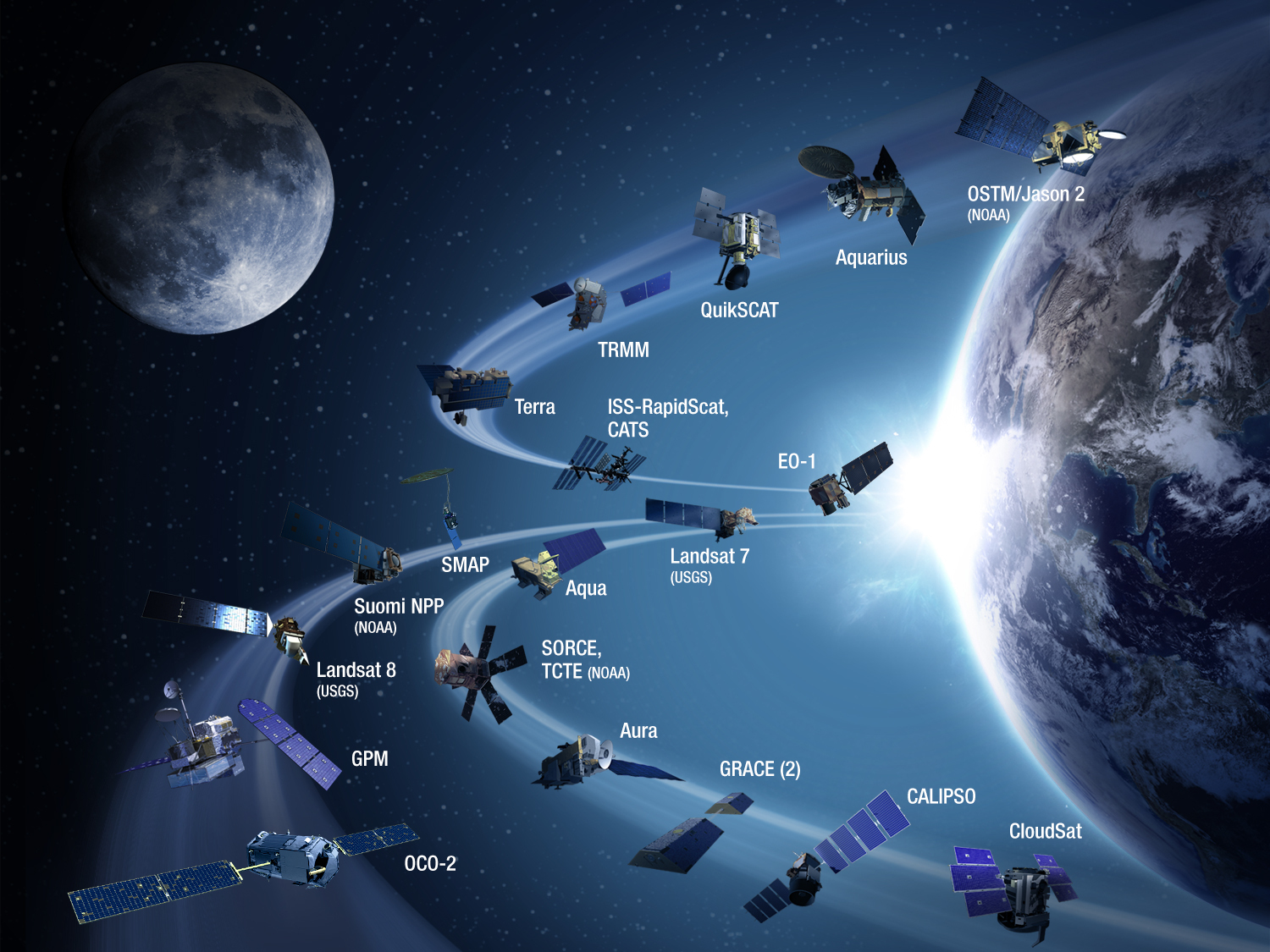
NASA Associate Administrator for Space Technology James Reuter advocated for the mass production of satellites in 2021 to address the agency’s evolving mission requirements. By shifting from bespoke, high-cost builds to standardized, repeatable manufacturing models, NASA officials aim to reduce mission timelines and lower the financial barriers associated with deploying complex orbital research constellations.
The Shift Toward Standardized Satellite Manufacturing
The traditional aerospace approach—characterized by unique, hand-crafted hardware designed for specific, singular objectives—is facing scrutiny from NASA’s leadership. As the agency balances an increasingly crowded orbital environment with limited budgetary resources, the push for mass-produced satellites represents a fundamental transition in how the United States approaches space infrastructure.
The interest in “buying off the shelf” or utilizing modular architectures is not merely a cost-saving measure; it is a strategic response to the necessity of rapid deployment. When NASA requires a constellation of sensors to monitor climate data or atmospheric conditions, the ability to procure identical units from a production line allows for faster integration and lower risks compared to custom-engineered alternatives.
Economic and Operational Rationales
The desire for mass production is driven by the economics of scale. In historical aerospace procurement, the cost per unit remains high because engineering, testing, and qualification processes are repeated for every individual satellite. By moving toward a model where production lines produce dozens or hundreds of units, the per-unit cost drops significantly. This efficiency allows agencies to allocate capital toward more ambitious projects, such as deep space exploration or advanced planetary science.
Furthermore, the operational benefit of mass production is redundancy. If a mission relies on a single, multi-billion-dollar satellite, the loss of that asset is a catastrophic failure for the program. Conversely, a constellation composed of mass-produced, smaller units offers resilience. If one or two units fail, the constellation remains functional, maintaining the continuity of data collection.
Institutional Challenges and Future Outlook
Despite the clear advantages, the transition to mass-produced satellite architectures presents significant hurdles. Existing procurement regulations and internal NASA processes were largely built for traditional, high-touch engineering projects. Adapting these standards to accommodate commercial, fast-paced production cycles requires a shift in both oversight and cultural mindset within the agency.
The focus remains on balancing the reliability required for space missions with the agility of the commercial sector. NASA continues to explore partnerships with private industry to bridge this gap, aiming to leverage the expertise of commercial satellite manufacturers who have already pioneered high-volume production in low Earth orbit. As of May 2026, the integration of these commercial-off-the-shelf technologies into government research missions remains a primary objective for the agency’s technology directorates, ensuring that future scientific goals remain achievable within current fiscal constraints.
Advancing the Production Model
The evolution toward mass-produced orbital hardware is increasingly characterized by a move away from the “boutique” satellite model that dominated the industry for decades. In these legacy projects, each satellite underwent a rigorous, individualized development cycle, often spanning several years from design to launch. Under the new production paradigm, the goal is to standardize the “bus”—the structural and power-providing core of the satellite—while allowing for interchangeable payloads to meet specific mission objectives. This modularity is intended to decouple the development of scientific instruments from the development of the satellite platform itself, potentially accelerating the launch frequency for essential research missions.
For NASA, this shift is not just about manufacturing speed; it is about the democratization of access to space-based observation. By reducing the complexity associated with individual builds, the agency intends to lower the barrier to entry for smaller research teams and academic institutions. When hardware can be sourced from established production lines rather than developed from scratch, the overhead costs associated with orbital deployment decrease, allowing for a higher volume of scientific data to be gathered over the lifecycle of a program.
Integrating Commercial Standards
A critical component of this transition is the alignment of government procurement standards with the realities of the commercial marketplace. Historically, NASA’s oversight requirements were highly prescriptive, mandating specific design and testing protocols that were often incompatible with the streamlined, iteration-heavy methods used by commercial satellite providers. To facilitate the adoption of mass-produced units, the agency is actively reevaluating these requirements to ensure they prioritize mission success through system-level reliability rather than process-level micromanagement.
This does not imply a reduction in mission quality. Instead, the agency is focusing on “mission-appropriate” assurance. For high-risk, flagship missions, the traditional, high-touch engineering model remains the gold standard. However, for a vast array of Earth-observation and atmospheric-monitoring missions, the mass-produced model offers a path to achieving comparable scientific outcomes at a fraction of the cost. The integration of these commercial-off-the-shelf technologies is being managed through a series of pilot programs and contract vehicles designed to incentivize manufacturers to maintain production capacity while meeting the agency’s rigorous safety standards.
Resilience Through Constellation Geometry
Beyond the economic benefits, the move to mass-produced satellites fundamentally changes the geometry of space missions. A constellation of dozens of smaller satellites can provide spatial and temporal coverage that a single, large satellite simply cannot achieve. By deploying satellites in formations, NASA can achieve persistent, global monitoring of dynamic phenomena, such as weather patterns or changing sea levels, with a higher degree of granularity. If an individual satellite in a large constellation experiences an anomaly, the impact on the overall mission is minimal, as the remaining units continue to provide data. This distributed sensing architecture is widely regarded by agency planners as the future of orbital research, provided that the cost of the individual units can be kept at a level that supports such high-volume deployments. As the agency moves forward, the success of this initiative will be measured by its ability to maintain these production lines over the long term, ensuring that the necessary orbital infrastructure is available when needed to support the nation’s scientific and technological objectives.
