Trump earned over $1 billion on cryptocurrency and coin ventures last year
A financial disclosure reveals that digital assets became one of the most lucrative components of President Donald Trump's business empire during his second term.
- Headline Dispatch: Trump earned over $1 billion on cryptocurrency and coin ventures last year
- Core Takeaway: A financial disclosure reveals that digital assets became one of the most lucrative components of President Donald Trump's business empire during his second term.
- Source Synthesis: Continuous live monitoring aggregated across major news wires and independent bureaus.
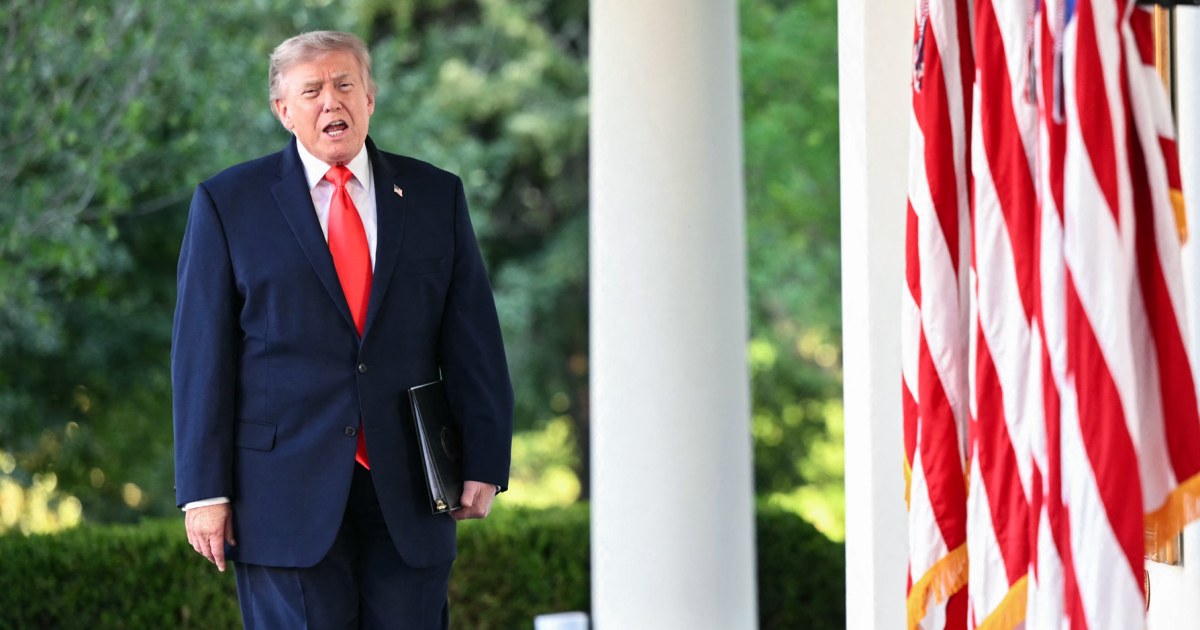
Trump earned over $1 billion on cryptocurrency and coin ventures last year
President Donald Trump reported more than $1 billion in income tied to cryptocurrency ventures in 2025, according to a financial disclosure released Tuesday. The 927-page document submitted to the U.S. Office of Government Ethics reveals that digital assets have become one of the most lucrative components of the president's business empire during the first year of his second term.
Total crypto earnings for the year reached approximately $1.4 billion, according to one report, while other accounts estimate the figure at nearly $1.2 billion. This windfall occurred as the administration aggressively pursued policies to make the United States the crypto capital of the world
, including the creation of a Strategic Bitcoin Reserve and the support of legislation such as the GENIUS Act.
The Meme Coin and World Liberty Windfalls
The largest single source of crypto income was a licensing agreement involving "meme" coins. Trump reported more than $635 million in royalties from a group called "Celebration Coins," also connected to CIC Digital LLC. The associated token, which trades as $TRUMP, launched on the Solana network just days before Trump took office in January 2025. While the coin peaked at $74.24 shortly after launch, its value plummeted to between $1.66 and $1.68 by Tuesday evening.
Additional significant gains came from World Liberty Financial, a decentralized finance venture co-founded by Trump and his sons, Donald Jr. And Eric, alongside Zack and Alex Witkoff. The disclosure shows Trump received more than $500 million from the project through token sales, distributions across cryptocurrency wallets, and the sale of an equity stake. Specific figures include:
- More than $236 million from additional crypto token sales.
- More than $65 million from equity sales associated with World Liberty Financial.
- More than $290 million classified as income from associated cryptocurrency wallets.
- $196 million in equity sales of Stablecoin Holdco LLC.
The company also sells $WLF tokens and a stablecoin pegged at $1 called USD1. However, investors in these assets have seen significant losses; the price of World Liberty tokens has dropped 80% since they began trading in September.
Broader Business Growth and Foreign Deals
While crypto dominated his recent earnings, Trump's traditional real estate and luxury holdings also grew. Mar-a-Lago generated $77 million, a 50% increase over the previous year. Other properties brought in $122 million from a golf club in Doral, Florida, and upwards of $30 million each from clubs in Jupiter, Florida, Bedminster, New Jersey, and Turnberry, Scotland.
The disclosure highlights a surge in overseas property expansion. A property in the United Arab Emirates generated $10.4 million, and a Saudi Arabian project sent $9 million to the Trump company. Additionally, a resort in Vietnam brought in $5 million, and a project in Qatar generated $5 million. These deals coincided with U.S. Government actions providing tariff relief to Vietnam, advanced technology access for Qatar, and fighter jets for Saudi Arabia.
Trump further monetized his brand through merchandise and media. He earned $4.7 million from "Trump Watches" and additional sums from branded sneakers, Bibles, and fragrances. Legal settlements with companies including Meta ($24.5 million), YouTube ($22 million), CBS ($16 million), ABC ($16 million), and X ($8 million) were also listed, though much of this was directed toward the Trust for the National Mall or his future presidential library.
Conflicts of Interest and Ethics Concerns
The scale of these earnings has sparked bipartisan criticism regarding conflicts of interest. Unlike previous presidents, Trump did not divest his assets or use a blind trust. The Trump Organization states that assets are managed by third-party institutions using automated technology.
Concerns have also been raised regarding specific investors. Justin Sun, a Chinese billionaire, reportedly spent $200 million on souvenir coins and $75 million on tokens. Sun has denied that this spending was related to a federal lawsuit that was paused in February last year before ending in a $10 million fine.
Another point of scrutiny involves the USD1 stablecoin, which an Abu Dhabi government-owned wealth fund used for a multibillion-dollar investment in Binance. Trump previously pardoned Binance co-founder Changpeng Zhao for financial crimes, though the president told CBS News last year, "I don't know who he is."
The disclosure also reveals that Trump's investment accounts purchased shares of the GEO Group, a private prison company, starting 10 days after his inauguration. These purchases ranged from $143,000 to $445,000 as the number of immigrant detainees rose from 35,000 to nearly 70,000.
White House spokesperson Anna Kelly denied any ethics breaches, stating:
"Neither the President nor his family has ever engaged — or will ever engage — in conflicts of interest,"and asserting that all administration actions are taken in the best interest of the American people.
Financial Standing and Next Steps
Forbes now estimates Trump's net worth at $6 billion, up from $2.3 billion in 2024, while Bloomberg estimates it at $7.6 billion. Despite the gains, the filing lists liabilities including judgments owed to E. Jean Carroll and a civil fraud penalty from New York Attorney General Letitia James, though the latter was recently reduced by appellate judges who called the nearly $527 million fine excessive
.
The intersection of Trump's personal wealth and federal policy remains a legislative battle. The Clarity Act, which would legalize most crypto activity in the U.S., has passed the House but remains in the Senate. Some Democrats are blocking the bill until it includes language barring the president and his family from engaging in cryptocurrency-related businesses.
How significant is this development?
Participate in our community survey on the trajectory and real-world impact of this news.