US and Japan coordinate rare intervention to stabilize Japanese yen
The United States and Japan have coordinated a rare joint market intervention to counter excessive volatility and stabilize the weakening Japanese yen.
- Headline Dispatch: US and Japan coordinate rare intervention to stabilize Japanese yen
- Core Takeaway: The United States and Japan have coordinated a rare joint market intervention to counter excessive volatility and stabilize the weakening Japanese yen.
- Source Synthesis: Continuous live monitoring aggregated across major news wires and independent bureaus.
US and Japan coordinate rare intervention to stabilize Japanese yen
The United States and Japan have carried out a rare joint intervention in currency markets to halt the slide of the Japanese yen. The coordinated action marks the first time the two nations have worked together to influence the currency in over a decade.
President Donald Trump confirmed Sunday evening that the Treasury Department assisted Japanese authorities. Speaking at Andrews Air Force Base in Maryland, Trump characterized the move as a sign of friendship and a means to support the world economy. They have a weakening yen, and they wanted a little bit of help. And we're always there for Japan,
Trump said, adding that the U.S. Is very strong, very, very strong financially
and noting that Japan has been very good to us, with the exception, of course, of Pearl Harbor.
Satsuki Katayama, Japan’s finance minister, stated that the joint action was intended to counter excessive volatility and disorderly movements in the Japanese yen in recent months.
The Japanese government maintains that the currency is undervalued, a view Katayama attributed to the success of Prime Minister Sanae Takaichi in revitalizing the economy.
The yen has struggled throughout the year, falling to 40-year lows. In July, the exchange rate hit a low where $1 was worth more than 163 yen, compared to around 147 yen a year prior. Factors contributing to the decline include investor concerns over increasing government spending and higher oil costs linked to the U.S. War with Iran. Because oil is traded in dollars, Japan has faced the double burden of rising oil prices and a weakening currency.
Before the coordinated effort, Japan attempted solo interventions between late April and early May, spending tens of billions of dollars to buy yen with limited success. A June rate hike by the Bank of Japan also provided little boost. Data from a U.S. Regulator showed net short positions on the yen reached roughly $12.5 billion, the highest level in two years.
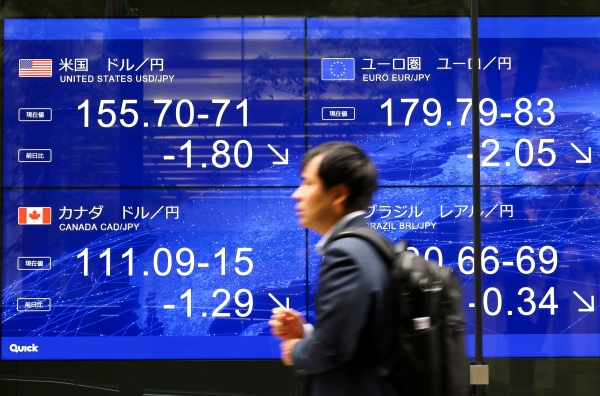
The recent joint intervention saw the U.S. Sell euros to buy yen, according to reports from the Financial Times. By the end of last week, the rate had fallen to 157 yen per dollar. On Monday, the yen rose to a three-month high, hitting 155.2 before settling between 155.39 and 156.49 per U.S. Dollar.
Treasury Secretary Scott Bessent confirmed the action on X, stating that Friday’s coordinated foreign exchange actions countered disorderly yen movements
and that the U.S. will not hesitate to participate in further joint intervention.
Bessent also indicated the U.S. Might increase the size of the Federal Reserve's repurchase facility to provide temporary dollar liquidity, describing it as an important backstop
.
The move comes amid a complex balancing act for the U.S. Dollar. While Trump has complained that an overpriced dollar makes American exports more expensive, the U.S. Considers it critical that the dollar remains the principal global reserve currency for pricing goods and settling accounts.
Market analysts remain divided on the long-term efficacy of the move. Analysts at Wells Fargo suggested the intervention underscores the limits of relying solely on foreign exchange operations. Masayuki Nakajima, a strategist at Mizuho Bank, argued that structural forces, such as interest-rate differentials between the U.S. And Japan, remain yen-negative, making it difficult to argue that the secular depreciation trend has fundamentally changed.
Other market reactions included:
- Oil: Brent crude futures sank more than 4% to $83.88 a barrel (and as low as $82.41 in some reports) after President Trump announced talks with Iran for Monday to resolve nuclear capabilities and reopen the Strait of Hormuz.
- Stocks: The Nikkei 225 dipped 1% on Monday, though it remains almost 30% higher this year. South Korea's KOSPI slid more than 5%. In the U.S., S&P 500 and Nasdaq futures rose.
- Bonds: The 2-year JGB yield hit 1.545% on Monday, the highest since 1995. The U.S. 30-year bond yield fell 3.7 basis points to 5.238%.
Japan's finance ministry stated it remains in close communication with the Treasury Department as both nations monitor the currency's stability.
How significant is this development?
Participate in our community survey on the trajectory and real-world impact of this news.