Confirmed Ebola deaths in DR Congo hit 600
The Democratic Republic of the Congo faces a critical Ebola outbreak with 600 confirmed deaths and infections spreading across four provinces.
- Headline Dispatch: Confirmed Ebola deaths in DR Congo hit 600
- Core Takeaway: The Democratic Republic of the Congo faces a critical Ebola outbreak with 600 confirmed deaths and infections spreading across four provinces.
- Source Synthesis: Continuous live monitoring aggregated across major news wires and independent bureaus.

Confirmed Ebola deaths in DR Congo hit 600
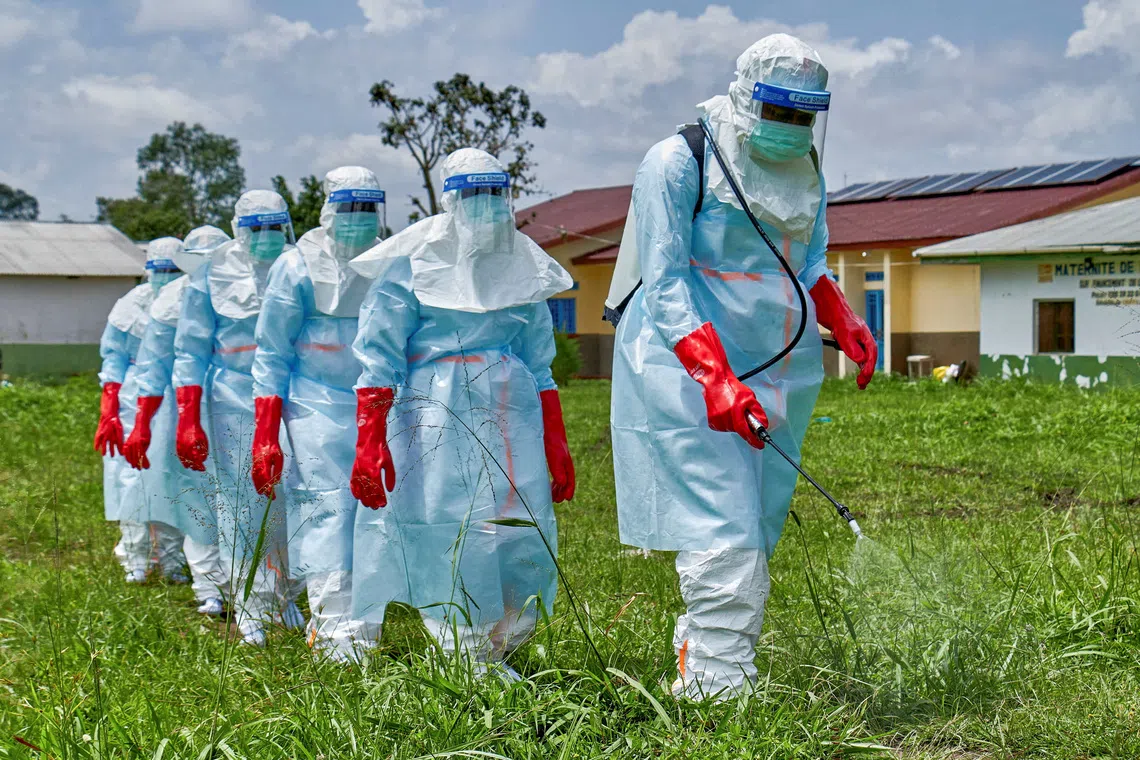
The Democratic Republic of the Congo (DRC) has reached a critical juncture in its fight against Ebola, with government data released Wednesday showing at least 600 people have died. Confirmed cases of the illness have risen to 1,759 as of Tuesday, July 8, 2026.
The scale of the crisis accelerated quickly. In the 24 hours preceding the government report, officials recorded 20 deaths and 51 new cases. While these totals are significant, they do not yet include two suspected cases in Kisangani, the capital of Tshopo province. Government officials stated these cases will be added to the official total once test results are validated.
Of the two pending cases in Kisangani, one is linked to the village of Nia-Nia in Ituri province, where the outbreak first appeared. The second case in Kisangani appears to have no geographic link beyond the city, according to the government.
Crisis at the Epicenter
The outbreak is being driven by the Bundibugyo virus. Although this strain is generally considered less deadly than other Ebola varieties, there is currently no approved vaccine. Clinical trial enrollment for a treatment for the Bundibugyo virus is just beginning as the situation deteriorates.
Ituri province is the hardest hit of the three eastern regions affected. There, the response is fracturing. Healthcare workers and front-line staff—including security teams, community outreach workers, and those burying the dead—have begun walking off their jobs. Many claim they have not received wages or bonuses since the outbreak was declared on May 15.
"Since the Ebola virus disease outbreak was declared, we’ve been demanding payment for our work,"
Dr Biensi Kano, member of the epidemiological surveillance committee in Bunia, via AP
Kano added that the lack of payment exposes workers and their families to significant socio-economic difficulties and undermines their living conditions. Other workers reported being treated unfairly by response teams and authorities, while operating with limited gear.
The frustration has boiled over into violence. On Monday, workers organized a protest outside the Rwampara Ebola treatment center, setting tires on fire and causing a brief panic before police intervened. In late May, a community investigator, Dr. Ben Bakule, reported narrowly escaping death when angry young men attacked him and colleagues during contact tracing in the village of Tutu, located in Djugu territory.
Barriers to Containment
The World Health Organization (WHO) representative in Congo, Dr. Anne Ancia, said Tuesday that the virus continues to spread, fueled by insecurity and population movements. She noted that some treatment centers are operating at near-full capacity.
Containment is further hindered by cultural practices and community mistrust. The virus often spreads during funerals that last several days, where family and friends touch the deceased. Aid workers have struggled to implement safe burials in areas where residents remain skeptical of the virus. At the Rwampara center, tents were set on fire by an angry mob last month.
Logistical failures have also stalled the response. Akilimali Pierre, incident manager at Congo’s National Institute of Public Health, attributed payment delays to the closure of Bunia airport, which he said has hampered the flow of funds.
This current outbreak, the 17th in the DRC, was declared a Public Health Emergency of International Concern by the WHO in May. However, the virus had already spread undetected for weeks through the mining towns of Bunia, Rwampara, and Mongbwalu before reaching neighboring provinces.
Wider Geographic Spread
While the government initially reported cases in Ituri, North Kivu, and South Kivu, reports from the National Institute of Biomedical Research (INRB) suggest the virus has reached a fourth province: Haut-Uele. This spread occurred after an infected person traveled from Bunia to Haut-Uele, which borders the Central African Republic and South Sudan.
This expansion means the entirety of the DRC's northeast, home to about 15 million people, is now affected. In response, the government issued a ban on public gatherings on Saturday in four provinces, including the capital, Kinshasa. Opposition figures have called this ban "politically motivated," noting it preceded a planned protest against constitutional reform on July 8.
Despite the escalating crisis, Minister of Health Roger Kamba previously assured response teams in Mongbwalu that the government was prioritizing their conditions, stating, All doctors, all nurses and all staff working on the response will be fully supported. We have the money for that.
The situation remains volatile as workers in Ituri continue to threaten strikes unless wages are paid, and officials in the province maintain that concerns are being addressed.
How significant is this development?
Participate in our community survey on the trajectory and real-world impact of this news.