DR Congo Ebola outbreak outpaces response as cases surge undetected
The Bundibugyo virus is fueling the fastest-growing Ebola outbreak in Africa's history, outpacing medical responses amid regional conflict and community violence.
- Headline Dispatch: DR Congo Ebola outbreak outpaces response as cases surge undetected
- Core Takeaway: The Bundibugyo virus is fueling the fastest-growing Ebola outbreak in Africa's history, outpacing medical responses amid regional conflict and community violence.
- Source Synthesis: Continuous live monitoring aggregated across major news wires and independent bureaus.

DR Congo Ebola outbreak outpaces response as cases surge undetected
The World Health Organization (WHO) has warned that a rare Ebola outbreak in the Democratic Republic of the Congo (DRC) is spreading faster than health officials can track, with a significant portion of new cases emerging from unknown chains of transmission. The outbreak, caused by the Bundibugyo virus, is described by the Africa Centers for Disease Control and Prevention (Africa CDC) as the fastest-growing Ebola outbreak ever on the continent.
Chikwe Ihekweazu, the executive director of the WHO Health Emergencies Programme, stated that 80% of new patients in the epicenter of the outbreak — Ituri province — are not on contact lists of existing patients. This indicates the virus is largely spreading undetected. Ihekweazu noted that modeling and test-positivity rates suggest the actual number of cases could be two to four times higher than confirmed counts.
The scale of the current crisis is already historic. Wessam Mankoula, an epidemiologist with the Africa CDC, noted that the outbreak is the third-largest on record. In the first six weeks after the outbreak was declared in mid-May, 1,596 cases were reported in the DRC. For comparison, the West Africa outbreak saw 994 cases and the North Kivu outbreak saw 378 cases in their respective first six weeks. Mankoula warned that the virus is moving faster than resources can be deployed to control it.
Casualties and Regional Spread
Data on the toll of the virus varies across reports. Congolese authorities stated that as of Monday, at least 1,926 people have been infected and 702 have died across three provinces. Other reports cite 1,792 confirmed cases and 625 deaths, with a case-fatality rate of 34%.
The crisis has extended beyond the DRC's borders. Neighboring Uganda has reported confirmed cases and deaths, including two health workers in a private facility in Kampala. Additionally, health officials in Brazil are investigating a suspected case involving a 37-year-old man in São Paulo who recently returned from the DRC. The U.S. Centers for Disease Control and Prevention also reported on July 11 that a U.S. Citizen working for a humanitarian organization in Congo tested positive for the virus.
The virus has also taken a heavy toll on the medical response. Mankoula reported that 112 healthcare workers in the DRC have been infected, and 32 have died.
Barriers to Containment
The response effort faces severe logistical and social hurdles. The DRC is currently dealing with an ongoing conflict between the military and rebel groups, specifically in gold-rich regions where militias allied to the Hema and Lendu ethnic groups have fought over land and minerals. This insecurity, combined with community mistrust and insufficient contact tracing, has hampered containment.
Violence has directly targeted health facilities. In Mongbwalu town, residents attacked the Mongbwalu general referral hospital. Dr. Richard Lokodu, the facility's medical director, said 18 patients fled after unidentified individuals
burned isolation tents erected by Médecins Sans Frontières (MSF). A second attack saw seven more patients escape. Similar violence occurred in Rwampara, where a crowd set fire to a treatment center. These attacks were driven by families wanting to perform traditional burials, which involve touching the body, a practice the WHO warns can spread the virus further.
Labor unrest has also disrupted care. Healthcare workers at a treatment center in northeast Congo went on strike on Monday over unpaid salaries and bonuses, arguing that even one day of action caused damage as patients could not access the center. They agreed to resume work on the condition that the government pays them within 72 hours.
Medical Response and Clinical Trials
There are currently no licensed vaccines or treatments for the Bundibugyo strain. However, a clinical trial for two antiviral candidates, the antiviral remdesivir and the monoclonal antibody MBP134, began enrolling patients last week. While currently operating at one site in the DRC, Africa CDC officials plan to expand the trial to 10 sites.
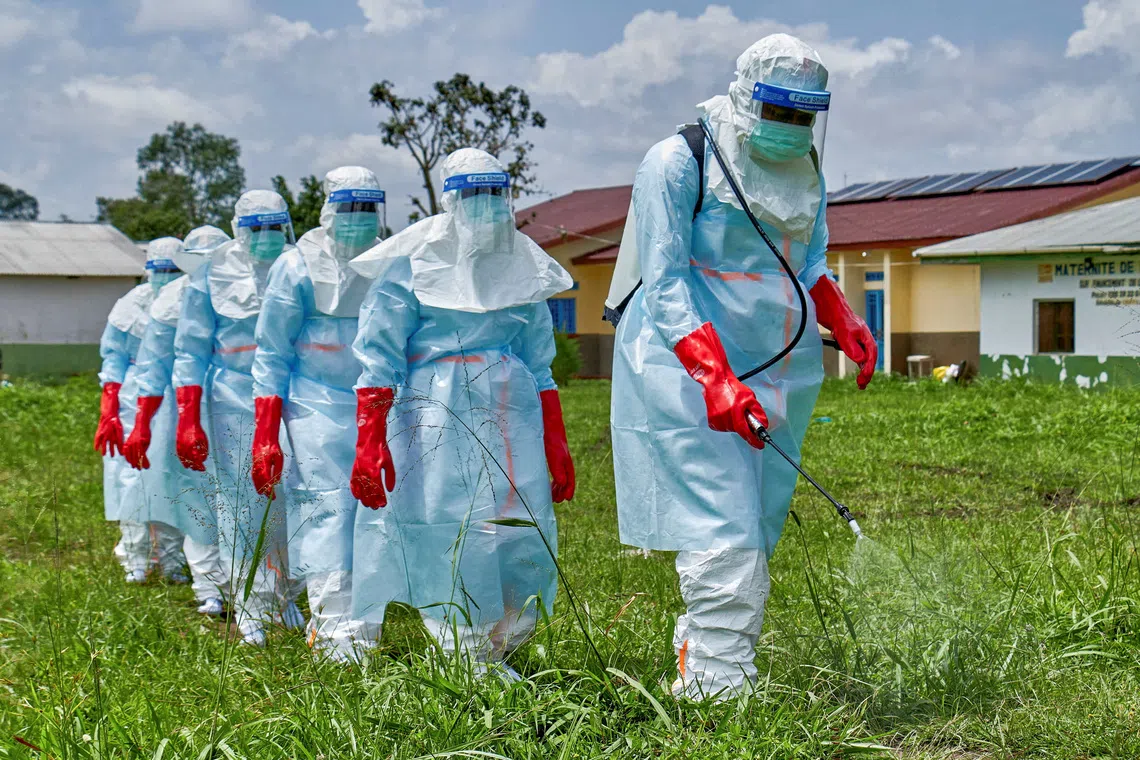
Infrastructure has seen some improvements. In Bunia, treatment capacity has reached nearly 800 beds, and laboratory capacity has grown from one to 14 labs. The National Institute for Biomedical Research laboratory in Bunia can now return test results within 24 hours. Previously, samples had to be transported more than 1,500km to Kinshasa, causing delays that health workers feared would cost lives.
WHO head Dr. Tedros Adhanom Ghebreyesus, who declared the outbreak a public health emergency of international concern
after 300 suspected cases and 88 deaths were initially reported, continues to urge neighboring countries to take immediate action as the epidemic outpaces the response.
How significant is this development?
Participate in our community survey on the trajectory and real-world impact of this news.