DRC Ebola outbreak continues to spread undetected as cases surge
With 1,792 confirmed cases and silent transmission in Ituri province, the DRC outbreak is outpacing containment efforts. Clinical trials for two antivirals have begun.
- Headline Dispatch: DRC Ebola outbreak continues to spread undetected as cases surge
- Core Takeaway: With 1,792 confirmed cases and silent transmission in Ituri province, the DRC outbreak is outpacing containment efforts. Clinical trials for two antivirals have begun.
- Source Synthesis: Continuous live monitoring aggregated across major news wires and independent bureaus.

The ongoing emergency, caused by the Bundibugyo virus, was first declared in mid-May 2026. Data current as of 9 July 2026 indicates 1,792 confirmed cases and 625 deaths in the DRC.
The outbreak is exhibiting rapid growth, with officials noting that the virus is outpacing the current containment response. According to modelling and test-positivity rates cited by the World Health Organization (WHO), the actual number of cases could be two to four times higher than the confirmed count. A major indicator of this silent spread is that 80% of new patients in Ituri province — the epicenter of the crisis — do not appear on existing contact lists.
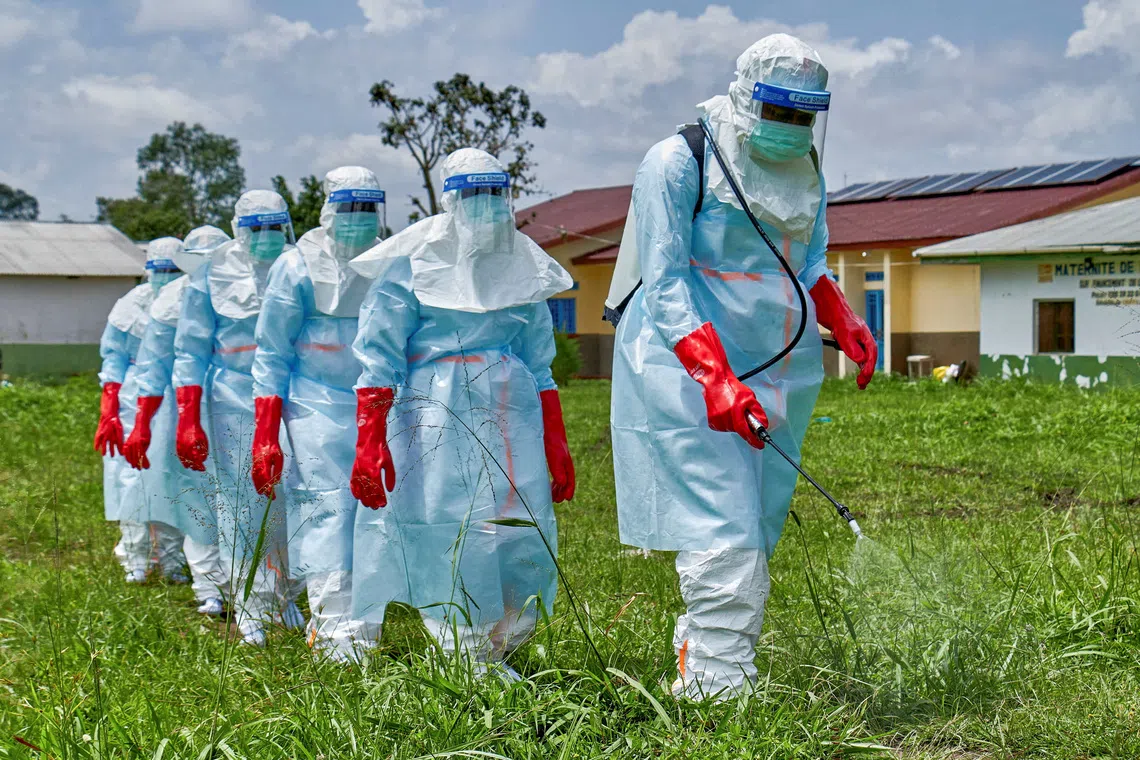
The intensity of the transmission is particularly visible in Bunia, the capital of Ituri province, where roughly one in two patients tested for the virus returns a positive result. While this strain of Ebola may cause milder symptoms than other known types, health officials caution that this characteristic is deceptive. It may reduce risk perception among local communities, leading families to care for their loved ones at home. This practice keeps the virus circulating in the population longer; an analysis of the initial 400 deaths found that 70% occurred outside of professional treatment centers.
The human cost of the response has been steep. At least 112 healthcare workers have contracted the virus, with 32 deaths recorded among them. Challenges in the field are manifold, ranging from armed conflict involving rebel groups to community mistrust. In some areas, responders have faced additional hurdles, including a strike by healthcare workers protesting unpaid benefits and poor working conditions. While many workers have returned to their posts, some remain dissatisfied.
Logistical and social complexities continue to hamper efforts. In the mining town of Mongbwalu, infected individuals have reportedly traveled while ill rather than seeking local care, further dispersing the virus. Meanwhile, treatment facilities in some areas are operating at 90% capacity. To address the surveillance gaps, authorities have begun training 21,000 community health workers to conduct house-to-house visits to identify suspected cases.
The outbreak has crossed international borders, with Uganda reporting 20 confirmed cases and two deaths. While Uganda has officially closed its border with the DRC, authorities acknowledge the difficulty of restricting movement across the 500-mile stretch. Families on both sides of the frontier share strong cultural and linguistic ties, often utilizing informal crossing points that render strict containment difficult. However, no new cases have been reported in Uganda since 21 June 2026. Imported cases have also been documented in France and Germany, involving individuals who traveled from the affected regions in the DRC.
Because there is currently no licensed vaccine or proven cure for the Bundibugyo strain, clinical trials for two antiviral candidates, MBP134 and remdesivir, have commenced in the DRC. Investigators aim to eventually scale these trials to 10 sites to determine the efficacy of the treatments. As the health response continues, the WHO is expected to publish its next update on the situation on 13 July 2026.
How significant is this development?
Participate in our community survey on the trajectory and real-world impact of this news.