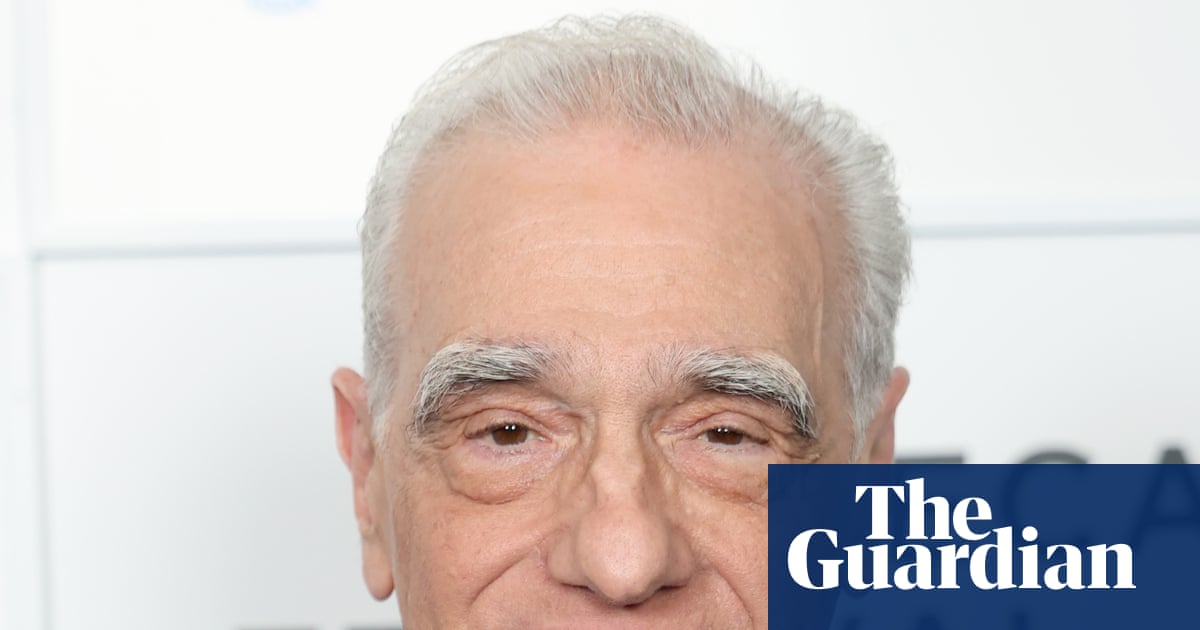
Martin Scorsese’s endorsement of AI in filmmaking has ignited a culture war—with directors like Boots Riley accusing him of financial opportunism and industry peers warning of a betrayal of artistic integrity. On June 3, 2026, Scorsese announced his advisory role at Black Forest Labs, a $3.25 billion AI startup, sparking backlash from artists who see his move as a cash grab and a threat to creative labor.
Scorsese’s AI Gambit: A $3.25 Billion Bet on Storyboards
cluster (priority): TechCrunch
Scorsese’s partnership with Black Forest Labs—backed by investors including Rick Yorn, co-founder of BroadLight Capital and Scorsese’s talent manager—marks his latest foray into AI, a technology he’s long resisted. The director, 83, framed his involvement as a tool to “push the bounds of creativity,” claiming the company’s Flux tool helps him visualize storyboards more efficiently for his production teams. In a statement to The Guardian, he argued that cinema, at just 125 years old, must evolve with new tools. But the reaction from peers suggests this isn’t about innovation—it’s about money.
Black Forest Labs, valued at $3.25 billion, is the same company behind Stable Diffusion and a recent rebuff of Elon Musk’s xAI after concerns over content safeguards. Its clients include Adobe, Canva, Microsoft, and Meta, positioning it as a linchpin in the AI arms race. Scorsese’s role as an advisor—officially announced this week—comes as Hollywood’s AI resistance softens. Steven Soderbergh used AI-generated sequences in *John Lennon: The Last Interview*, while *Jurassic World Rebirth* director Gareth Edwards called AI “a fucking genius at helping you.” Yet Scorsese’s endorsement carries unique weight: as a living legend, his stamp could accelerate AI adoption in ways no other filmmaker’s could.
The controversy hinges on one question: Is this a genuine leap forward, or a cynical cash grab? The answer depends on who you ask.
Boots Riley’s F-Bomb: “Doesn’t Give A F*ck”
cluster (priority): Variety
Boots Riley, the writer-director behind *I Love Boosters* (now in theaters), didn’t mince words. On X, he accused Scorsese of joining Black Forest Labs for “a gang of money” and suggested the director thinks AI will “fall on its face anyway.” Riley’s post, shared widely in the film community, read:
> “My guess: at 83, they gave his family a gang of money (they throw tens of millions left and right) he wanted the income stream for them and feels like ‘AI’ will fall on its face anyway, so he doesn’t give a fuck. If that’s not the case, extra fuck him. Separately, go see *I Love Boosters* today.”
>
> —Boots Riley, via Deadline
Riley doubled down in a follow-up, clarifying his issue wasn’t with Scorsese *using* AI—it was with the director leveraging his legacy to push the industry toward it. “They need him,” Riley wrote. “One trillion spent on generative AI and it’s not saving anyone or changing film yet.”
To illustrate his point, Riley shared his own “TERRIBLY DRAWN storyboards” for *I Love Boosters*, admitting they worked well enough before an artist redrew them. “You don’t have to use AI to do this shit,” he concluded. The jab hit hard: Scorsese’s statement about AI streamlining preproduction echoed Riley’s critique of the tool’s redundancy.
Artists Strike Back: “He Throws Us Under the Bus”
Martin Scorsese Rips Comic Book Movies, Draws Backlash
Riley’s outrage isn’t isolated. Concept artists and storyboarders, already underpaid and undervalued, see Scorsese’s move as a direct threat. Karla Ortiz, a concept artist on *Black Panther*, *Avengers: Endgame*, and *Infinity War*, called Scorsese’s endorsement “disgusting” on social media, accusing him of “throwing every single storyboard artist he’s ever worked with under the bus.” Samuel Deats, director of *Castlevania*, went further:
> “There is absolutely no reason to need AI built on the stolen work of millions of artists to storyboard your vision. Have some damn pride and respect your peers.”
>
> —Samuel Deats, via The Guardian
The backlash reflects a broader tension: AI’s promise of efficiency clashes with the labor of human artists, many of whom fear obsolescence. Scorsese’s defense—that AI is a tool for *communication*, not replacement—hasn’t mollified critics. “Cinema is a young medium,” he argued, but his peers counter that the craft of storytelling has always relied on human collaboration, not algorithmic shortcuts.
Even within the AI camp, skepticism lingers. Jane Rosenthal, co-founder of the Tribeca Film Festival, defended *Dreams of Violets*, a fully AI-generated film about Iranian protesters, as “something that should be seen right now.” But Scorsese’s involvement with Black Forest Labs feels different: it’s not about artistic experimentation but corporate integration. The company’s investors include BroadLight Capital, Scorsese’s own talent manager—a detail that fuels suspicions of a conflict of interest.
The Stakes: Money, Legacy, and the Future of Filmmaking
cluster (priority): The Guardian
Scorsese’s AI pivot isn’t just about storyboards. It’s about positioning himself—and his legacy—for the next era of Hollywood. Black Forest Labs’ $3.25 billion valuation signals serious money, and Scorsese’s advisory role could translate into future projects, endorsements, or even a seat at the table as AI reshapes production. But the optics are toxic: while artists protest layoffs and wage stagnation, Scorsese profits from a tool that may displace them.
The timeline matters. Scorsese recently wrapped *What Happens At Night* (starring Leonardo DiCaprio and Jennifer Lawrence), and his next project could be the first to fully integrate AI storyboarding. If it succeeds, other studios may follow—accelerating a shift that artists fear will devalue their work. Riley’s critique cuts to the heart of the issue: Who benefits when AI enters the creative process?
The answer, so far, isn’t the artists.
What Happens Next: Scorsese’s AI Test Case
Scorsese’s experiment with Black Forest Labs will be watched closely. If his AI storyboards improve efficiency without harming artists, critics may soften. But if the tool leads to layoffs or creative homogenization, the backlash could grow. Riley’s challenge—“go see *I Love Boosters* today”—is a call to action, urging audiences to support films that reject AI’s encroachment on artistry.
For now, the debate rages: Is Scorsese a visionary embracing progress, or a cash-grabber exploiting his name? The answer may hinge on whether Black Forest Labs’ tools deliver—or if, as Riley suspects, they’re just another corporate distraction.
One thing is clear: Hollywood’s AI future is here. And it’s coming with Scorsese’s blessing.
Jasmine Brooks curates coverage of film, music, and digital culture. She began her career as an arts columnist for The Evening Tribune and has since interviewed creatives across Hollywood, Seoul, and London. Her focus blends culture, diversity, and storytelling excellence.