
Türkiye’s World Cup 2026 dream ended in Santa Clara on Friday night after a 1-0 defeat to 10-man Paraguay, their second straight loss in Group D. The defeat—marked by a record 62 shots without a goal across two games—confirmed their elimination with a match to spare, while Paraguay secured a spot in the knockout round after a dramatic recovery from their 4-1 opener against the United States. The match also saw the first application of FIFA’s controversial new rule: Miguel Almiron’s red card for covering his mouth during a confrontation with Mert Muldur, a decision upheld by VAR.
How Paraguay’s 65-second goal became the tournament’s fastest—and why it mattered
Matias Galarza’s strike at 65 seconds—the fastest goal in World Cup history—set the tone for Paraguay’s resilience. The Atlanta United midfielder, who had sat out the opener, converted a clever flick from Julio Enciso into a low rocket from 25 meters, beating goalkeeper Mert Günok with precision. For a team that had crumbled 4-1 to the U.S., the goal was more than a score: it was a statement of mental toughness. “We showed our quality fighting spirits even with one player down,” Galarza said afterward. “God wanted this to happen for Paraguay more than ever before.”
The goal also underscored Paraguay’s tactical shift under Gustavo Alfaro. Unlike their chaotic opener—where they conceded four goals—they played a disciplined, compact defense, nullifying Türkiye’s 79% possession dominance and 32 shots. “It’s nothing about tactics or strategy here,” Alfaro told reporters. “This victory is to the credit of the players.” The contrast with their first match couldn’t be starker: Paraguay’s efficiency (1 goal in 65 seconds) vs. Türkiye’s futility (62 shots, zero goals in two games).
The red card that changed the game—and FIFA’s controversial new rule
Almiron’s dismissal in first-half stoppage time wasn’t just a turning point—it was a landmark moment in World Cup officiating. The red card, handed after VAR review for covering his mouth during a confrontation with Muldur, marked the first time FIFA’s new rule on “mouth-covering gestures” was enforced. The policy, introduced after Benfica’s Gianluca Prestianni was accused of making discriminatory remarks to Vinicius Jr. during Euro 2024, drew immediate backlash from Turkish fans and pundits. “It was a stupid decision,” one Turkish supporter told The Guardian, though FIFA stood by the call, citing the rule’s clarity.

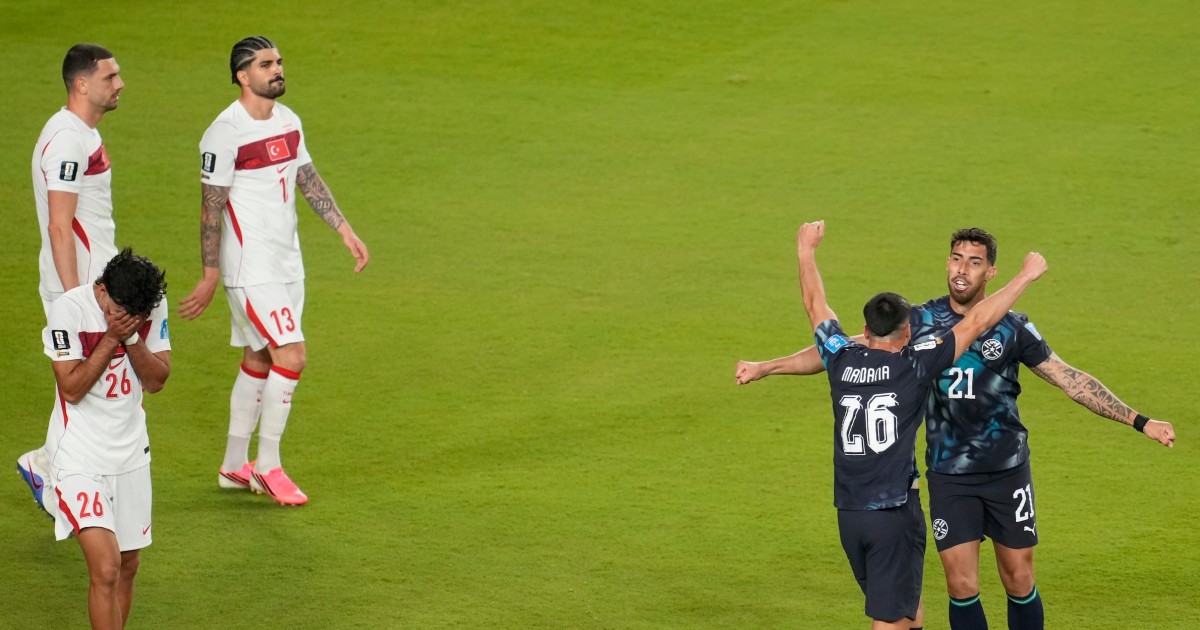
The incident also exposed the psychological toll of the rule. Almiron, Paraguay’s captain, had been vocal in midfield—his ejection left his team with 10 players for 45 minutes. Yet Paraguay held firm, a testament to their defensive organization. “We tried very hard but it didn’t work,” admitted Arda Guler, Türkiye’s 21-year-old star. “Everybody’s sad, everybody’s crying.” The defeat was especially bitter for a team that had dominated possession (79% at one stretch) and created multiple chances, including Mert Muldur’s 35th-minute header that rebounded off the crossbar.
Türkiye’s 62 shots, zero goals: How a golden generation collapsed under pressure
Türkiye’s campaign unraveled not for lack of effort, but for an inability to finish. Across two matches—first a 2-0 loss to Australia, then Friday’s defeat—they mustered 62 shots, the most in any two-game span since World Cup records began in 1966. Their stars, including Kenan Yildiz (6 shots, 1 on target) and Guler (3 chances created), were stifled by Paraguay’s disciplined defense. “We should have won these games,” Guler said. “But we should have scored some goals.”
The numbers tell the story: 32 shots vs. Paraguay, none on target for Türkiye. Their best chance—a free-kick header by Muldur—hit the crossbar and post. Later, Demiral skied a close-range effort wide. The frustration was palpable, especially after their swashbuckling Euro 2024 run, where they reached the quarterfinals. But in the World Cup, where defensive organization often trumps creativity, Türkiye’s attacking firepower proved insufficient. “It’s a huge disappointment,” Montella said. “But we fought until the end.”
What’s next for Paraguay—and why their World Cup is far from over
Paraguay’s next match—against Australia on Thursday—will determine their fate in the knockout round. A win secures second place in Group D; a draw or loss risks elimination. Their path hinges on consistency: they’ve shown they can defend (holding off Türkiye’s 32 shots) and attack (Galarza’s goal), but must avoid another defensive lapse like the one against the U.S. “We’re not out of the woods yet,” Alfaro acknowledged. “But today, we showed we can compete.”
For Türkiye, the fallout is immediate. Their final Group D match against the U.S.—already confirmed as Group D winners—will be a homecoming of sorts, with fans likely venting frustration over the elimination. The team’s collapse also raises questions about their preparation. Despite being fancied as dark horses, their inability to convert chances mirrors broader trends in modern football: possession isn’t enough when defenses are organized. “This is a lesson for all teams,” said a scout at the match. “You can’t just shoot—you have to finish.”
A statistical anomaly: Why Türkiye’s 62 shots, zero goals is historic
Türkiye’s 62 shots across two matches without a goal isn’t just a personal failure—it’s a statistical outlier. According to Opta data, no team in World Cup history has gone 62 shots in two games without scoring.

- Türkiye vs. Australia (June 15): 30 shots, 0 goals (2-0 loss)
- Türkiye vs. Paraguay (June 20): 32 shots, 0 goals (1-0 loss)
- Total: 62 shots, 0 goals (new World Cup record)
The comparison to their Euro 2024 run is striking. There, they scored 12 goals in five matches, including a quarterfinal victory over Portugal. But in the World Cup, where defenses are more disciplined, their finishing evaporated. “It’s not just about talent,” said a tactical analyst. “It’s about execution—and today, Türkiye failed that test.”
The bigger picture: What this loss says about Türkiye’s World Cup ambitions
Türkiye’s elimination isn’t just a footballing setback—it’s a cultural moment. The team’s rise had been framed as a coming-of-age story for a nation hungry to reclaim its place on the global stage. Their Euro 2024 run had fueled hopes of a deep World Cup campaign, but the reality was stark: they lacked the killer instinct to break down organized defenses. “This is a wake-up call,” said a former Turkish international. “We need to address our finishing, not just our talent.”
The loss also underscores a broader trend: in the World Cup, defensive solidity often trumps individual brilliance. Paraguay’s win wasn’t about flashy football—it was about grit, organization, and a single moment of magic from Galarza. For Türkiye, the question now isn’t just about the next match, but about how they’ll rebuild their reputation. Their 24-year absence from the World Cup is over, but their legacy in this tournament is already written in red ink.
For now, the focus shifts to Paraguay—and whether they can maintain their defensive discipline in their final group match. One thing is clear: in the World Cup, it’s not always the team with the most shots who wins. Sometimes, it’s the one who scores first—and holds on.
Find more reporting in our Sports section.
