ICE plans to equip agents with gloves that can deliver electric shocks
The Department of Homeland Security intends to equip ICE officers with wearable conductive gloves described as distraction and de-escalation devices.
- Headline Dispatch: ICE plans to equip agents with gloves that can deliver electric shocks
- Core Takeaway: The Department of Homeland Security intends to equip ICE officers with wearable conductive gloves described as distraction and de-escalation devices.
- Source Synthesis: Continuous live monitoring aggregated across major news wires and independent bureaus.
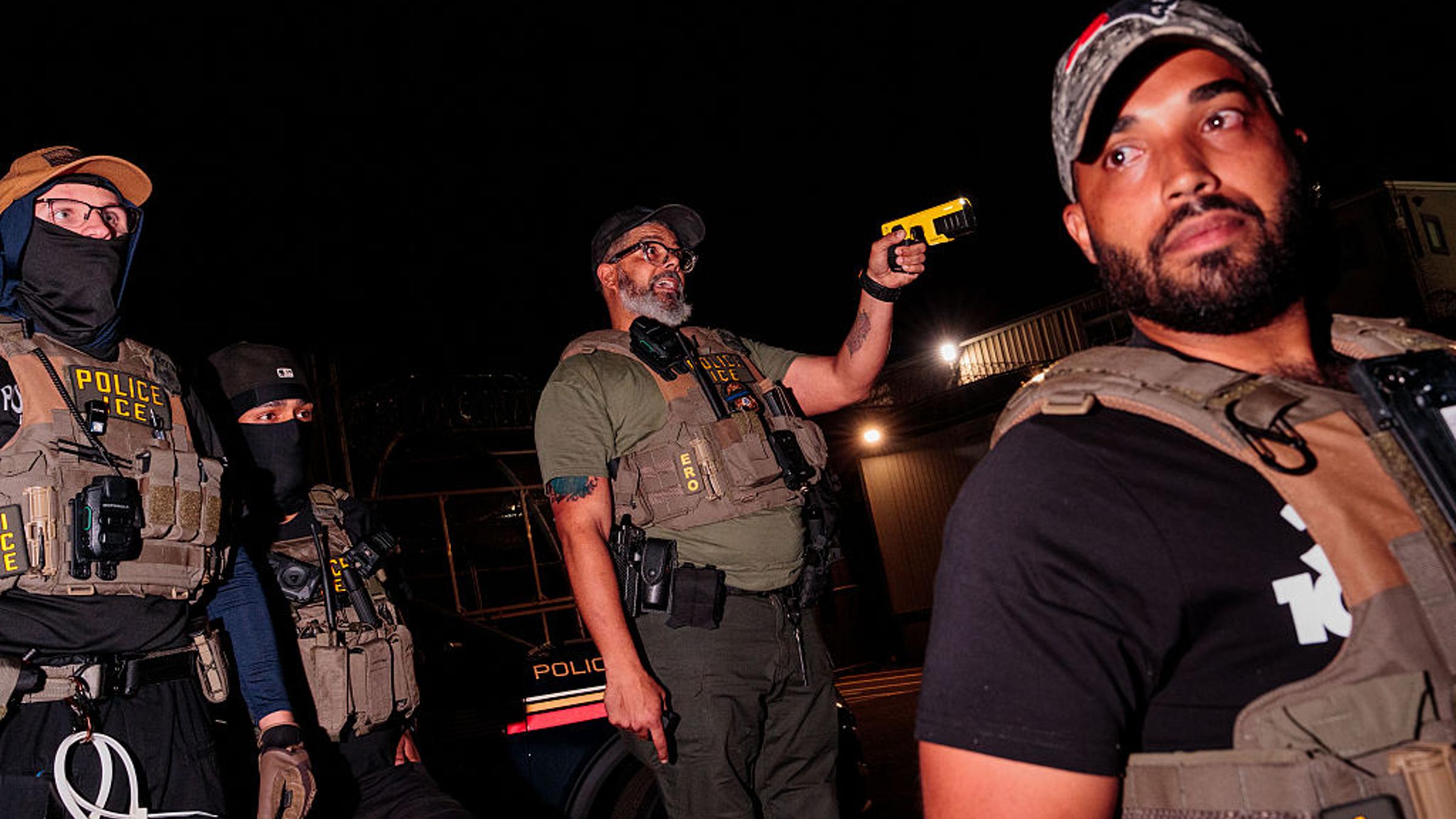
ICE plans to equip agents with gloves that can deliver electric shocks
The Department of Homeland Security (DHS) intends to provide Immigration and Customs Enforcement (ICE) officers with wearable gloves capable of delivering electric shocks to individuals during detentions. According to a procurement notice published on 10 August, the agency may spend up to $20 million to acquire these devices by the end of March 2027.
The equipment, known as Generated Low Output Voltage Emitters or G.L.O.V.Es
, is manufactured by Compliant Technologies, a veteran-owned company based in Kentucky. The device functions as a conductive glove that delivers an electrical current upon skin contact when a small button on the wrist is activated. Unlike a taser, the glove does not use prongs that break the skin.
DHS described the gloves in its notice as a conductive distraction and de-escalation device
. A DHS spokesperson stated that ICE constantly assesses the needs of field officers to ensure they have the necessary tools to safely arrest and remove criminal illegal aliens from our country
, adding that officers are highly trained in de-escalation.
Pain compliance and accountability
The manufacturer claims the weapon subdues targets within three seconds on average without leaving scars or burns. However, former DHS officials and civil liberties advocates warn that the device is designed for pain compliance
rather than incapacitation.
Margo Schlanger, who previously led DHS’s office for civil rights and civil liberties, argued that tasers are more effective and humane because they can be brandished from a distance. She contended that the gloves are a method of painful domination
that can be used in situations where a person is not posing a risk to an officer.
Concerns regarding accountability stem from the low optic
nature of the device. Jeff Niklaus, founder and CEO of Compliant Technologies, previously described the gloves as such in a Police & Security News article. Jenn Rolnick Borchetta, deputy director on policing at the ACLU, warned that the ability to deliver a shock via a small button may be imperceptible to those watching
, creating a recipe for more harm to the public and less accountability
.
Training and force concerns
The rollout comes as the Trump Administration increases immigration enforcement. Since Trump returned to office last January, at least 10 people have died in encounters with federal agents. This includes the January deaths of Alex Pretti and Renee Good in Minnesota during vehicle inspections.
Critics point to a rapid expansion of the ICE workforce as a risk factor. Naureen Shah, ACLU director of policy and government affairs for immigration, questioned the decision to introduce novel technology to personnel after efforts to hire more than 12,000 officers in less than a year.
John Sandweg, former acting director of ICE and acting general counsel of DHS, described the plan as tone deaf
. Sandweg cited February documents from two DHS whistleblowers showing that ICE scaled up hiring while removing several screening and training protocols. He argued that the devices should be tested in small pilots
rather than rolled out en masse to ensure they are not abused.
Usage and restrictions
The G.L.O.V.E. Is already utilized in various settings, including some American prisons, hospitals, and healthcare environments to manage combative patients. A list of buyers reviewed by NPR at a school safety conference last year included more than 50 police departments across about 20 states, as well as public schools in Omaha, Nebraska.
The manufacturer's user manual explicitly prohibits the use of the equipment for torture or punishment. It further states that the current must not be deployed against disabled individuals, children, pregnant women, or elderly people.
The acquisition follows a period of high-pressure enforcement. Since the second Trump administration began, the government mandated a daily quota of 1,500 arrests, leading to the dismissal of acting ICE director Caleb Vitello after early targets were missed. Enforcement has extended into the corporate sector, including September raids at LG and Hyundai factories in Georgia that resulted in the detention of roughly 300 South Korean employees.
While a DHS spokesperson claims 70% of ICE arrests target dangerous illegal aliens charged or convicted of a crime
, data indicates that a majority of those held in ICE custody during Trump’s second term have no criminal convictions.
Compliant Technologies declined requests for interviews. DHS has not issued a formal response to the specific criticisms regarding the potential for discreet abuse.
How significant is this development?
Participate in our community survey on the trajectory and real-world impact of this news.