Senate confirms Trump ally Jay Clayton as director of national intelligence
Jay Clayton, a former SEC chair and Trump ally, has been confirmed as the director of national intelligence following a contentious Senate vote.
Senate confirms Trump ally Jay Clayton as director of national intelligence
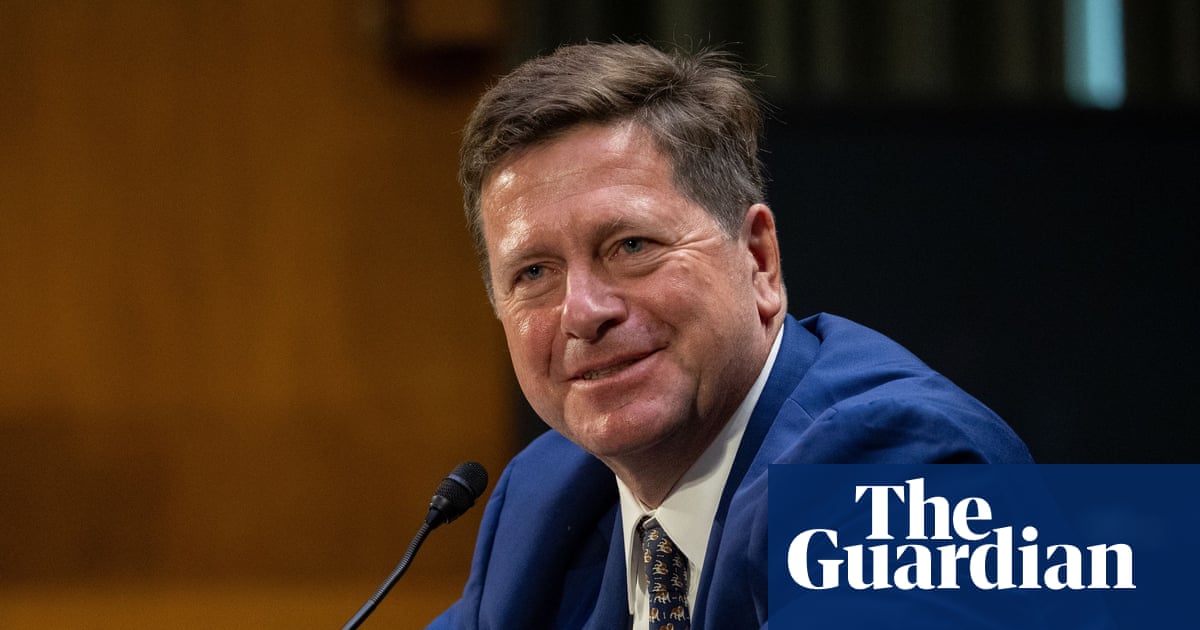
The US Senate confirmed Jay Clayton as the director of national intelligence on Tuesday, in a party-line vote of 51-47. All Republicans supported the nomination of the Trump ally, while all Democrats opposed it.
President Donald Trump must formally approve the appointment before Clayton is sworn in. Following the vote, Trump wrote on Truth Social that Jay is outstanding in every way, and will do a spectacular job as Director!
Clayton, who most recently served as the US attorney for the southern district of New York and previously chaired the Securities and Exchange Commission during Trump's first term, replaces Bill Pulte. Pulte, a loyalist heading the Federal Housing Finance Agency, had served as acting intelligence chief since June. Pulte had no previous intelligence experience and oversaw several rounds of layoffs at the agency.
The leadership transition follows the earlier resignation of Tulsi Gabbard, Trump's first director of national intelligence, who stepped down for family reasons after her husband received a diagnosis of a rare bone cancer. Media reports had indicated that Gabbard and Trump differed regarding the war with Iran.
Controversies and Confirmation
Clayton's path to confirmation was marked by tension over his views on the 2020 election. During his July 15 hearing before the Senate Intelligence Committee, Clayton declined to state that Trump lost the election. He repeatedly asserted that Joe Biden was certified
as the president.
These stances followed a June interview on CNBC in which Clayton suggested a deep problem with voting in America
and questioned the integrity of the process, specifically mentioning the length of time California takes to count ballots. He also refused to say during his hearing if voter fraud was a problem, despite studies showing it is exceedingly rare.
Senator Ron Wyden, a Democrat from Oregon, opposed the nomination, warning that Clayton was unqualified and would serve as the president's election conspiracy win
.
Clayton also faced scrutiny for his office's issuance of subpoenas to New York Times journalists concerning reporting on security for Trump's Air Force One airplane, which was a gift from Qatar. Those subpoenas were abruptly withdrawn during a court hearing after a federal judge questioned an attorney from Clayton's office about irregularities and errors.
Impact on Intelligence Authorities
The confirmation may influence the status of Section 702 of the Foreign Intelligence Surveillance Act, a warrantless spy tool that lapsed more than six weeks ago. Democrats had walked away from a bipartisan deal to reauthorize the authority after Trump appointed Pulte as acting chief.
Senate Majority Leader John Thune, a Republican from South Dakota, stated on Monday that he hoped the confirmation would encourage my colleagues to stop blocking reauthorization of the Foreign Intelligence Surveillance Act
.
Senator Mark Warner of Virginia, the top Democrat on the Senate Intelligence Committee, said he initially felt encouraged by the nomination but developed serious reservations
during the confirmation process about whether Clayton would resist political pressure. Warner stated that Clayton now has the responsibility to show that intelligence will never be shaped to fit a political narrative
.
Despite the vote, the spy statute is expected to remain lapsed for some time. The House is currently on a five-week recess and is not scheduled to return to Washington until August 31. The Senate is expected to be away until September 14.