Supreme Court rejects Trump order to restrict birthright citizenship
Supreme Court rejects Trump order to restrict birthright citizenship
- Headline Dispatch: Supreme Court rejects Trump order to restrict birthright citizenship
- Core Takeaway: Supreme Court rejects Trump order to restrict birthright citizenship
- Source Synthesis: Continuous live monitoring aggregated across major news wires and independent bureaus.
Supreme Court rejects Trump order to restrict birthright citizenship
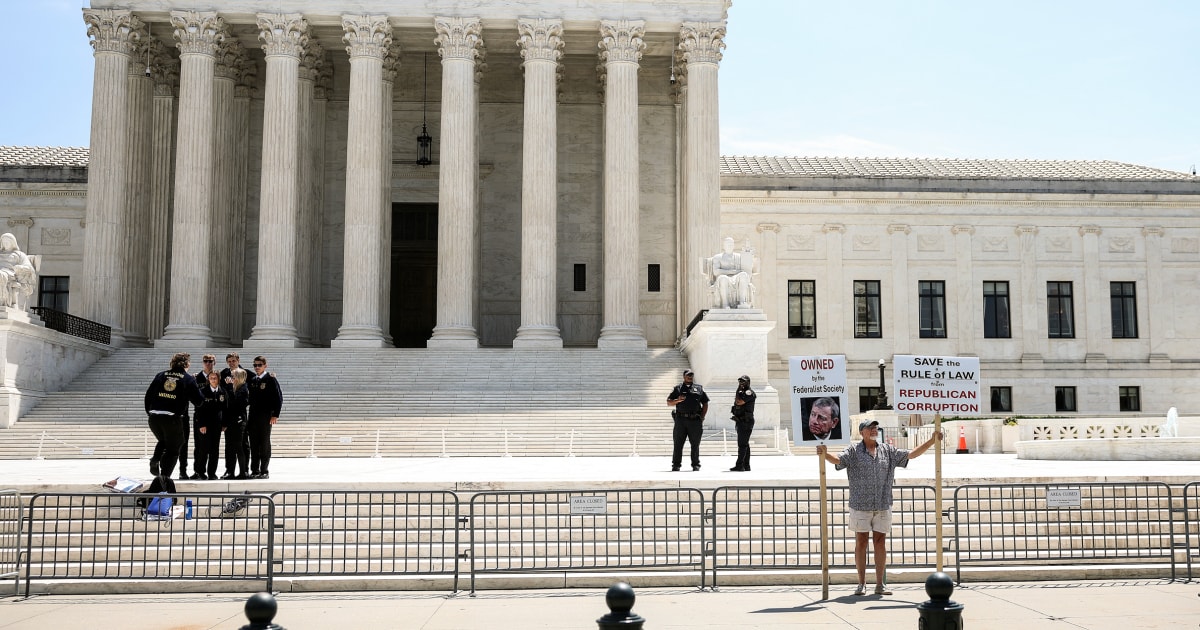
A divided Supreme Court on Tuesday, June 29, 2026, struck down an executive order by President Donald Trump that sought to deny American citizenship to children born in the United States to mothers who are in the country temporarily or illegally.
In a 6-3 vote, the court upheld a broad interpretation of the 14th Amendment. Writing for the majority, Chief Justice John Roberts stated that the long-settled understanding of the amendment makes a citizen of anyone born in the country, with very limited exceptions.
"Citizenship, then and now, was the right to have rights—to freely participate in our political community. The Framers of the Fourteenth Amendment extended that promise to ‘every free-born person in this land,’"
Chief Justice John Roberts, via AP
The ruling follows a legal battle that began when Trump signed the order on the first day of his second term. The order was part of a wider immigration crackdown and was challenged by several lower courts. Lower courts had previously blocked the restrictions, citing the 1898 Wong Kim Ark case, which established that the U.S.-born child of Chinese nationals is a citizen.
While the court ruled against the president, the majority was not unanimous in its reasoning. A bare majority of five justices, including Roberts, Justice Amy Coney Barrett, and the three liberal justices, ruled on constitutional grounds. Justice Brett Kavanaugh joined the majority but disagreed with the constitutional ruling, instead pointing to a federal law that he said broadly conveys birthright citizenship.
Three justices—Samuel Alito, Neil Gorsuch, and Clarence Thomas—would have upheld the restrictions. In a 91-page dissent, Justice Thomas argued that the court took an extraordinary step
by declaring the order facially unconstitutional, claiming the 14th Amendment has been repurposed for political projects
not supported by the Reconstruction Congress.
The Trump administration had argued that children of noncitizens are not subject to the jurisdiction
of the United States and therefore are not entitled to citizenship. Research indicated that more than one-quarter of a million babies born in the U.S. Annually would have been affected. The order would have applied not only to undocumented immigrants but also to legal residents, including students and green card applicants.
President Trump reacted to the decision on Truth Social, calling the ruling too bad for our Country
and asserting that Congress could address the issue through legislation.
But the majority decision was based on constitutional grounds. Overcoming such a ruling would require a constitutional amendment, necessitating a two-thirds majority vote in both the House and Senate, or a constitutional convention called for by two-thirds of state legislatures.
Advocates for immigrant rights celebrated the decision. Angelica Salas, executive director of the Coalition for Humane Immigrant Rights of Los Angeles, said the ruling confirms that the Constitution is above the president. Roman Palomares, national president of the League of United Latin American Citizens, said the decision confirms that a child born on this soil is a citizen of this nation.
The ruling is the latest legal setback for Trump's administration at the high court. In February, the justices struck down global reciprocal tariffs Trump had imposed using an emergency powers law.
How significant is this development?
Participate in our community survey on the trajectory and real-world impact of this news.