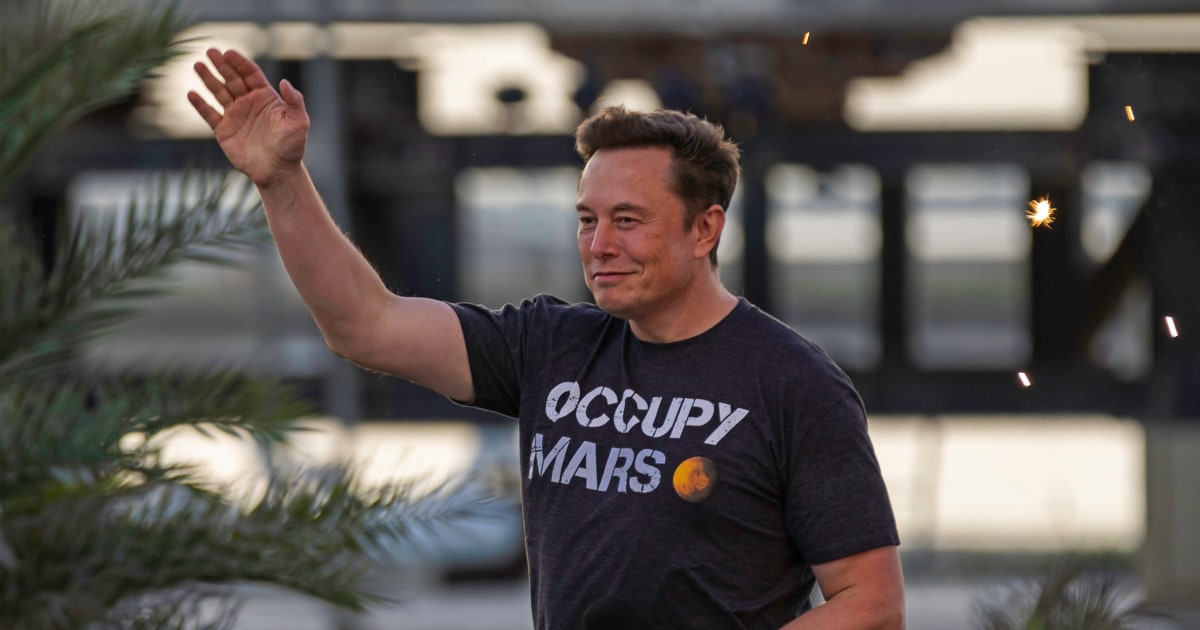
Elon Musk’s SpaceX has locked in a $135-per-share IPO price targeting a $75 billion raise and a $1.77 trillion valuation, making it the largest public offering in history and positioning Musk to become the world’s first trillionaire if the stock debuts next week. But analysts warn the company’s financials are opaque, its profitability is unproven, and its valuation may be inflated by hype over AI and space ambitions.
Why SpaceX’s IPO Price Is a Gamble on Hype Over Fundamentals
SpaceX’s decision to fix its IPO price at $135 per share—skipping the traditional price-range approach—reflects both confidence and risk. Unlike most tech IPOs, which propose a range (e.g., $120–$135) and finalize a day before trading, SpaceX’s filing offered only the fixed $135 price, a move that underscores Musk’s outsized influence and the company’s reliance on brand power over investor due diligence. The $1.77 trillion valuation would make SpaceX the seventh-largest public company globally, surpassing even Apple’s peak market cap, but analysts like Dan Coatsworth of AJ Bell question whether the market will reward its untested AI and space ventures.
Musk’s control remains absolute: he will retain 82.4% of voting power after the IPO, a structure that mirrors Tesla’s governance and raises questions about long-term investor alignment. The $75 billion raise—if fully subscribed—would fund SpaceX’s expansion into AI (via its recent acquisition of xAI) and its Starlink satellite network, but the company’s latest quarterly loss of $4.28 billion (up from $4.94 billion in 2025) signals that profitability is not imminent. Starlink, the only profitable segment, generated $3.26 billion in revenue (69% of total), while its space and AI divisions posted losses of $619 million and $2.5 billion, respectively.
“We think the company has been significantly overvalued and investors will have opportunities to buy the stock at more attractive levels after the IPO.”
Morningstar’s $780 billion discounted cash flow valuation—nearly 48% below SpaceX’s private valuation of $1.5 trillion—highlights the disconnect between hype and reality. The firm flags xAI as a “material threat of value destruction,” citing its indeterminate economic moat and “novel and untested” technologies. SpaceX’s S-1 filing admits it may never turn a profit, warning of “significant capital expenditures over years” before AI products could break even. Yet, the company’s path to the Nasdaq 100 Index just 15 days post-IPO—thanks to lobbying efforts—could artificially prop up its stock price, at least initially.
Musk’s Trillion-Dollar Playbook: How SpaceX’s IPO Stacks Up to Tesla
This isn’t Musk’s first trillion-dollar gambit. Tesla’s 2020 IPO valued the company at $54 billion; today, it’s worth $1.6 trillion. SpaceX’s $1.77 trillion valuation would make it his second, but the parallels end there. Tesla’s revenue model (electric vehicles, energy storage) is mature and cash-flow-positive. SpaceX’s bets—Starlink’s dominance in satellite internet, Starship’s reusable rockets, and xAI’s AI ambitions—are still in development. The company’s $4.28 billion quarterly loss dwarfs Tesla’s 2020 IPO-year loss of $862 million, and its net losses since inception (per its S-1) suggest it’s burning cash faster than it can generate returns.
One wild card: retail investors. SpaceX plans to offer shares directly through platforms like Robinhood and Fidelity, a move that could drive speculative demand. But Morningstar cautions that the IPO’s small initial float (just 18% of shares being sold) means most of the stock will remain locked up—limiting liquidity and potential upside. The firm predicts the stock may “ascend, at least for a time,” thanks to AI infrastructure hype and Nasdaq inclusion, but warns of a material threat of value destruction if xAI’s losses mount.
The $75 Billion Question: What SpaceX Will Do with the Cash
SpaceX’s $75 billion war chest will fund three core areas: AI (xAI), space (Starship/Starlink), and defense contracts. But the timing is risky. Starlink’s revenue growth is slowing, and Starship’s first orbital test flight in 2025 ended in a rapid unscheduled disassembly (RUD)—a term Musk himself used. Meanwhile, xAI’s AI models, while cutting-edge, lack a clear path to profitability. The company’s S-1 filing admits it will need “significant capital expenditures over years” before AI products could turn a profit, if ever.
- Starlink: Already profitable ($3.26B revenue in Q1 2026), but growth may plateau as global satellite internet adoption matures.
- Starship: Critical for NASA contracts and Mars missions, but development costs are ballooning. The 2025 test failure set back timelines.
- xAI: Musk’s AI play, but its losses ($2.5B in Q1) and unproven revenue model raise red flags. Morningstar calls its economic moat “indeterminate.”
- Defense: SpaceX’s military contracts (e.g., GPS satellites) are stable but low-margin compared to AI or space ambitions.
The real question: Will the IPO proceeds accelerate growth or deepen losses? SpaceX’s $1.77 trillion valuation assumes its AI and space ventures will scale rapidly—but the company’s history of net losses suggests caution. As Coatsworth notes, “little is known” about SpaceX’s financials due to its private status, and Musk’s 85% voting control means shareholders have little say in how funds are deployed.
What Happens Next: Three Scenarios for SpaceX’s Stock Debut
SpaceX’s Nasdaq debut is expected within two weeks, but the stock’s trajectory hinges on three factors: investor sentiment, regulatory hurdles, and execution risks.

- Scenario 1: The Hype Play
The stock opens at $135 and surges 20–30% on AI and space excitement, boosted by Nasdaq 100 inclusion. Retail investors pile in, but the gains are short-lived as fundamentals lag. - Scenario 2: The Valuation Reality Check
The stock opens flat or down 10% as analysts like Morningstar’s $780B valuation gain traction. xAI’s losses and Starship’s delays weigh on confidence, but Musk’s brand keeps it afloat. - Scenario 3: The Black Swan
A major setback—e.g., a Starship failure, xAI funding freeze, or regulatory crackdown—triggers a sell-off. The $1.77T valuation becomes a meme, and SpaceX’s IPO joins the ranks of overhyped tech flops.
One certainty: Musk’s influence will dominate. His 82.4% voting control means he can pivot strategy without shareholder approval. But if the IPO underperforms, pressure may mount to prove SpaceX’s AI and space bets can deliver—something its loss history suggests is far from guaranteed.
The Bigger Picture: What a SpaceX IPO Means for Tech and Space
SpaceX’s IPO isn’t just about Musk or rockets—it’s a test of whether unproven, loss-making ventures can command trillion-dollar valuations in an era of AI mania. If successful, it could embolden other private companies (e.g., Neuralink, The Boring Company) to follow suit. If it falters, it may signal the end of the “build it first, ask questions later” era in tech.
For investors, the message is clear: SpaceX’s valuation is a bet on Elon Musk’s vision, not its balance sheet. The company’s S-1 filing admits it “may not achieve profitability in the future”, and its $4.28 billion loss in the latest quarter underscores that risk. Yet, the IPO’s retail accessibility—thanks to platforms like Robinhood—could turn it into a speculative frenzy, much like GameStop in 2021.
“With a small initial float boosted by almost every investment bank on the planet, buoyant investor appetite for AI infrastructure bids, and an unprecedented path to inclusion in the Nasdaq 100 Index just 15 trading days after the IPO, we expect SpaceX’s share price will likely survive separation and may even ascend, at least for a time.”
The real question isn’t whether SpaceX’s IPO will succeed—it’s whether the market will care about fundamentals when the brand is Musk. If history is any guide, the answer may lie in how quickly the hype outpaces the reality.
- June 17, 2026: Expected Nasdaq debut (within two weeks of filing).
- July 2, 2026: Deadline for Nasdaq 100 inclusion (15 days post-IPO).
- Q3 2026: Next earnings report—critical for gauging Starlink/AI progress.
