Ancient rocks suggest water has shaped earth for 3.1 billion years
Analysis of ancient volcanic rocks in Western Australia suggests a primitive water-recycling process called 'dripduction' was active long before plate tectonics.
- Headline Dispatch: Ancient rocks suggest water has shaped earth for 3.1 billion years
- Core Takeaway: Analysis of ancient volcanic rocks in Western Australia suggests a primitive water-recycling process called 'dripduction' was active long before plate tectonics.
- Source Synthesis: Continuous live monitoring aggregated across major news wires and independent bureaus.
Ancient rocks suggest water has shaped earth for 3.1 billion years
Geologists studying some of the planet's oldest volcanic rocks have uncovered evidence that surface water was traveling deep into Earth's interior more than 3.1 billion years ago. The findings, published in Nature Communications, suggest the young planet was already utilizing a version of the water-recycling processes that drive volcanic activity and shape continents today, despite vastly different environmental conditions.
The research was led by scientists from Adelaide University, Monash University, and the Geological Survey of Western Australia, with contributions from Curtin University, the Australian National University, Cardiff University, and the GEOMAR Helmholtz Centre for Ocean Research in Germany. The team analyzed chemical fingerprints within rocks from the Pilbara Craton in Western Australia, specifically the Whundo Group. These rocks, formed between 3.6 billion and 2.8 billion years ago, are among the oldest on Earth and were produced before the presence of oxygen in the atmosphere or the emergence of life.
The Mystery of the Early Water Cycle
Modern Earth maintains a "deep water cycle" through plate tectonics. In this process, ocean water is carried into the mantle at subduction zones, where one tectonic plate slides beneath another. This water lowers the melting point of the mantle—similar to how salt melts ice—generating the magmas that feed powerful volcanoes, such as those in the Pacific's Ring of Fire.
However, the early Earth was significantly hotter, rendering the crust too soft for rigid plates to behave in this manner. This created a geological puzzle: how could water reach the mantle if plate tectonics were not yet operational?
"The early Earth was too hot for plates to behave that way [pulling water down to the mantle],"
Dr. Eric Vandenburg, geochemist at Adelaide University, via statement
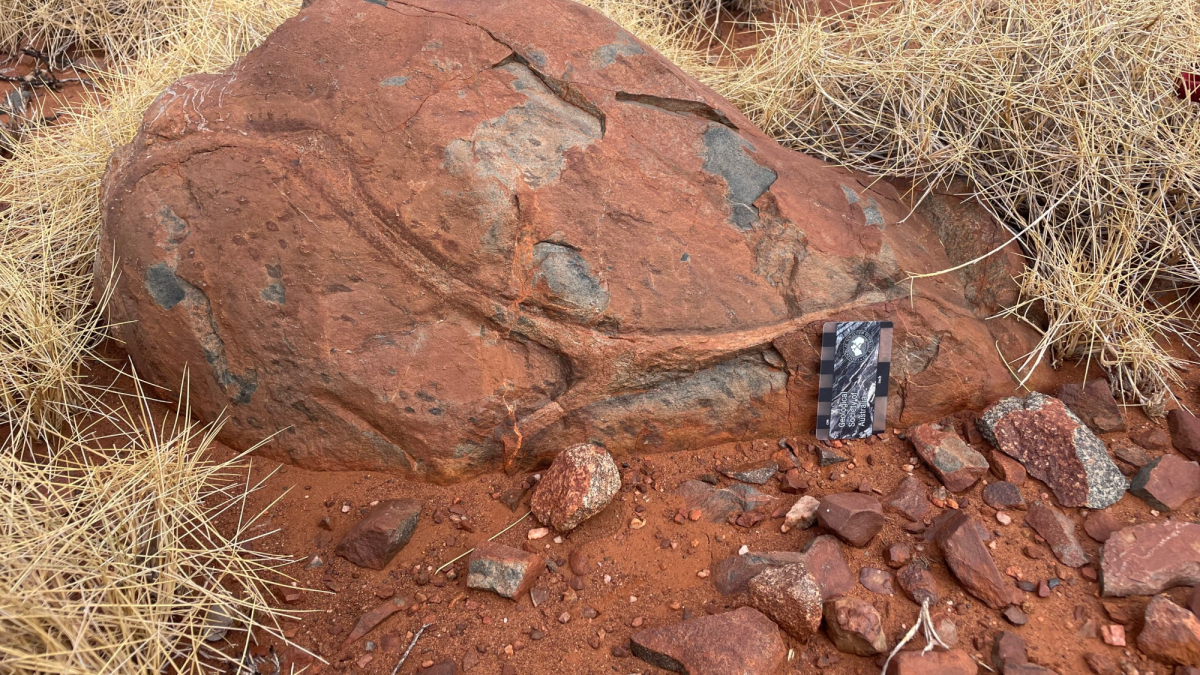
To answer this, the team examined 3.1 billion-year-old lavas from the Whundo Group. Unlike most surviving crust from Earth's first 2 billion years, which is thick and granite-rich, the Whundo lavas sit on a rare, thin crust. The researchers identified the oldest widespread example of boninite, a rare, water-rich lava that today almost exclusively erupts at subduction zones. Geochemical modeling revealed that the mantle beneath this region of ancient Australia held approximately as much water 3.1 billion years ago as the mantle beneath modern arc volcanoes.
Introducing 'Dripduction'
Because traditional subduction was mechanically challenging in the hotter Archean eon, the researchers propose a different mechanism called dripduction
.
In this process, dense, water-rich sections of the cool outer crust sporadically sagged and collapsed into the hotter mantle below in short, local bursts. This acted as an improvised, part-time version of subduction. As these crustal pieces descended, they released water into the mantle, creating the steam and magma that fueled volcanic eruptions. These eruptions eventually solidified into the rocks currently being studied in the Pilbara.
While the Earth was not operating exactly as it does now, Dr. Vandenburg noted that some key processes were already in place. The discovery indicates that the interior and surface were connected much earlier than previously recognized.
Wider Implications for Continental Growth and Life
Understanding the movement of deep underground water is critical because it influences continental growth and the production of chemical elements necessary for life. Other research published in Nature’s Communications Earth and Environment Journal further connects water to the building blocks of landmasses. Studying 1.6-billion-year-old rocks from the Georgetown Inlier in northeast Queensland, researcher Silvia Volante found that water from both volcanic rocks and deep within the mantle fueled a chain reaction of melting at temperatures between 700 and 750°C, helping form the continental crust.
Next Steps
Geologists now plan to hunt for other fragments of pristine early crust to see if the same chemical fingerprints of dripduction exist.
How significant is this development?
Participate in our community survey on the trajectory and real-world impact of this news.