Durham University astronomers find earliest evidence of nuclear discs
Durham University astronomers find earliest evidence of nuclear discs
- Headline Dispatch: Durham University astronomers find earliest evidence of nuclear discs
- Core Takeaway: Durham University astronomers find earliest evidence of nuclear discs
- Source Synthesis: Continuous live monitoring aggregated across major news wires and independent bureaus.
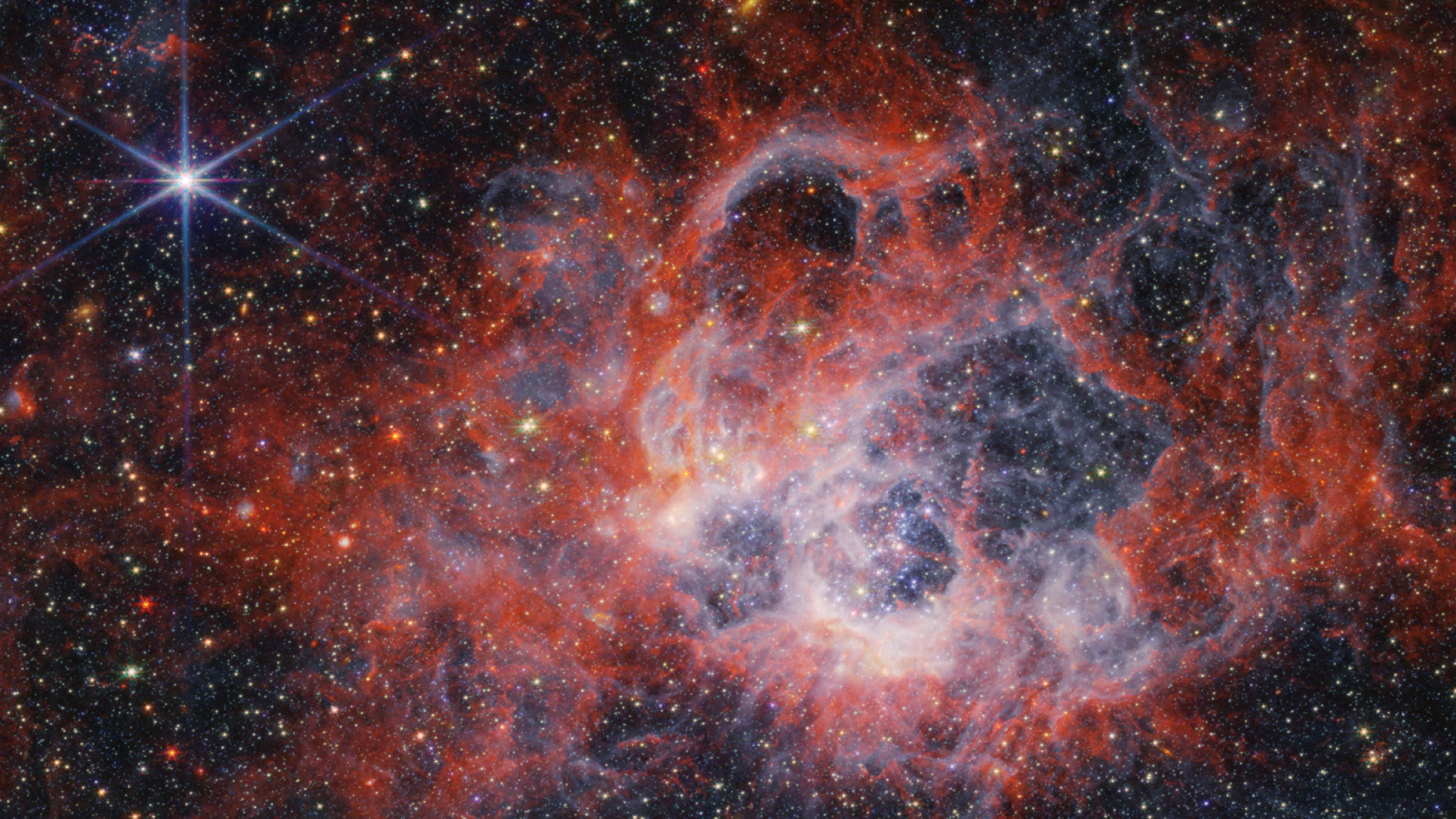
Durham University astronomers find earliest evidence of nuclear discs
A team of astronomers at Durham University has made a novel discovery, uncovering the earliest known signs of galaxy-building in action. Using data from the James Webb Space Telescope, the researchers have identified a compact, star-forming structure at the heart of a galaxy, dating back more than nine billion years. This finding provides clear evidence of a 'nuclear disc' forming at a time when the Universe was still relatively young.
Nuclear discs are common in nearby, mature galaxies, but until now, they had never been observed so far back in cosmic history. The discovery suggests that galaxies were already developing complex internal structures much earlier than scientists had assumed. The Durham-led team made the discovery using the James Webb Space Telescope's unprecedented sensitivity and sharp vision, which allow astronomers to study distant galaxies in extraordinary detail.
The galaxy they studied is seen as it was just 4.5 billion years after the Big Bang. At its centre, the researchers identified a nuclear disc that is actively forming new stars and is still growing. The nuclear disc appears to have been built by a long, bar-shaped structure of stars stretching across the galaxy. These bars are a familiar feature of many present-day spiral galaxies and act like cosmic engines, driving gas and stars towards the centre and helping new structures to form.
While previous studies had shown that bars themselves can form early, there was no direct proof that they were already reshaping galaxies at this stage in the Universe's history. This research provides that missing evidence. The findings challenge long-standing ideas about galaxy evolution and point to a much more active and structured early Universe.
In related research, astronomers have discovered over a dozen "dormant" galaxies that paused their star formation within the first billion years after the Big Bang. The discovery, made with data from the James Webb Space Telescope, illuminates a fascinating phase in the lives of early galaxies and could provide more clues about how galaxies evolve. These galaxies may remain dormant indefinitely or become "quenched" due to various reasons, including the presence of supermassive black holes at their centers or stellar feedback.
Another study has revealed the most chemically primitive galaxy yet, LAP1-B, which dates back to just 800 million years after the universe began. The galaxy's metal concentration is roughly 1/240th the concentration found in our sun, making it a record low and a telltale sign that it came from the early universe. The researchers suggest that LAP1-B confirms two long-standing predictions in astronomy, including the existence of Population III stars and ultra-faint dwarf galaxies.
Meanwhile, NASA's James Webb Space Telescope has detected and "weighed" a galaxy that not only existed around 600 million years after the big bang but is also similar to what our Milky Way galaxy's mass might have been at the same stage of development. The galaxy, nicknamed the Firefly Sparkle, is gleaming with star clusters and is still forming. The researchers were able to image the galaxy in crisp detail due to a natural effect known as gravitational lensing, which enhanced the distant galaxy's appearance.
How significant is this development?
Participate in our community survey on the trajectory and real-world impact of this news.