NASA rescue mission to prevent Swift telescope from falling back to Earth
A private robotic mission will attempt to grapple and tow the Neil Gehrels Swift Observatory back to a stable orbit to prevent an uncontrolled reentry.
- Headline Dispatch: NASA rescue mission to prevent Swift telescope from falling back to Earth
- Core Takeaway: A private robotic mission will attempt to grapple and tow the Neil Gehrels Swift Observatory back to a stable orbit to prevent an uncontrolled reentry.
- Source Synthesis: Continuous live monitoring aggregated across major news wires and independent bureaus.
NASA rescue mission to prevent Swift telescope from falling back to Earth
NASA has commissioned a robotic rescue mission to save the Neil Gehrels Swift Observatory from an uncontrolled reentry into Earth's atmosphere. A private spacecraft, developed by Arizona-based Katalyst Space Technologies, is scheduled to launch early Tuesday, June 30, to grapple the aging telescope and tow it back to a stable orbit.
The mission is a race against physics. Launched in November 2004 to study high-energy events and gamma-ray bursts, Swift has seen its altitude drop from 363 miles to roughly 225 miles. This descent has been accelerated by recent solar activity, which expands Earth's upper atmosphere and increases drag on spacecraft in low-earth orbit. NASA analyses indicate a 90% probability of uncontrolled reentry by the end of the year, with the point of no return projected for October 2026 at an altitude of about 185 miles.
To slow this "orbital bleed," NASA paused Swift's science operations on February 11, 2026.
The Rescue Operation
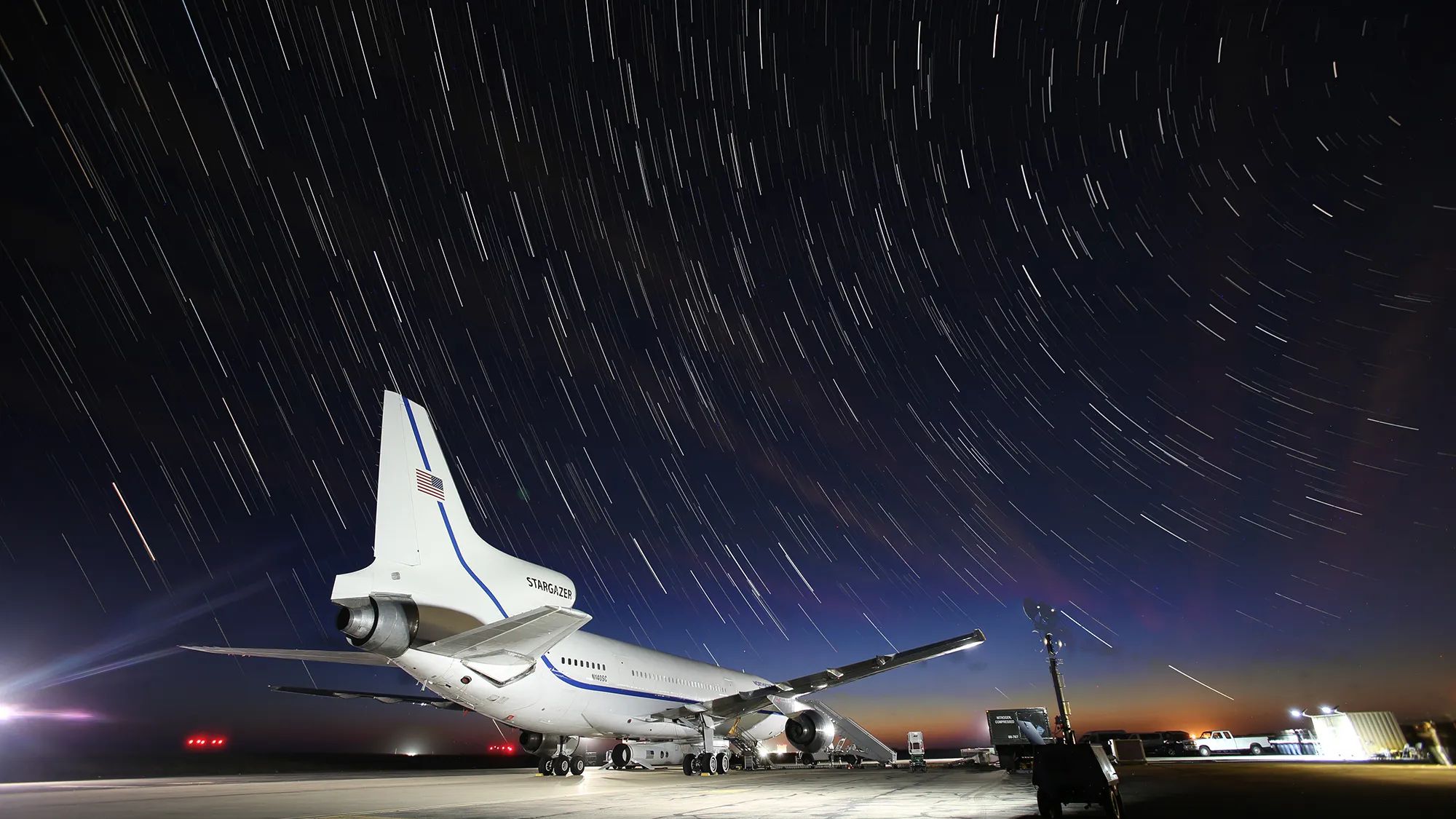
The rescue vehicle, named LINK, will launch via a Northrop Grumman Pegasus XL rocket. The rocket will be released from an L-1011 Stargazer jet at approximately 39,000 feet (12,000 meters) while traveling at Mach 0.82. Liftoff is scheduled for 6:23 a.m. EDT (1023 GMT) from Bucholz Army Airfield at Kwajalein Atoll in the Marshall Islands.
NASA selected the Pegasus rocket because of its ability to reach the specific 20.6-degree inclination of Swift's orbit and the urgency of the timeline. The Pegasus XL, a 55-foot (16.9 meters) solid rocket-propelled vehicle, is making its final flight after 45 missions since its debut in 1990.
Once in orbit, LINK — which weighs about 425 kilograms and stands roughly 4.9 feet (1.5 m) tall — will begin a rendezvous with the 12.7-foot (3.9 m) observatory. The process will be complex because Swift was not designed to be serviced and lacks docking ports or grappling fixtures. LINK will spend two to three weeks observing Swift to determine optimal grapple points before using its three robotic arms to secure the telescope.
After securing the observatory, LINK will utilize ion thrusters to gradually raise the pair's orbit over several months. The objective is to return Swift to its original altitude of about 373 miles (600 km). If successful, this push is expected to take four to six weeks, potentially allowing science operations to resume by fall 2026 and extending the telescope's life by five to ten years.
A New Model for Orbital Maintenance
The $30 million mission represents a significant shift in how NASA manages aging space hardware. Katalyst Space Technologies was selected in September 2025 and completed the design, manufacture, and testing of LINK by May 2026.
"While NASA could have allowed Swift to re-enter the atmosphere, the situation presented an opportunity to demonstrate a key capability for the future of space exploration. This daring approach also extends Swift’s scientific lifetime and is more affordable than replacing the observatory’s unique capabilities,"
NASA, via Swift Boost mission page
The mission marks the first time a private American spacecraft will attempt to capture an uncooperative U.S. Government satellite. No one thought it was going to be possible
, stated NASA astrophysics director Shawn Domagal-Goldman via Space.com.
According to science mission chief Nicky Fox, the decision was driven by the fact that the observatory is worth hundreds of millions and there is currently no budget for a successor.
Future Implications
Beyond saving Swift, the mission serves as a proof-of-concept for robotic orbital servicing. Katalyst CEO Ghonhee Lee noted that other senior observatories could benefit from such services. Lee indicated that a next-generation robot currently in development could potentially assist the Hubble Space Telescope in a couple of years. Hubble is also reportedly losing altitude, and discussions regarding a similar robotic boost around 2028 have taken place, though no such mission has been approved.
The outcome of the Swift Boost mission will determine if robotic capture can move from simulations and paper concepts to a standard tool for extending the operational life of expensive orbital infrastructure.
How significant is this development?
Participate in our community survey on the trajectory and real-world impact of this news.