Earth’s biggest volcanic event transformed an entire oceanic plate
New seismic research reveals that the world's largest volcanic outpouring didn't just create a plateau, but fundamentally reprocessed the oceanic plate beneath it.
- Headline Dispatch: Earth’s biggest volcanic event transformed an entire oceanic plate
- Core Takeaway: New seismic research reveals that the world's largest volcanic outpouring didn't just create a plateau, but fundamentally reprocessed the oceanic plate beneath it.
- Source Synthesis: Continuous live monitoring aggregated across major news wires and independent bureaus.
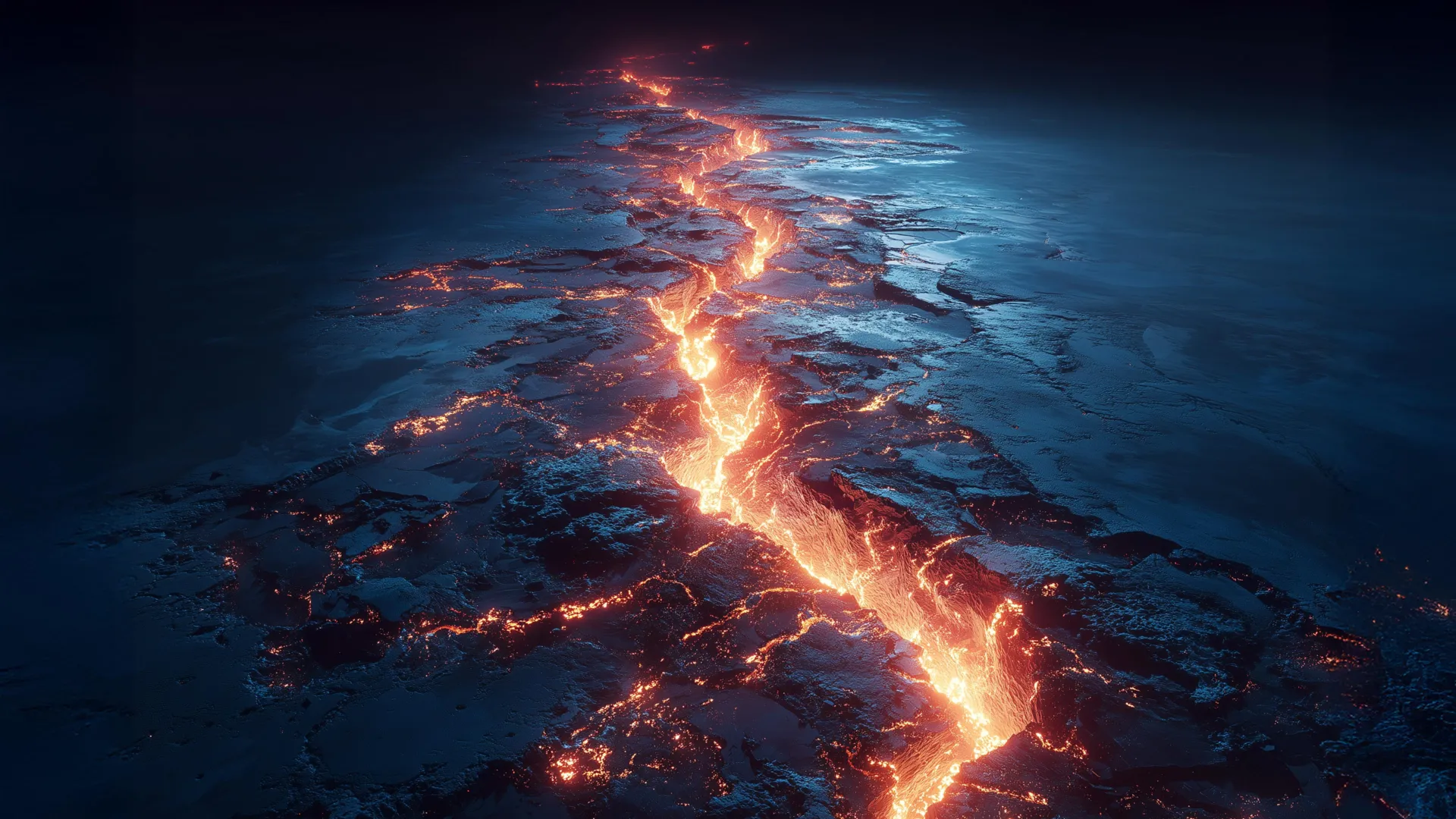
Earth’s biggest volcanic event transformed an entire oceanic plate
The most colossal volcanic episode in the history of the planet did more than create a massive underwater plateau; it fundamentally reshaped the physical and chemical nature of the oceanic plate beneath it, according to a study published in Geophysical Research Letters on September 30, 2025.
Researchers discovered that the oceanic plate beneath the Ontong Java Plateau (OJP) in the western Pacific Ocean possesses a composite internal structure. This structure consists of horizontal layers intersected by networks of vertical magma intrusions known as dike swarms. These dikes formed when molten rock forced its way through cracks and subsequently solidified.
The findings were produced by a research team led by Lecturer Azusa Shito of Okayama University of Science, who worked alongside Professor Masako Yoshikawa of Hiroshima University and Associate Professor Akira Ishikawa of the Institute of Science Tokyo.
The Anatomy of a Volcanic Cataclysm
The Ontong Java Plateau is the world's largest oceanic plateau. It formed approximately 110-120 million years ago during a period of extraordinary submarine volcanism. This event is considered the largest volcanic outpouring known in Earth's history, with eruptions so immense that scientists believe they disrupted the global environment and may have contributed to mass extinctions by altering climate, ocean chemistry, and available oxygen in seawater.
While scientists previously suspected that a thermochemical plume — a column of hot material from deep within the mantle that may carry recycled ancient oceanic crust — drove the volcanism, it was not fully understood how that magma affected the existing plate above it. The new research reveals that the magma did not simply pass through the plate but penetrated it, creating a broad underground network of pathways.
Seismic Clues to Deep Modification
To map the deep structure, the team analyzed high-frequency seismic signals called Po and So waves. These were recorded using instruments installed on nearby oceanic islands and ocean-bottom seismometers positioned around the plateau.
In typical oceanic plates, Po and So waves form when P and S waves scatter repeatedly through layered structures, allowing them to travel several thousand kilometers. However, the signals near the OJP behaved unusually: Po waves moved through the region efficiently, but So waves weakened dramatically. This disparity led the researchers to use seismic waveform modeling to reconstruct the plate's interior, revealing the combination of horizontal lamination and vertical dike swarms.
The team also detected a significant drop in seismic wave speeds. Both Po and So waves travel about 17% slower beneath the plateau than they do in standard oceanic crust.
Chemical Refertilization
The researchers concluded that the slow wave speeds could not be explained by physical structure alone. Instead, they propose that the plate underwent a process called refertilization.
The mantle is primarily composed of peridotite, which loses certain chemical components during partial melting. Refertilization occurs when new magma restores these components to the depleted rock, changing its physical properties and mineral content. The study suggests that magma from the thermochemical plume reacted with the surrounding mantle rock, chemically modifying the plate as it rose.
This dual process of physical intrusion and chemical transformation challenges the view of oceanic plates as static layers. It suggests a more dynamic model where plates are reprocessed by deep-Earth events, allowing material from the deep mantle to be stored within the lithosphere for hundreds of millions of years.
Scientists expect this framework of physicochemical modification to improve the understanding of how other large volcanic provinces and oceanic plateaus evolve over geological timescales.
How significant is this development?
Participate in our community survey on the trajectory and real-world impact of this news.