13,000 tonnes of space junk clutters Earth orbit. Here’s how it could be cleaned up
With debris from satellites and rockets increasing rapidly, engineers are developing nets, lasers, and sustainable materials to clean up the orbital environment.
- Headline Dispatch: 13,000 tonnes of space junk clutters Earth orbit. Here’s how it could be cleaned up
- Core Takeaway: With debris from satellites and rockets increasing rapidly, engineers are developing nets, lasers, and sustainable materials to clean up the orbital environment.
- Source Synthesis: Continuous live monitoring aggregated across major news wires and independent bureaus.
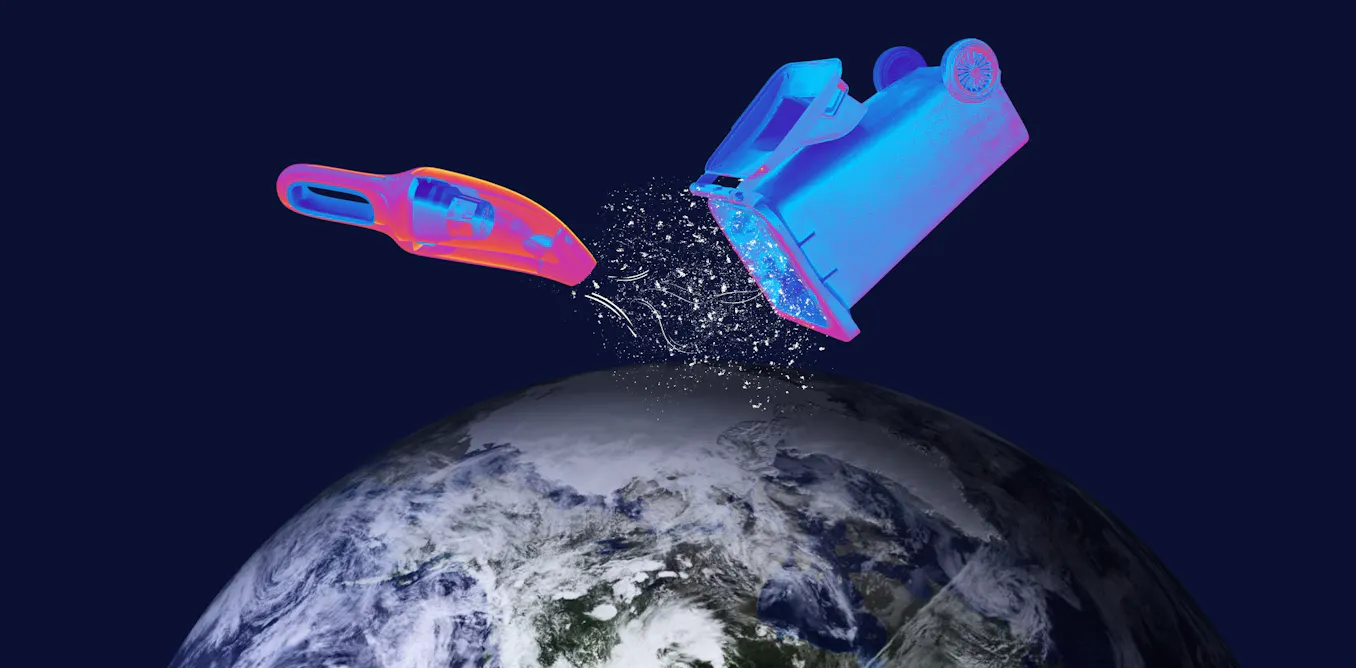
13,000 tonnes of space junk clutters Earth orbit. Here’s how it could be cleaned up
Earth is currently surrounded by an estimated 13,486 tonnes of space junk, a mass comparable to 13 million adult cane toads. This debris, which includes everything from discarded rocket bodies and defunct satellites to nanoparticle fragments, now constitutes nearly half of all tracked objects in orbit.
According to a report from the engineering supply company Accu, which used data from the U.S. Space Force’s Space-Track.org, there are 33,269 trackable objects in orbit. Of these, 17,682 are satellites, while 15,587 are discarded debris. This junk is further categorized as 2,396 discarded rocket bodies, 12,550 expended launch components, and 641 unclassified objects.
The problem has intensified over the last decade as launch costs dropped and flight frequency increased. The number of trackable objects rose by approximately 10,000 between 2020 and 2025. This acceleration coincides with the rise of the private space industry starting in 2015 and the deployment of megaconstellations. Elon Musk’s SpaceX currently owns about 10,000 of the more than 15,000 satellites orbiting Earth, with plans to launch one million more satellites—each roughly 70 metres long and 20 metres wide—to form a data centre megaconstellation.
A Growing Orbital Threat
Space junk is hazardous due to the speeds at which it travels. In low Earth orbit, debris moves at an average of 7 kilometres per second, or nearly 20,000 mph. At such velocities, even a tiny mote can cause significant damage. A piece of junk just 1 cm across can knock a spacecraft out of commission, and a 10 cm piece can blast a satellite to pieces.
The danger to human spaceflight is already evident. The International Space Station (ISS) must manoeuvre to avoid collisions at least once a year. In 2016, a fleck of paint or metal a fraction of a millimeter across left a 7mm-long gouge in an ISS window. In 2021, the ISS crew retreated to a secure location when the station passed close to a cloud of Russian junk, and in 2024, astronauts took shelter after a decommissioned Russian satellite fragmented.
The risk extended to the Tiangong space station in 2025, where several Chinese taikonauts became stranded after a suspected piece of junk cracked the window of their return capsule.
Engineers warn of the Kessler Syndrome
, a worst-case scenario where collisions create a cascade of new debris, potentially making regions of orbit unusable and cutting Earth off from space.
The Primary Contributors
While the debris is a global issue, its origins are concentrated. The United States, Russia (including the former USSR), and China are the biggest contributors. The Accu report estimates that these three actors account for 96% of trackable junk. China is responsible for 34%, while the U.S. And the Commonwealth of Independent States (CIS) each account for 31%.
Accu further notes that while the U.S. And CIS historically left more junk, much of it burned up in the atmosphere, whereas China’s debris has remained in orbit.
Strategies for Cleanup and Prevention
Efforts to manage the crisis are unfolding across technology, policy, and philosophy.
- Active Debris Removal: Technologies under development include nets, magnets, tethers, sails, slingshots, harpoons, and laser
brooms
designed to alter orbits. These tools aim to tip old spacecraft into the atmosphere or push them intograveyard
orbits. There is currently a hit list of the 50 most dangerous spacecraft, primarily abandoned rocket bodies. - Sustainable Design: Japan is testing wood as a spacecraft material. Other proposals include refuelling spacecraft to extend their lives or using more durable or disposable materials. A paper in Chem Circularity published December 1 suggests a
circular space economy
based on the 3 Rs: reduce, reuse, and recycle. This would involve modular spacecraft that can be upgraded in orbit and the use of space stations as multifunctional centers for repair and refuelling. - Policy Shifts: The standard for how long spacecraft can remain in original mission orbits has been reduced from 25 years to five years. The European Space Agency is leading a zero debris policy, and the Inter-Agency Debris Co-ordination Committee provides mitigation guidelines.
However, the default solution of letting satellites incinerate in the atmosphere is creating its own problem. At least one Starlink satellite burns up daily, releasing soot and alumina particles that may impact the ozone layer.
Proposed "road rules" for orbit, known as space traffic management, aim to coordinate activities and share information to avoid congestion. To date, a globally agreed system does not exist.
A Shift in Perspective
Some argue that the crisis stems from an ideology of competition for prestige and a belief that there are no moral obligations to a lifeless space environment. Philosopher Val Plumwood’s co-participation approach suggests managing space as an interconnected system extending from the ocean floor through the atmosphere to lunar orbits, as the Moon’s surface is also being impacted by junk.
As private companies like Astroscale and ClearSpace join agencies like NASA to deploy countermeasures, the future of space exploration depends on whether sustainability can become the default model for the modern space age.
How significant is this development?
Participate in our community survey on the trajectory and real-world impact of this news.