Surface Laptop Ultra with NVIDIA N1X matches 14-core Apple M3 Max in Cinebench 2026
Early Cinebench 2026 results for the NVIDIA N1X-powered Surface Laptop Ultra show multi-core performance parity with the Apple 14-core M3 Max.
- Headline Dispatch: Surface Laptop Ultra with NVIDIA N1X matches 14-core Apple M3 Max in Cinebench 2026
- Core Takeaway: Early Cinebench 2026 results for the NVIDIA N1X-powered Surface Laptop Ultra show multi-core performance parity with the Apple 14-core M3 Max.
- Source Synthesis: Continuous live monitoring aggregated across major news wires and independent bureaus.
Surface Laptop Ultra with NVIDIA N1X matches 14-core Apple M3 Max in Cinebench 2026
The landscape of portable high-performance computing shifted at Computex 2026, held in June, as early benchmarks for NVIDIA’s long-awaited RTX Spark platform — internally designated as the N1X — began to circulate. An engineering sample of the upcoming Surface Laptop Ultra, featuring the 20-core N1X processor, has recorded 5,771 points in the multi-core test of Cinebench 2026 and 540 points in the single-core test.
These figures, which recently surfaced on the TechPowerUp forums and were shared online, suggest that NVIDIA’s debut Arm-based chip is capable of competing directly with established high-end silicon. Specifically, the N1X multi-core performance aligns closely with Apple’s 14-core M3 Max, which typically reaches 5,722 points in the same evaluation. While the N1X sample trailed the M3 Max by approximately 4% in single-threaded tasks, the parity in multi-core workloads highlights the potential of the new architecture.
Technical observers note that these results were achieved using a non-standard "High Performance" profile that allowed the chip to exceed its default power limits, reportedly drawing nearly 50W during the benchmark. The engineering sample displayed configurable power limits of 80 W PL1 and 95 W PL2. Because the test was conducted on pre-production hardware running Windows 11 26H1, with diagnostic tools misidentifying clock speeds and providing generic hardware labels, analysts caution that the final retail performance may vary.
The RTX Spark Platform
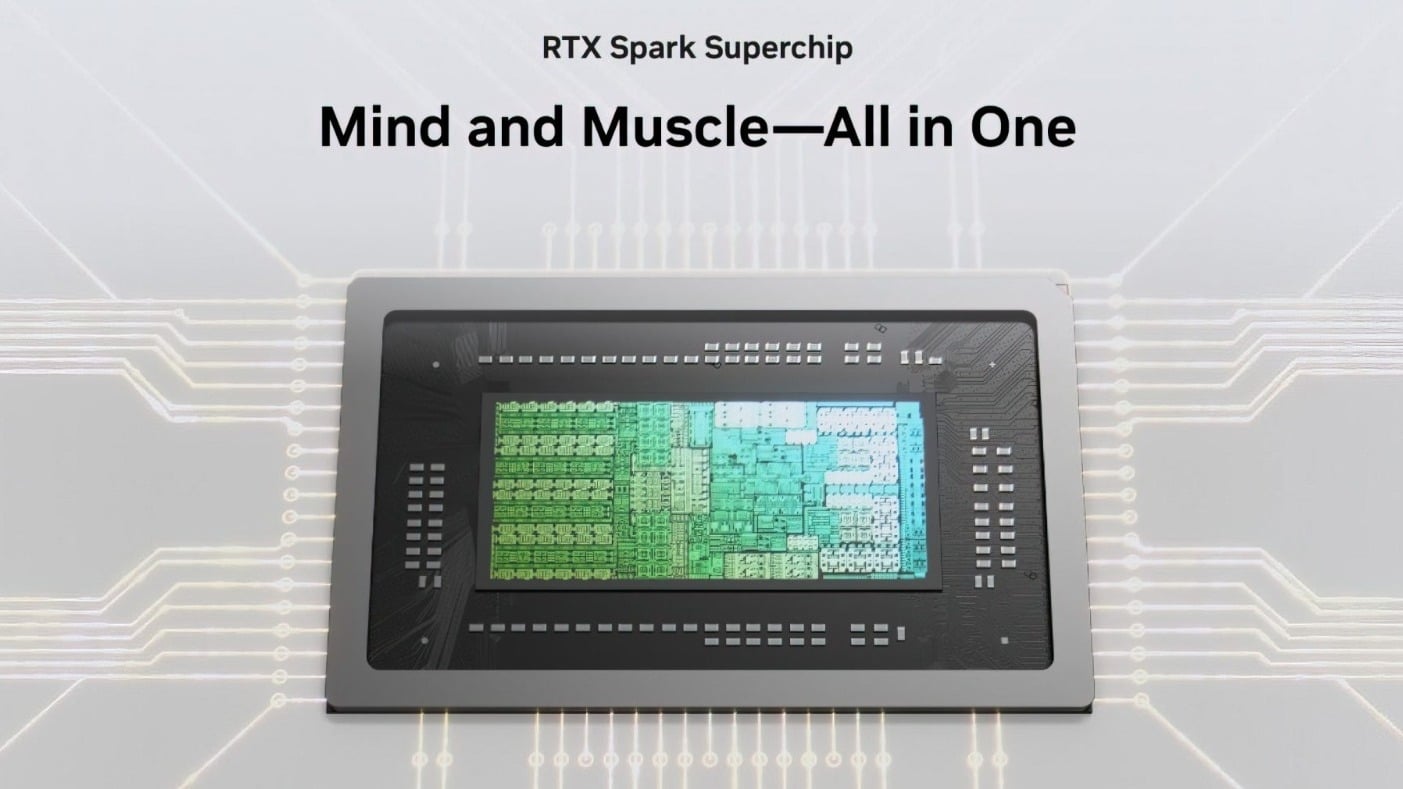
The N1X processor serves as the foundation for Microsoft’s Surface Laptop Ultra, a machine announced at Computex 2026 as a direct challenge to the MacBook Pro. The SoC integrates a 20-core CPU, comprised of ten Cortex-X925 cores and ten Cortex-A725 cores, paired with a Blackwell-based GPU featuring 6,144 CUDA cores. NVIDIA and Microsoft have connected the CPU and GPU via the high-speed NVLink-C2C interconnect, a design that enables up to 128GB of unified memory.
This memory architecture is intended to facilitate advanced creative and AI-driven workflows. According to Microsoft, the system can dynamically allocate resources between the processor and the graphics card to handle 120-billion-parameter AI models locally. The platform also includes fifth-generation Tensor Cores with FP4 precision, providing up to one petaflop of AI compute performance.
Design and Professional Utility
The Surface Laptop Ultra is designed to sustain high-performance output through a dual-fan, dual-heat-pipe cooling system. The chassis, which weighs less than 4.5 lbs, features a 15-inch mini-LED PixelSense Ultra touchscreen. This display supports a 2880 by 1920 resolution and reaches 2,000 nits of peak HDR brightness. In response to professional demands, the device includes a selection of ports: HDMI, USB-C, USB-A, an SD card reader, and a standard headphone jack.
To support the transition to the new architecture, Microsoft has optimized the Windows 11 operating system for the N1X. This includes an updated Prism emulation layer for x86 applications and new security primitives that allow for the containment of local AI agents. Gaming performance is also a focus, with native support for anti-cheat software from Epic and BattlEye, and the inclusion of titles such as League of Legends, Valorant, and PUBG: Battlegrounds.
While the Surface Laptop Ultra represents the flagship integration of the RTX Spark platform, Microsoft confirmed that other hardware partners, including ASUS, Dell, HP, Lenovo, and MSI, are also preparing devices powered by the new NVIDIA silicon. The Surface Laptop Ultra is scheduled to arrive in stores in the fall of 2026, offered in Platinum and Nightfall finishes.
How significant is this development?
Participate in our community survey on the trajectory and real-world impact of this news.