UK Launches Hi-tech Mission To Study Greenland Ice Melt
An international team of scientists is deploying advanced robotics and drones in Greenland to investigate how melting glaciers could trigger a collapse of the AMOC current system.
- Headline Dispatch: UK Launches Hi-tech Mission To Study Greenland Ice Melt
- Core Takeaway: An international team of scientists is deploying advanced robotics and drones in Greenland to investigate how melting glaciers could trigger a collapse of the AMOC current system.
- Source Synthesis: Continuous live monitoring aggregated across major news wires and independent bureaus.
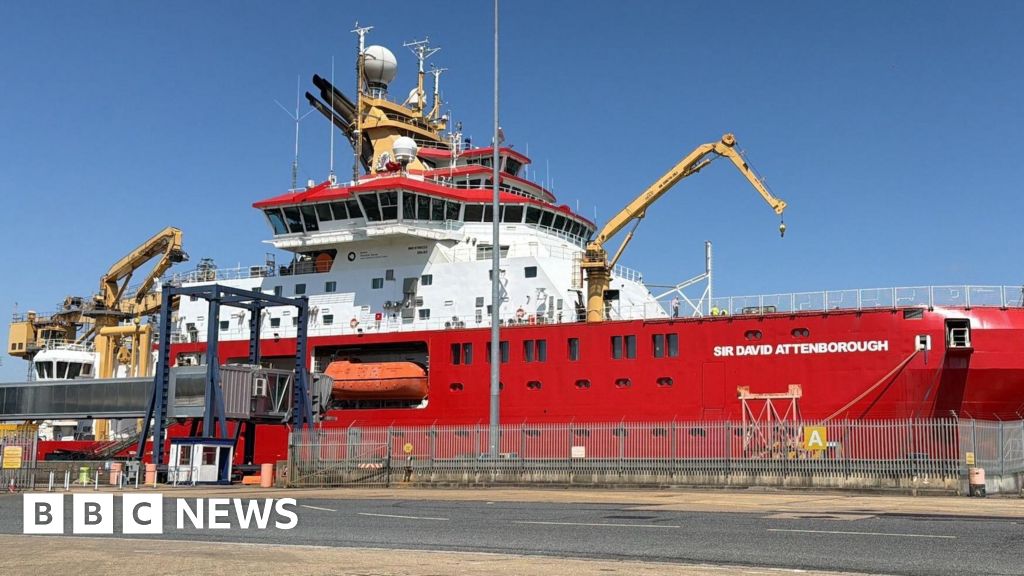
UK Launches Hi-tech Mission To Study Greenland Ice Melt
An international team of approximately 80 scientists and crew set sail from Harwich International Port in Essex on Thursday, July 16, 2026, aboard the RRS Sir David Attenborough. The mission aims to investigate how rapidly melting glaciers in Greenland may be pushing vital Atlantic Ocean current systems toward collapse.
The expedition is part of a £20 million project known as GIANT, or Greenland Ice sheet to AtlaNtic Tipping points. Funded by the British government’s Advanced Research and Invention Agency, the project is led by the British Antarctic Survey. The team will spend five to six weeks in July and August studying tidewater glaciers in the fjords of southeast Greenland, specifically near Kangerlussuaq.
High-Tech Observation in Hazardous Zones
Scientists have historically struggled to study the precise boundary where ice meets ocean water due to the dangerous environment. According to oceanographer Jonathan Nash of Oregon State University, ice cliffs can tower between 30 and 100 meters above the surface, fracturing and launching house-sized icebergs into fjords with little warning.
To overcome these risks, the mission employs an uncrewed squadron of technology. This includes rugged flying drones capable of operating in hostile weather and a helicopter that will drop javelin-like GPS sensors into glacier surfaces to track movement. On the water, a robotic boat will use sonar to track melt-rate changes.
Subsurface exploration involves several specialized robots:
- A submersible named Boaty McBoatface that can dive 1500 meters to map glacier mélange and geometry.
- Autonomous robots capable of diving hundreds of meters to the seabed.
- A slim underwater vehicle, 23 centimeters in diameter, designed to fit through drilled holes to observe the ice sheet from beneath.
- Sensors that screw into ice cliffs 50 to 100 meters below sea level to measure temperature and turbulence in real time.
These tools will allow researchers to observe millimeter-scale phenomena, such as ancient air bubbles released during melting. Nash noted that these bubbles could have considerable
implications for sea-level rise projections.
The Threat to Atlantic Currents
The primary concern for researchers is the Atlantic Meridional Overturning Circulation (AMOC), a conveyor belt system that transports warm tropical waters northward. This system keeps Western Europe milder than regions at similar latitudes, such as Siberia or eastern Canada.
Scientists warn that the influx of freshwater from Greenland's ice sheet acts like adding cold tap water
to a pot of salty soup, as described by earth scientist Kristin Poinar of the University at Buffalo. This disrupts the density difference required for water to sink and drive the circulation. A breakdown of the AMOC could make Europe colder and drier, shift tropical monsoons, and affect global food supplies.
While some scientists suggest a collapse is inevitable, Mark Inall, a British marine physicist, stated that is not currently the consensus view. However, US glaciologist Erin Pettit told AFP that the AMOC is likely slowing down.
Improving Climate Models
The data will feed directly into the UK Earth System Model. According to project leader Kelly Hogan, a marine geophysicist at the British Antarctic Survey, current simulations are known to have inaccuracies. The mission seeks to better represent the Greenland ice sheet in these models to provide decision-relevant predictions
.
Hogan noted that the urgency of the mission is underscored by the fact that the UK and Western Europe experienced the warmest June months on record in 2026, which caused excess deaths and disrupted power supplies. She warned that in the short term—within 10 years—changes in the North Atlantic could result in stormier winters and altered rainfall patterns in the UK, impacting farmers and fish stocks.
The current UK climate model forecasts that the North Atlantic Subpolar Gyre could be disrupted within decades. Hogan stated,
"Our best models at the moment say these changes could happen as early as the 2040s,"
Kelly Hogan, British Antarctic Survey, via Source 1
To expedite the process, Paul Holland of the British Antarctic Survey is on board to work directly with findings, stating there is no time to wait for climate modelling centres to catch up. The team is also using AI algorithms to identify "blind spots" in existing data to determine where to deploy their robots.
Following the current mission in the southeast, the team plans to conduct measurements at the Petermann glacier in northwest Greenland next summer in 2027.
How significant is this development?
Participate in our community survey on the trajectory and real-world impact of this news.