
Texas softball repeated as national champions Thursday, defeating Texas Tech 4–1 in Game 2 of the 2026 Women’s College World Series to claim its second consecutive title. Teagan Kavan, the Longhorns’ junior pitcher, again earned Most Outstanding Player honors after pitching two dominant innings and securing the save.
The victory capped a weekend where the NCAA’s most-watched softball event defied the narrative of a “broken” college athletics system. While senators debated the Protect College Sports Act in Washington, the WCWS delivered record-breaking ratings, sold-out crowds, and a timeless slice of college sports magic—complete with autograph lines, relay races, and concession-stand hamburgers priced at $7.50.
How Texas won it: The final inning that sealed the title
Texas Tech’s NiJaree Canady, the tournament’s top pitcher, dominated through four innings, retiring 11 straight batters before finally yielding a double to Reese Atwood and a hit-by-pitch to Leighann Goode. But Canady regrouped, striking out Hannah Wells to keep the Red Raiders scoreless. The Longhorns’ bats answered in the fifth when Kayden Henry hit a solo homer off Canady, and pinch runner Alisa Sneed scored on Leighann Goode’s RBI single—giving Texas a 2–1 lead.


Texas head coach Mike White, a native New Zealander known for his tactical brilliance, made a pivotal move by inserting Citlaly Gutierrez to stabilize the game. Gutierrez, a senior ace, allowed just one hit in her three innings of relief, while Teagan Kavan—who had already thrown two complete-game wins in the tournament—closed out the final two frames. Kavan struck out the side in her first appearance, securing the save and her second consecutive Most Outstanding Player award.
Texas Tech’s final threat came in the ninth, but a brilliant defensive play by Logan Halleman robbed Kaiah Altmeyer of a likely RBI double, and Gutierrez shut the door on a 4–1 victory. The win gave Texas its second national championship in three years, continuing a dynasty built on elite pitching and clutch hitting.
The ratings and the reality: Why the WCWS feels like a crisis-free moment
While U.S. senators debated the “broken” state of college athletics, the WCWS delivered a stark contrast. With 12,149 fans packing Devon Park in Oklahoma City and another 2 million viewers tuning in, the event shattered ESPN’s softball ratings records—even before the championship games. The atmosphere was electric, with fans from around the world sending texts to players like Teagan Kavan, who signed autographs for hundreds of young girls before her Game 1 start.
“A lot of people take a lot of time away and spend a lot of money to bring their kids here. I was that little girl, too, that wanted to meet everybody and see everybody.”
The New York Times framed the WCWS as a rebuttal to the political narrative, highlighting the sport’s enduring charm: speedy hitters, dominant pitchers, and a rivalry so intense that fans root against Texas Tech for “buying” a title or against Texas for SEC dominance. Even the concession stand—a $7.50 hamburger—felt like a throwback to simpler times in college sports.
Yet the contrast with Washington couldn’t be sharper. Just hours before Game 1, Sen. Maria Cantwell (D-WA) and Sen. Ted Cruz (R-TX) introduced the Protect College Sports Act, calling the system “broken and unsustainable.” Cruz later told reporters, “College athletics is being torn apart from every direction.” But on the field, the games told a different story: one of tradition, excitement, and a sport thriving despite the chaos.
Texas Tech’s near-miss: How the Red Raiders fell just short
Texas Tech’s NiJaree Canady, a freshman sensation, had been untouchable through the first four innings, retiring 11 batters in a row. But Texas’s bats finally found a way in the fifth, with Kayden Henry’s homer and Alisa Sneed’s RBI single breaking the Red Raiders’ scoreless streak. Canady responded by striking out Hannah Wells, but the damage was done.
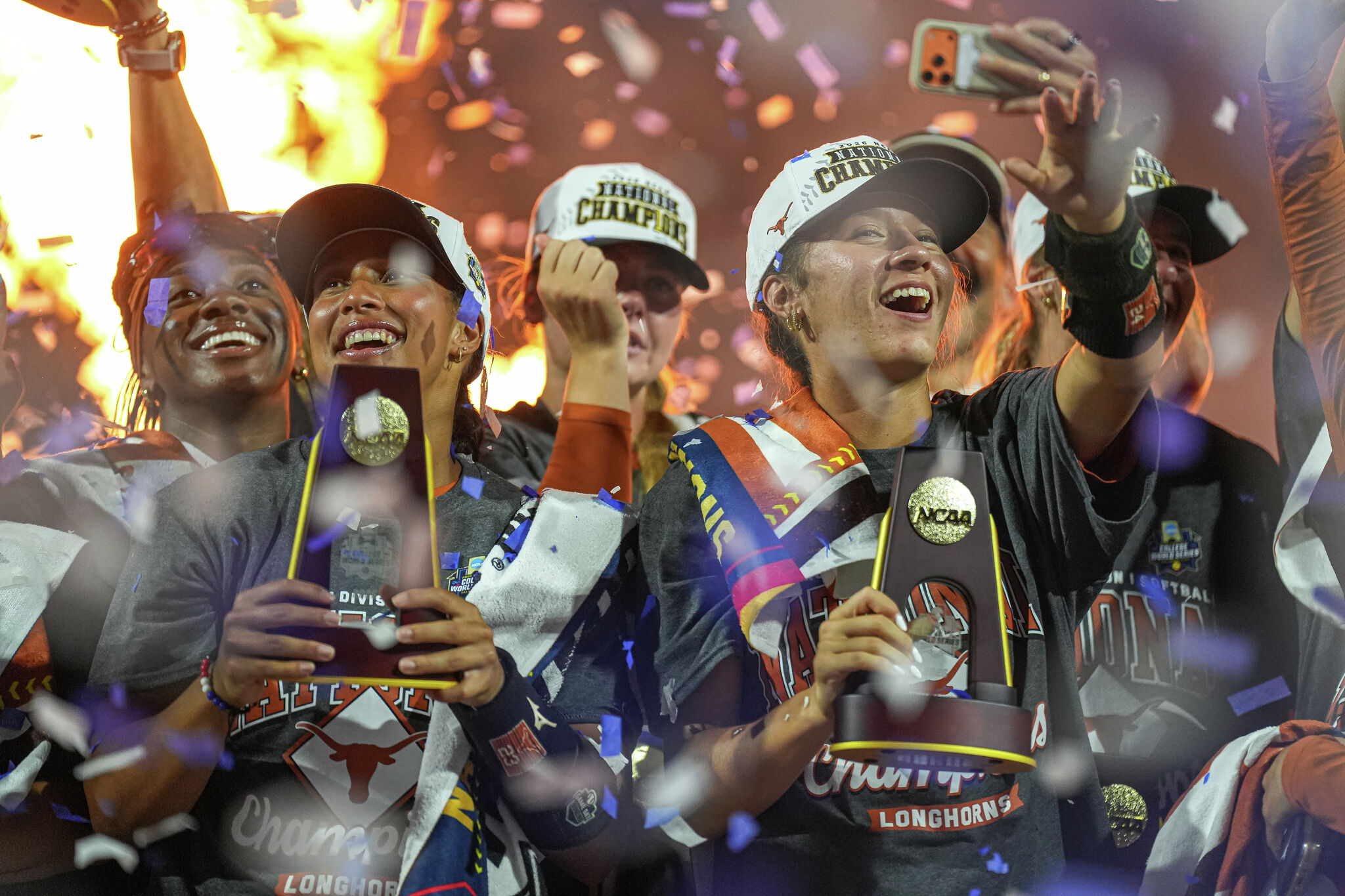
The Red Raiders’ offense never found its rhythm, managing just five hits in the game. Texas pitcher Citlaly Gutierrez, who had been stellar all tournament, allowed only one hit in her three innings of relief. The Longhorns’ bullpen, led by Teagan Kavan, sealed the deal in the ninth, striking out the side to preserve the 4–1 lead.
Texas Tech’s defense, however, nearly stole the game. Logan Halleman made a game-saving play in the eighth, robbing Kaiah Altmeyer of a likely RBI double. But with the bases loaded and two outs in the ninth, Texas’s bullpen held firm, and the Longhorns walked away with their second title in three years.
What’s next for Texas softball—and the future of college sports
The Texas softball team’s dominance isn’t just about this season—it’s about building a dynasty. With Teagan Kavan returning for her senior year and a roster full of experienced players, the Longhorns are poised to remain a national powerhouse. But beyond the on-field success, the WCWS has reignited a broader conversation: Can college sports survive the political and financial pressures?
The Protect College Sports Act, introduced just days before the WCWS, aims to address issues like NIL (Name, Image, Likeness) compensation and athlete welfare. But the tournament’s success suggests that, for now, the magic of college sports—at least in softball—remains intact. The question is whether that magic can translate into sustainable change.
For Texas, the focus now shifts to next season. With Kavan and Gutierrez returning, the Longhorns will be heavy favorites to defend their title. But the bigger story may be whether the WCWS can continue to deliver the kind of excitement that defies the doomsayers in Washington.
One thing is certain: The 2026 Women’s College World Series proved that, for one magical weekend, college sports still feels like a crisis-free moment.
