People feared dead in Japan after magnitude 7.1 quake causes blast at mall
Search and rescue operations are underway in southwestern Japan after a massive earthquake triggered a blast at a shopping mall and caused industrial collapses.
- Headline Dispatch: People feared dead in Japan after magnitude 7.1 quake causes blast at mall
- Core Takeaway: Search and rescue operations are underway in southwestern Japan after a massive earthquake triggered a blast at a shopping mall and caused industrial collapses.
- Source Synthesis: Continuous live monitoring aggregated across major news wires and independent bureaus.
People feared dead in Japan after magnitude 7.1 quake causes blast at mall
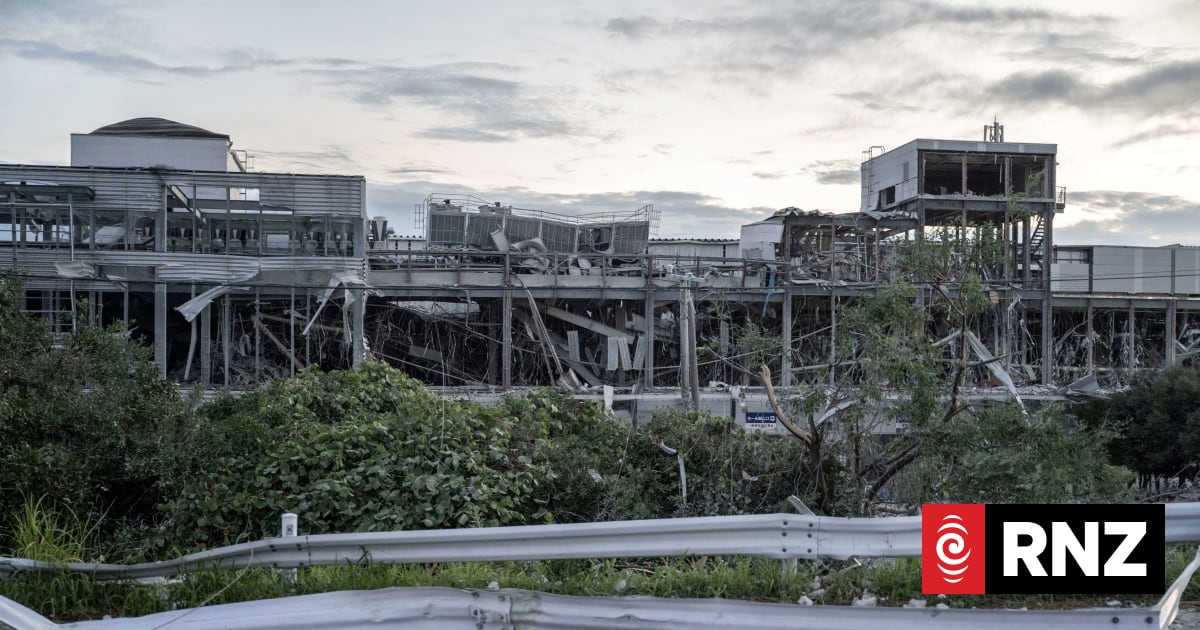
Search and rescue operations are underway across Kyushu island in southwestern Japan after a magnitude 7.1 earthquake struck on Tuesday, July 29, 2026. The tremor, recorded by the Japan Meteorological Agency (JMA), triggered a massive explosion and partial collapse at the Aeon Mall Kumamoto in Kashima Town, leaving dozens of people unaccounted for.
Two young women in their 20s were confirmed dead early Wednesday after being pulled from the rubble of the mall. Local officials and the public broadcaster NHK reported that another person at the mall was in a state of cardiopulmonary arrest. A third fatality was reported by an official from Kumamoto Prefecture's Disaster Management Division, who noted the individual was found in a collapsed house.
The devastation at the mall was compounded by a blast reported 30 minutes after the initial quake. A government source told the Kyodo news agency that the explosion was likely caused by a gas leak, while other local reports indicate the mall used stored LP gas rather than the city supply. The blast tore away one side of the building and caused the second floor to collapse, exposing the structure's steel frame. While many customers had evacuated before the explosion, police believe 20 to 30 employees remain missing.
Industrial and Urban Destruction
The earthquake caused severe damage at the Nippon Paper Industries Yatsushiro Mill in Yatsushiro City. A large smokestack collapsed at the site, and local government officials stated that 11 people were trapped at the plant. Two of those rescued were in cardiac arrest, and nine others remain missing.
Beyond industrial sites, the quake caused widespread infrastructure failure. The Kyushu Expressway was partly ripped up, and a cargo train derailed and overturned at Yatsushiro station. In the city of Kumamoto, parts of the walls of the centuries-old Kumamoto Castle collapsed. Prime Minister Sanae Takaichi confirmed on X that the region suffered water and power outages, with Kyushu Electric Power reporting that approximately 45,000 households and facilities lost power. Additionally, about 9,500 households were without gas.
Transport was paralyzed across the region. High-speed shinkansen and local train services were suspended for safety checks. Aso Kumamoto Airport closed its runway, and though it reopened in the evening, some reports indicated no initial prospect of resuming operations.
Medical Crisis and Emergency Response
Regional hospitals are struggling to manage the influx of casualties. Saiseikai Kumamoto Hospital, a 400-bed facility, reported it was at full capacity and had to suspend pre-scheduled hospitalizations. Two other hospitals reported taking in at least 50 injured patients each.
"People are coming in with burns and fractures from being trapped under objects due to the earthquake, and ambulances are constantly bringing in injured people. Inside the hospital, there are water leaks and electrical system failures."
Around 10 people were injured at a special nursing home for the elderly in Hikawa town. The Japanese military has mobilized 3,600 personnel, including the 42nd Rapid Deployment Regiment and the 8th Reconnaissance Unit of the Ground Self-Defense Force, for life-saving operations. The defense minister added that 20 aircraft were dispatched to assess damage from the air.
Seismic Context
The primary tremor occurred at 4:27 pm Tuesday. It was followed by a succession of aftershocks, including a magnitude 6.1 quake at 5:08 pm. On the JMA's Shindo "scale of shaking," the event measured at the highest possible level seven.
Kumamoto has a history of seismic trauma, having been hit by two devastating quakes in 2016 (magnitude 6.5 and 7.3) that killed 273 people. Japan sits on the boundaries of four tectonic plates along the Pacific "Ring of Fire," and according to Professor Shoichi Yoshioka of Kobe University via CNN, about 10% of the world's earthquakes of magnitude 6 or higher occur in or around the archipelago.
The Nuclear Regulation Authority reported no immediate abnormalities at nuclear power plants, and Kyushu Electric Power confirmed that three reactors operating in the region during the quake functioned normally.
Recovery efforts continue as emergency crews search the ruins of the Aeon Mall and the Yatsushiro Mill for survivors. More than 175 schools and centers in Kumamoto city remain closed, with 178 sites designated as evacuation points.
How significant is this development?
Participate in our community survey on the trajectory and real-world impact of this news.