At least 18 die as 49,000 migrants breach Morocco-Ceuta border
A massive surge of migrants into the Spanish exclave of Ceuta has left at least 18 people dead and thousands stranded, sparking diplomatic tension.
- Headline Dispatch: At least 18 die as 49,000 migrants breach Morocco-Ceuta border
- Core Takeaway: A massive surge of migrants into the Spanish exclave of Ceuta has left at least 18 people dead and thousands stranded, sparking diplomatic tension.
- Source Synthesis: Continuous live monitoring aggregated across major news wires and independent bureaus.
At least 18 die as 49,000 migrants breach Morocco-Ceuta border
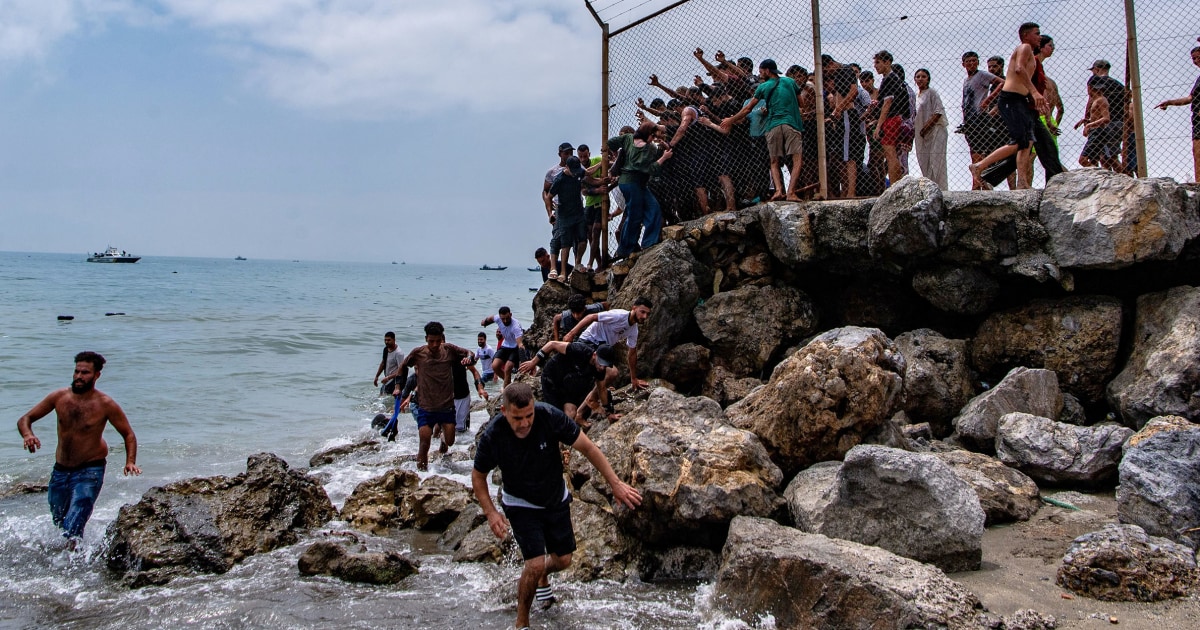
A massive surge of migrants breaching the frontier between Morocco and the Spanish exclave of Ceuta has left at least 18 people dead and thousands more stranded in the small territory. Spain’s interior ministry estimated that some 49,000 migrants crossed into the enclave over the past 24 hours.
The crisis peaked Thursday and overnight, as throngs of people — primarily young Moroccan men, though including families with women and children — bypassed border barriers. Many reached the territory by swimming around breakwaters, while others entered via the urban Tarajal beach. The deaths were caused by a combination of drownings and a stampede to cross the breakwater fence at Tarajal, according to Rachid Sbihi, who leads a local workers association representing Civil Guard officers.
Sbihi described the situation as a serious humanitarian crisis
, reporting that thousands of migrants, including unaccompanied children, were left sleeping on sidewalks and in parks. He noted that reinforcements arriving at the scene were primarily focused on humanitarian efforts and treating the injured, adding, It’s chaotic.
The scale of the influx has strained the capacity of the 18.5-square-kilometer territory, which has a population of 80,000. A police source indicated that around 40,000 migrants have crossed in recent days. Juan Jesús Vivas, head of Ceuta’s regional government, had warned on Wednesday that reception centers were already overwhelmed, with hundreds of people sleeping on the streets after more than 1,500 migrants entered during the prior week.
In response, the Spanish government deployed the military to maintain security in the city. Prime Minister Pedro Sánchez and Interior Minister Fernando Grande-Marlaska were scheduled to visit the Tarajal border on Friday. Sánchez stated on X that his government is fully committed to providing an immediate response
and is working with Morocco to restore normalcy.
The turmoil extended into Morocco, specifically in the town of Bni Nsar. Local media and rights groups reported clashes between migrants and police, involving the throwing of rocks and the burning of police vehicles, resulting in injuries to security forces and dozens of arrests.
While Moroccan authorities have not issued a public statement, a Moroccan official source told AFP that the two countries have discussed the matter. Spain’s Interior Ministry stated that the Moroccan government is closely cooperating
and that Moroccan police are stopping numerous people from crossing. Both nations have agreed to work together to return those who entered illegally.
The cause of the surge remains unclear. Ceuta authorities suggested a recent Spanish Supreme Court ruling might be a factor; the ruling bars the immediate return of migrants arriving by sea without due process, though it does not apply to land crossings. However, some activists in Morocco questioned this link, arguing most migrants would be unaware of the legal decision.
The event has triggered immediate international diplomatic friction:
- France: Interior Minister Laurent Nunez activated the Rapid Intervention Border Force and ordered immediate stepped-up controls at the Spanish border.
- Italy: Premier Giorgia Meloni called for Spain to be suspended from the open-borders Schengen zone to ensure citizen safety. Spain responded by summoning the Italian ambassador, accusing Rome of political opportunism.
- United States: Two top officials in the White House of President Donald Trump used video of the Ceuta crossings to reiterate anti-immigration policies.
The current situation evokes memories of May 2021, when a diplomatic rift over Spain hosting the leader of the Polisario Front led Morocco to loosen border controls, allowing more than 8,000 migrants to enter Ceuta over two days. Another territory, Melilla, has also seen recent crossing attempts, as reported by Omar Naji of the Moroccan Association of Human Rights.
Spain’s Interior Ministry stated that current legislation for national emergencies does not classify migration flows as a risk to national security. The ministry plans to publish its next formal migration report on August 3.
How significant is this development?
Participate in our community survey on the trajectory and real-world impact of this news.