Israel rejects Trump's 15-point plan for Gaza, PM Netanyahu says
Prime Minister Benjamin Netanyahu has formally rejected a U.S.-proposed peace plan for Gaza, insisting that Hamas must be completely disarmed before Israeli forces withdraw.
- Headline Dispatch: Israel rejects Trump's 15-point plan for Gaza, PM Netanyahu says
- Core Takeaway: Prime Minister Benjamin Netanyahu has formally rejected a U.S.-proposed peace plan for Gaza, insisting that Hamas must be completely disarmed before Israeli forces withdraw.
- Source Synthesis: Continuous live monitoring aggregated across major news wires and independent bureaus.
Israel rejects Trump's 15-point plan for Gaza, PM Netanyahu says
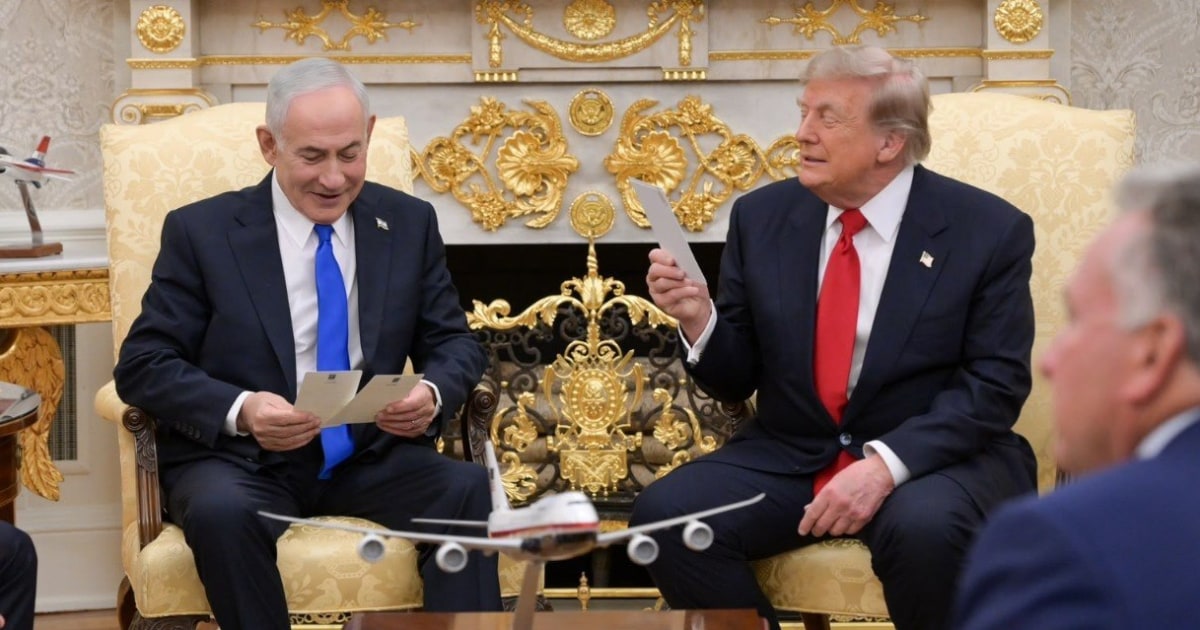
Prime Minister Benjamin Netanyahu announced Sunday that Israel rejects a 15-point peace plan for Gaza proposed by United States President Donald Trump’s Board of Peace. Speaking at a cabinet meeting, Netanyahu stated that the Israeli military will not carry out any withdrawal from the enclave until Hamas is "genuinely" disarmed.
The Prime Minister sought to remove any ambiguity regarding his position, noting, I want to clarify this: Israel rejects the 15-point document. I have heard people saying, ‘You didn’t say that.’ So here I am saying it again
.
The dispute centers on the sequencing of troop withdrawals and disarmament. The original proposal from the Board of Peace called for a phased withdrawal of Israeli troops to occur alongside the disarmament of Hamas. President Trump had previously claimed that Hamas agreed to lay down its arms, and the document suggests Hamas would surrender weapons to a nascent Palestinian governing body.
Netanyahu rejected this concurrent approach, insisting that disarmament must happen first. He specified that this must include heavy weapons, lighter weapons, all weapons
, asserting that Israel is seeking genuine rather than fictitious
disarmament.
The Board of Peace, led by director Nickolay Mladenov, appears to have adjusted its stance following a meeting with Netanyahu last week. The body subsequently stated that an Israeli withdrawal would only take place after the disarmament of Hamas is "complete."
Hamas has expressed a different set of conditions. Last month, the group stated it would disarm only after Israel completely withdraws and stops all hostilities. Furthermore, Hamas indicated that the surrender of its heavy weapons would occur later in the process, conditional upon the establishment of a Palestinian state.
Netanyahu reaffirmed his opposition to such a state, declaring that as long as he remains Prime Minister, there will be no Palestinian State.
The Prime Minister is currently facing a domestic political struggle for survival with elections scheduled for October. He has faced pressure from far-right allies to end the Gaza plan and hold a new cabinet vote. Polls indicate he is in a tight race to remain in power, with the conflicts in Gaza and Iran likely to be pivotal factors.
Basim Naeem, a senior Hamas official, responded to Netanyahu's rejection by calling on the U.S. And mediators to exert pressure
on the Israeli government. Naeem urged Netanyahu to abide by the roadmap and avoid obstructing the process for domestic political and electoral considerations
, stating that Hamas remains committed to the Board of Peace's plan based on national responsibility
.
Netanyahu noted that Israel is continuing discussions with the United States. They have ideas; some of them are acceptable to us and some are not, and we know how to stand firm on these matters
, he said.
The diplomatic deadlock persists against a backdrop of ongoing violence. While a ceasefire was agreed upon last October, Israel has continued near-daily deadly attacks across the Gaza Strip. Gaza's Health Ministry reports that the death toll since October 2023 has reached 73,386, with 174,250 injured. This includes over 1,200 deaths since the October ceasefire began. On Saturday, recovery operations at the Karam Building found 19 dead bodies under the rubble, according to Gaza civil defense.
Israel maintains that its war in Gaza was a response to the Hamas attack on October 7, 2023, which killed approximately 1,200 people and took 251 hostages.
The rejection of the deal has drawn criticism from some within Israel. Analyst Dan Perry argued that Hamas' disarmament should be welcomed if agreed upon and suggested that improving conditions for Palestinians in Gaza could reduce the likelihood of future attacks, arguing that humanitarian needs and security concerns are not necessarily in conflict.
How significant is this development?
Participate in our community survey on the trajectory and real-world impact of this news.