Ship runs aground in Strait of Hormuz, Iranian state TV reports
Iranian state media reports a container ship is stuck in shallow waters after failing to follow a route mandated by the Revolutionary Guard. This incident occurs as diplomats in Qatar work toward an agreement to resolve tensions in the region.
- Headline Dispatch: Ship runs aground in Strait of Hormuz, Iranian state TV reports
- Core Takeaway: Iranian state media reports a container ship is stuck in shallow waters after failing to follow a route mandated by the Revolutionary Guard. This incident occurs as diplomats in Qatar work toward an agreement to resolve tensions in the region.
- Source Synthesis: Continuous live monitoring aggregated across major news wires and independent bureaus.
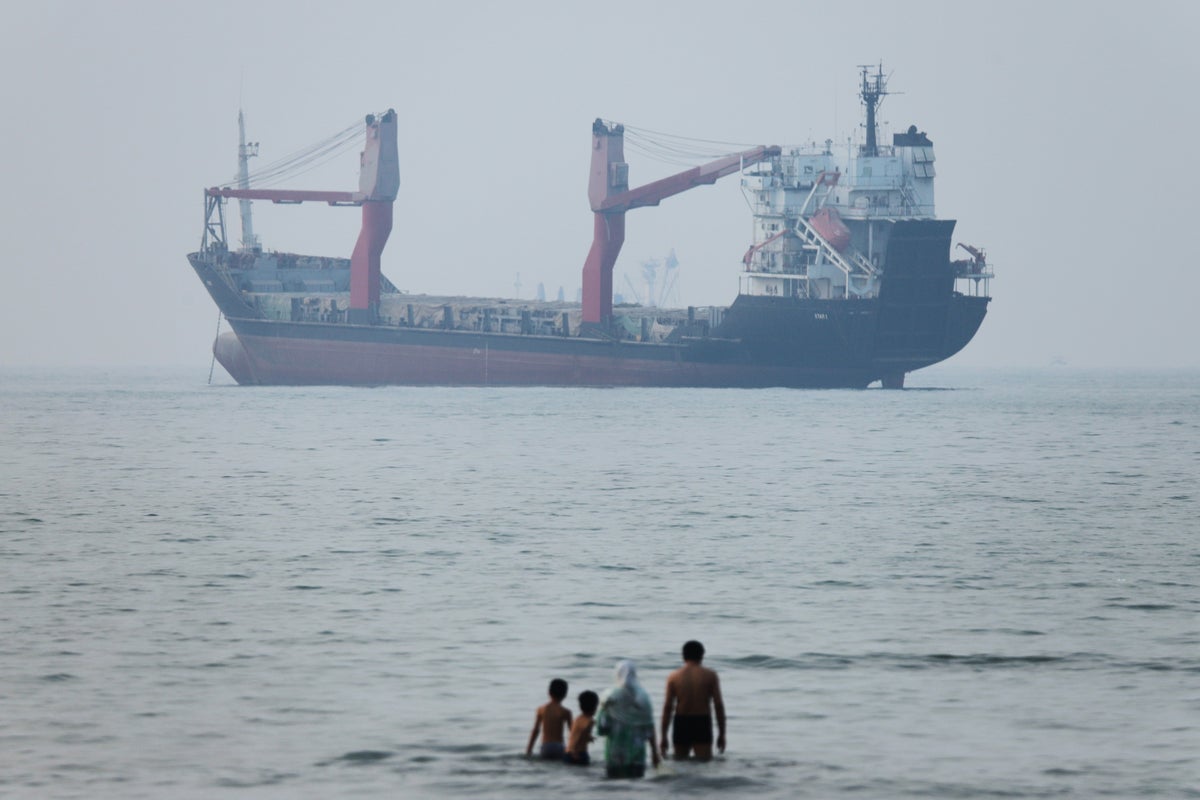
Ship runs aground in Strait of Hormuz, Iranian state TV reports
A foreign container ship ran aground in the Strait of Hormuz after using a route not approved by Iran, according to Iranian state television on Wednesday, July 1, 2026.
State media reported the vessel became unable to continue sailing because of shallow waters along its chosen path. The report emphasized that shippers must follow instructions provided by the Revolutionary Guard, Iran's paramilitary force, in the waterway. The Guard's navy has issued repeated warnings that any movement through the Persian Gulf via routes other than the Route of Authority
could lead to irreparable incidents
.
The announcement follows recent Iranian attacks on two ships that attempted to leave the strait without Tehran's permission, including a vessel transporting crude oil from Qatar. The incident occurs as Iran seeks to assert control over the strait, which the world has long viewed as an international waterway. In peacetime, a fifth of all natural gas and oil passes through the channel.
The grounding took place amid high-stakes diplomatic efforts in Doha, Qatar, to end the war that began Feb. 28. U.S. Mideast envoy Steve Witkoff and Jared Kushner, son-in-law to President Donald Trump, arrived in Qatar on Tuesday, June 30, 2026. They were met Wednesday by Qatar's foreign minister, Sheikh Mohammed bin Abdulrahman Al Thani, and the ruling emir, Sheikh Tamim bin Hamad Al Thani.
Simultaneously, Iran's top negotiator, Kazem Gharibabadi, and a supporting team traveled to Qatar, where they met with Sheikh Mohammed. An Iranian statement indicated that these discussions focused on an interim deal and the obstacles to its implementation. Pakistani mediators also participated in the process.
As part of this interim arrangement, the two nations agreed to allow ships to pass without charges for 60 days. However, Tehran has insisted on controlling vessel routes and intends to charge passage fees in the future, a move that would upend decades of standard practice.
The U.S. And several Gulf Arab states have stated they will not agree to such charges. Tensions peaked last weekend when attacks broke out across the Mideast following an attempt by a U.N. Agency and Oman to establish a new route near the Omani shore.
While some vessels have managed to exit the strait, the situation remains volatile. The Thai Foreign Ministry reported Tuesday that 10 of 11 Thai-flagged or chartered vessels have departed safely. South Korean officials say all but two of the country’s 26 vessels that were stranded have left safely.
Beyond the waterway, Lebanon remains a primary obstacle to a permanent peace deal. Iran demands that all fighting cease between the Israeli military and Hezbollah, an Iranian-backed militia, and calls for Israel to relinquish land it currently occupies in southern Lebanon. Israel maintains it must hold that territory and retain the ability to attack Hezbollah, which continues to launch strikes into northern Israel.
Mohammad Bagher Qalibaf, Speaker of the Iranian parliament and a key negotiator, told state television that while dialogue continues, Iran is prepared for war
if agreed-upon terms are not implemented.
In a separate security incident on Wednesday, Iraqi authorities shot down a small drone over Baghdad's Green Zone. Two security officials, speaking on condition of anonymity, described the drone as unarmed and likely used for surveillance. This is the first security event in Baghdad since the ceasefire agreement between the U.S. And Iran, following a period of frequent attacks by Iranian-backed Iraqi militias on diplomatic and military facilities.
Technical talks between diplomats began Wednesday in Qatar to finalize specifics for a permanent agreement. These closed-door discussions aim to resolve differences over Lebanon and the control of the Strait of Hormuz before top leaders seal a final deal.
How significant is this development?
Participate in our community survey on the trajectory and real-world impact of this news.


