State Department report labels Cuba a major threat to Western civilization
A State Department report characterizes Cuba as a permanent enemy and a partner in a modern axis of evil. Critics argue the document is a tool to manufacture consent for military invasion.
State Department report labels Cuba a major threat to Western civilization
A State Department report published on Monday, characterizes Cuba as a permanent enemy and a major threat to the United States and Western civilization
. The 100-page document, which was released without a listed author, describes the island nation as the capital of 21st century communism
and asserts that it is committed to the destruction of the West through the spread of Third Worldism
.
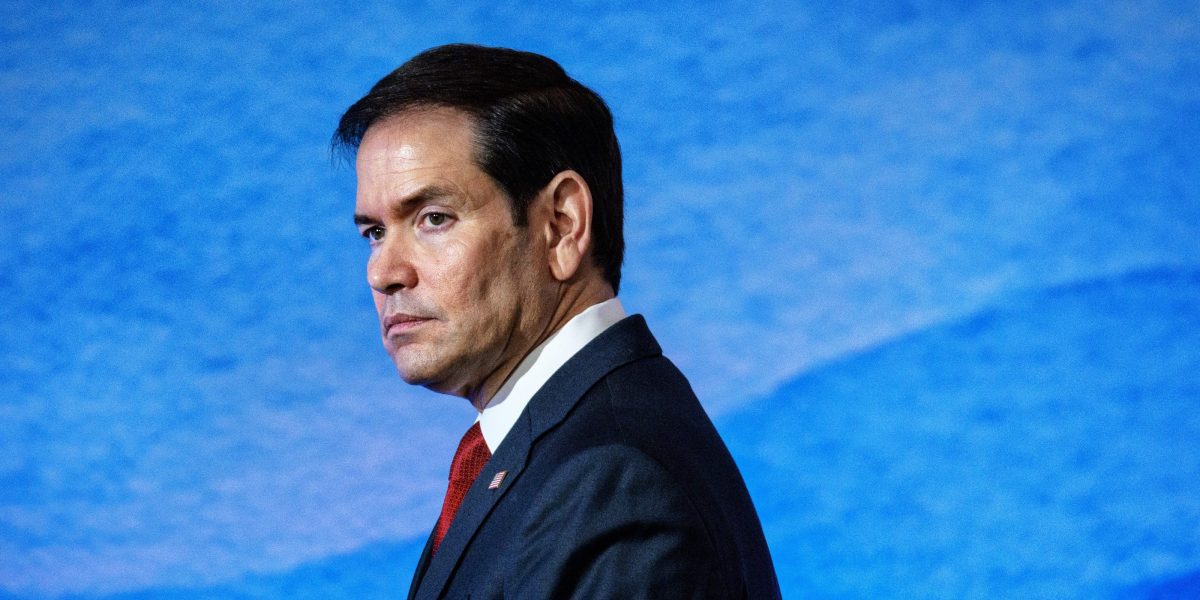
Members of Congress and experts suggest the report is the brainchild of Secretary of State Marco Rubio. A first-generation Cuban American, Rubio has made the overthrow of the Cuban government a top priority under the second Trump administration. The report alleges that Cuba is less a nation-state and more an all-encompassing intelligence and subversion operation
focused on an existential revolution against the U.S.
Allegations of Global Subversion
The State Department claims Cuba has spent decades attempting to foment revolutionary movements globally. The report warns that Cuba is building a modern axis of evil
by partnering with the governments of North Korea, China, Russia, and Iran. According to the document, the regime acts as a force multiplier
for an anti-American coalition, serving as a staging ground for foreign adversaries to conduct operations against the United States.
The report specifically links Cuban intelligence to American civil society, listing various individuals and organizations as accomplices. Those named include:
- The Democratic Socialists of America
- Code Pink
- Los Angeles Mayor Karen Bass
- Left-wing streamer Hasan Piker
The National Lawyers Guild is highlighted in a section spanning nearly five pages, where authors describe the progressive law association as one of the most insidious
organizations in Cuba's U.S. Network. The report also targets U.S. Universities for their exchange programs with Cuban institutions, implying they are recruitment grounds for spies. Harvard University was singled out, with the report referencing faculty trips to Cuba as recently as 2017.
Domestic and Academic Criticism
Critics in Congress have dismissed the report as a tool to manufacture consent for a military invasion and to suppress domestic dissent. Rep. Delia Ramirez, D-Ill., stated the report was intentionally designed to instill fear of the Cuban people
and argued that while it criticizes the Cuban regime, it attacks the constitutional rights of Americans regarding free assembly and speech.
Rep. Mark Pocan, D-Wis., described the document as the stupidest, most fantastical, most biased thing I’ve ever read from a governmental agency
. Pocan argued the report relies on data from the 1960s and 1970s to baselessly claim Cuba is responsible for movements such as Antifa and Black Lives Matter.
Alejandro de la Fuente, a professor at Harvard who chairs the university’s Cuba Studies Program, rejected the thesis that Cuba poses a grave national security threat. De la Fuente noted that the Cuban government has actually been wary of American academic exchanges because they recognize that knowledge production requires a plurality of viewpoints. He attributed the country's current state to the ineptitude and corruption of the regime
which has destroyed the society and economy.
Humanitarian Context and Regional Tensions
The report's claims of an expansive intelligence reach contrast with the current physical state of the island. In early January, the Trump administration tightened the embargo into a virtual blockade on all arriving fuel. This has resulted in extended blackouts and a collapsed tourism economy. Rep. Ramirez described the situation as a war on the Cuban people
and stated that during a recent fact-finding trip, she saw nothing to suggest Cuba poses an existential threat to the U.S.
The U.S. Focus on Cuba appears more intense than its approach to other regional autocracies. While Secretary of State Marco Rubio condemned Nicaraguan President Daniel Ortega last week after Ortega declared there would never be elections here again
, analysts suggest the U.S. Is less likely to intervene in Nicaragua. Kai Thaler, a professor at UC Santa Barbara, noted that Nicaragua lacks the oil and rare earth minerals that made Venezuela an attractive target for President Trump. Thaler also attributed the priority on Cuba to the influence of the Cuban diaspora in Washington, specifically figures like Rubio and Ted Cruz.
As the U.S. Maintains its oil embargo and the State Department continues to frame the island as a global adversary, the Trump administration has signaled a campaign for aggressive intervention in Cuba.