Donald Trump says he cancelled Iran strikes after Middle East allies’ request
President Trump has halted military action against Iran to allow for negotiations on denuclearization and the reopening of the Strait of Hormuz.
Donald Trump says he cancelled Iran strikes after Middle East allies’ request
US President Donald Trump announced late Saturday that he has cancelled planned military strikes against Iran, stating that Middle East allies and Iran itself requested a delay to finalize a deal to end the five-month-old conflict. The president said the emerging agreement would require an end to Iran's nuclear threat
and the Immediate, Complete and Total
reopening of the Strait of Hormuz.
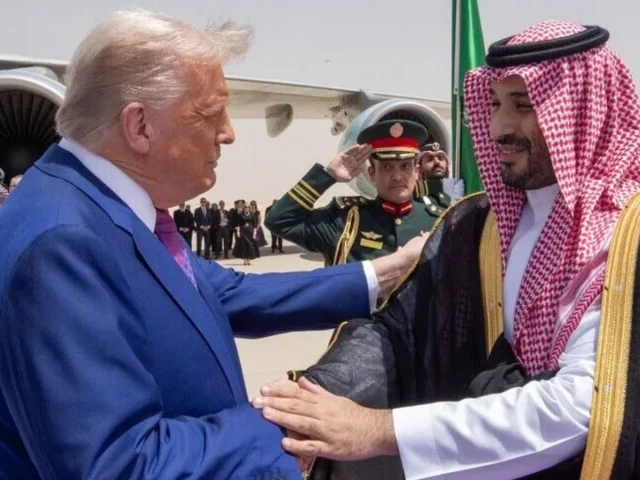
The decision follows a series of high-stakes diplomatic interventions. Saudi Crown Prince Mohammed bin Salman spoke with Trump by phone on Saturday to express concern over potential US escalation. According to sources briefed on the call, the Saudi leadership sought clarity on the US plan of action and urged de-escalation to prevent the region from sliding into a wider conflict. Saudi officials specifically feared that if the US targeted Iranian energy infrastructure or power plants, Tehran would respond by attacking energy facilities in Saudi Arabia and other Gulf nations.
The Saudi Press Agency reported that the crown prince emphasized the need to prioritize dialogue and make all possible efforts
toward diplomatic solutions to preserve regional security and stability.
Writing on Truth Social, Trump claimed Israel joined the US in this commitment. While the president stated the US remains locked and loaded
with military power not seen since World War II, he agreed to halt the attack subject to being able to rapidly make a DEAL
.
The move comes amid a volatile military environment. On February 28, the US and Israel launched strikes that began the current war, with Trump stating the goal was to destroy Iranian missile capabilities and stop the pursuit of nuclear weapons. US Secretary of State Marco Rubio claimed in an interview with Fox News that these attacks have severely degraded
Iran's defensive capabilities, destroying its navy, air force, and missile defenses. Rubio argued that this position of strength is the only reason Iran now seems eager
to negotiate on denuclearization and the straits.
However, the region remains on high alert. On Saturday, the Kuwaiti army reported destroying Iranian drones launched at vital facilities, including a government facility in northern Kuwait and civilian property on Bubiyan Island. Separately, the United Kingdom Maritime Trade Operations reported two maritime incidents off Oman, including a tanker struck by an unknown projectile that damaged its engine room.
Tehran had signaled it was prepared for a massive escalation. A senior Iranian security official quoted by Tasnim stated that a comprehensive plan
was ready to respond to American recklessness
. This reported retaliation list included:
- Saudi Arabia: The Ghawar oil field, the Abqaiq oil processing facility, and the Khurais oil field.
- United Arab Emirates: The Zakum oil field and Ruways refinery.
- Qatar: The North Field and Ras Laffan Industrial City.
- Kuwait: The Burgan oil field.
- Bahrain: The Sitra refinery and Al-Mihaj.
- Israel: The Tamar and Leviathan offshore natural gas fields.
Iranian Foreign Minister Abbas Araqchi warned in calls with officials from Turkey, Pakistan, and Saudi Arabia that any US or Israeli attacks would be met with a proportionate response
. Meanwhile, Majidreza Hariri, president of the Iran-China Chamber of Commerce and Industry, suggested Washington lacks the courage
to target Iranian infrastructure because Iran's decentralized electricity grid, which contains up to 150 power plants, is more resilient than those of its neighbors.
Economic pressures have also mounted. Benchmark Brent crude futures rose 24% in July, as the conflict disrupted shipping through the Strait of Hormuz. Additionally, Houthi allies of Iran have begun threatening the Bab el-Mandeb strait. Trump has previously argued that the goal of preventing Iran from obtaining nuclear weapons justifies higher fuel costs, but the economic strain has increased political pressure as midterm elections approach in November.
The diplomatic effort is being led by a team including Secretary of State Marco Rubio, special envoy Steve Witkoff, and Jared Kushner. The urgency comes after a mid-June truce crumbled within weeks. White House press secretary Karoline Leavitt previously expressed frustration that Tehran broke a memorandum of understanding by killing American soldiers and shooting at commercial ships.
As negotiations proceed, the US State Department has issued security alerts for US citizens in 10 countries—including Jordan, Iraq, Lebanon, and the UAE—warning of potential flight cancellations and airspace closures.