Trump says ceasefire 'is over' after US and Iran trade strikes overnight
The U.S. and Iran have traded military strikes in the Middle East, leading President Trump to terminate an interim ceasefire and causing oil prices to soar.
- Headline Dispatch: Trump says ceasefire 'is over' after US and Iran trade strikes overnight
- Core Takeaway: The U.S. and Iran have traded military strikes in the Middle East, leading President Trump to terminate an interim ceasefire and causing oil prices to soar.
- Source Synthesis: Continuous live monitoring aggregated across major news wires and independent bureaus.
Trump says ceasefire 'is over' after US and Iran trade strikes overnight
President Donald Trump declared on Wednesday, July 8, 2026, that the interim ceasefire with Iran is over
, following a volatile exchange of military strikes in the Middle East. The announcement came as world oil prices soared more than five percent amid fears of renewed regional conflict.
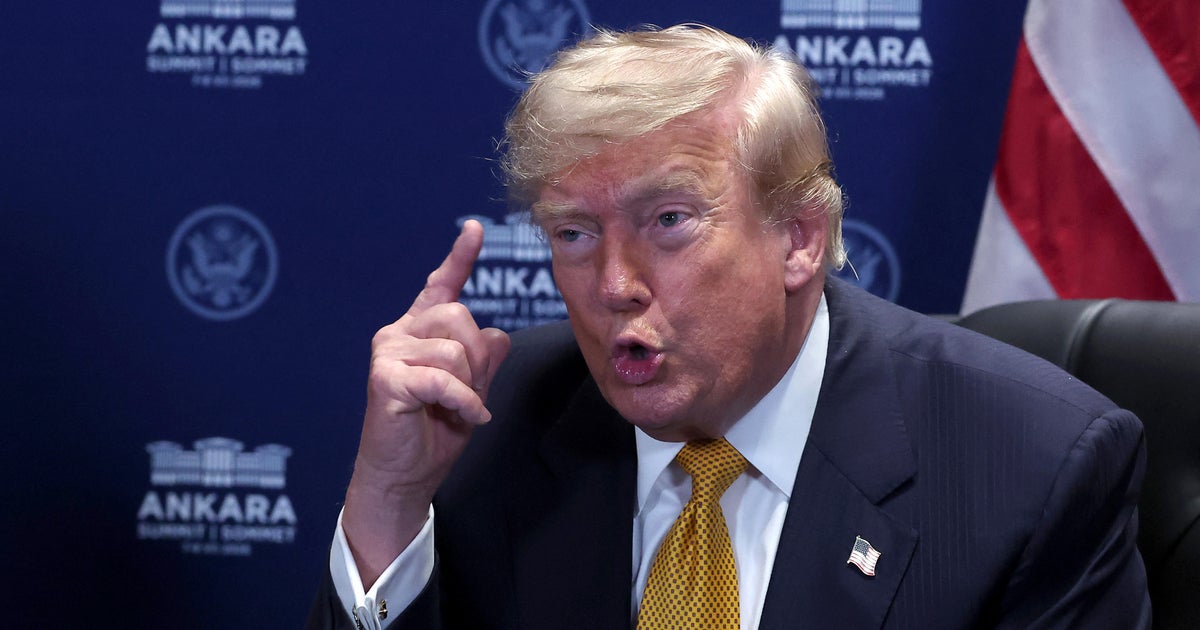
The escalation began Tuesday night when President Trump, while attending a NATO summit in Ankara, Turkey, ordered a series of strikes against Iranian targets. The U.S. Military revoked a license that had previously allowed Tehran to sell its oil on the world market as part of a 14-page memorandum of understanding signed last month. That agreement had aimed to end the conflict on all fronts
and allow commercial traffic to resume in the Strait of Hormuz.
The U.S. Described the operations as retaliation for attacks on three merchant ships in the Strait of Hormuz earlier in the week. According to the U.K. Maritime Trade Operations center, one tanker caught fire off the coast of Oman. Majed al-Ansari, a spokesperson for the Qatari Foreign Ministry, stated the vessel was carrying Qatari natural gas and called the strike an unacceptable attack
on global energy security, holding Iran fully legally responsible
.
U.S. Central Command reported that American forces hit more than 80 Iranian targets, including radar sites, air defense systems, and over 60 small boats used by the Islamic Revolutionary Guard Corps. The military stated these strikes were intended to impose heavy costs
for targeting civilians in an international waterway.
Iran responded with missile strikes targeting U.S. Military installations in Bahrain and Kuwait. Bahrain’s Ministry of Interior sounded missile alert sirens three times Wednesday morning, urging residents to seek safe harbor. Kuwait described the attacks as an undermining of regional de-escalation efforts, and UAE senior diplomat Anwar Gargash called the strikes a clear indicator
that Tehran cannot commit to turning the page on war.
Inside Iran, the Mehr news agency reported explosions in the port city of Bushehr, which houses the nation's only civilian nuclear power plant. A provincial official told the FARS news agency that two military bases in Bushehr province were targeted. Iranian state media also reported explosions in Bandar Mahshahr, where a Guard member was killed.
Speaking to reporters alongside NATO Secretary-General Mark Rutte in Ankara, President Trump dismissed the possibility of a continued truce.
he said. He further characterized the Iranian leadership as"For me, I think it's over,"
scum,
sick people, and
liars, adding that
if they had a nuclear weapon they'd use it.
While the President stated he would allow U.S. Negotiators to continue talking, he questioned the utility of the effort, saying, I think they're wasting their time
. NATO chief Mark Rutte told the president that the U.S. Response was absolutely necessary
and a very strong response
to Iran's ceasefire violations.
Conversely, Iran's Parliament Speaker Mohammad Bagher Qalibaf wrote on social media that the era of bullying and extortion is over
and stated, We don't fold
. The Revolutionary Guard accused the U.S. Army of violating the Islamabad understanding
by attacking coastal bases in Mahshahr and Hormozgan provinces.
The military clashes coincided with a dayslong funeral for Iran's slain Supreme Leader Ayatollah Ali Khamenei, who was killed on February 28. Funeral ceremonies continued Wednesday in Najaf, Iraq, attended by Iranian President Masoud Pezeshkian and Iraqi Prime Minister Ali Falah al-Zaidi. The new Supreme Leader, Ayatollah Mojtaba Khamenei, has not appeared at the ceremonies and is believed to be in hiding after being wounded in the strike that killed his father.
The instability has hit energy markets sharply. International benchmark Brent North Sea crude jumped 5.3 percent to $78.09 a barrel, while West Texas Intermediate advanced 5.4 percent to $74.23 a barrel. The Strait of Hormuz is a vital artery, carrying roughly one-fifth of the world's traded oil and natural gas.
Negotiations for a final deal, which were intended to focus on the nuclear program and the reopening of the strait, were scheduled to begin after the burial of Ayatollah Ali Khamenei. His body is expected to be buried this Thursday, July 9, at the Imam Reza shrine in Mashhad.
How significant is this development?
Participate in our community survey on the trajectory and real-world impact of this news.