Trump expresses frustration with Netanyahu before White House meeting
Tensions rise between Donald Trump and Benjamin Netanyahu ahead of a White House meeting following the public leak of Israeli intelligence regarding Iran.
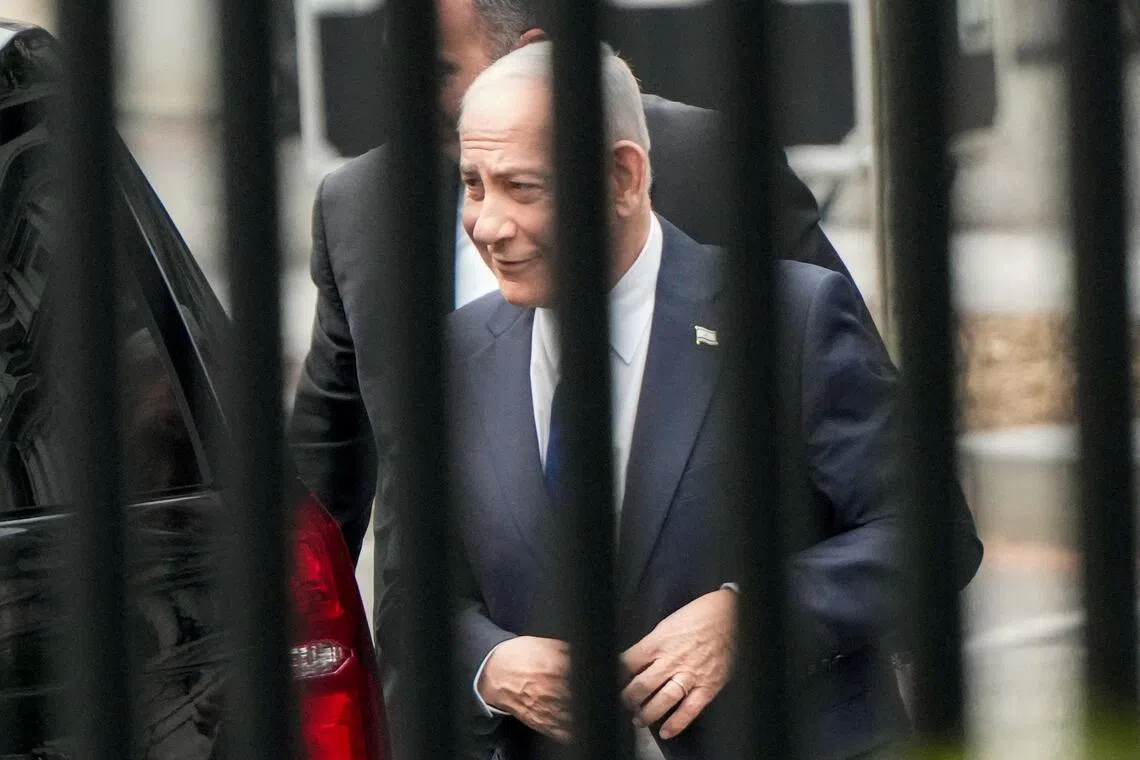
Trump expresses frustration with Netanyahu before White House meeting
US President Donald Trump voiced irritation with Israeli Prime Minister Benjamin Netanyahu on Tuesday, July 28, ahead of a closed-door meeting at the White House. The friction centers on the leak of Netanyahu's planned talking points regarding Iran, which surfaced publicly before the leaders could convene.
In an interview with Fox & Friends, Trump reacted to reports that Netanyahu intended to discuss Pickaxe Mountain, a fortified underground facility near a primary Iranian nuclear site. Using the prime minister's nickname, Trump said, I don’t need Bibi to tell me that. Bibi’s telling me that because he wants me to stay involved.
Trump questioned why the Israeli leader would announce such details to the world rather than speaking to him directly. The New York Post had reported on July 27 that Netanyahu planned to provide intelligence suggesting Iran is lying about seeking a peace deal while expanding nuclear facilities at Pickaxe Mountain.
The meeting is the first since the US-Israel war on Iran began on February 28. It follows brief closed-door talks between Trump and Ukrainian President Volodymyr Zelensky. While Trump's relations with Zelensky have warmed as Ukraine blunts Russian advances, his relationship with Netanyahu has grown strained. This tension was highlighted by a June phone call in which Trump called the prime minister f***ing crazy
, a claim Trump later confirmed publicly.
Both leaders arrived in Washington to attend a memorial service for Senator Lindsey Graham, a Republican hawk and advocate for both Israel and Ukraine.
Regional Conflict and Military Tensions
The White House talks arrive as both the Middle East and Ukraine conflicts reach critical junctures. Trump has paused US airstrikes to allow for diplomacy, while Iran has halted retaliatory attacks for four days. However, the stability is fragile:
- Iran and the US: Trump warned that the US could target Pickaxe Mountain, bridges, and power plants if Tehran fails to reach a deal. Iran responded by warning that any country or company receiving frozen Iranian assets as compensation for damaged vessels would be barred from transiting the Strait of Hormuz.
- Lebanon: Despite a US-mediated framework agreement signed last month for a phased Israeli withdrawal, Israeli forces have continued demolition operations in southern Lebanon, including strikes in the ancient city of Tyre and Nabatieh al-Fawqa.
- Ukraine: President Zelensky identified anti-ballistic defense and strategic cooperation as his top priorities. He is seeking urgently needed air defense capabilities and the completion of a drone deal, as well as a license to produce Patriot interceptors.
Israeli Defence Minister Israel Katz recently acknowledged that US warplanes used Israeli airbases to launch strikes on Iran. Meanwhile, Iran’s government spokesperson, Fatemeh Mohajerani, reported that US attacks destroyed 12 bridges and two tunnels, and cost Iran about 230 million cubic metres of gas production capacity.
Political Stakes and Public Sentiment
The meeting carries domestic weight for both leaders. Netanyahu is struggling in opinion polls and is seeking Trump's support for an October 27 reelection vote. Trump, meanwhile, is facing pressure from supporters who oppose deeper US involvement in the Middle East. A Reuters/Ipsos poll conducted July 24-26 found that only one in three Americans support the war on Iran, the lowest level since the conflict began.
Trump’s overall approval rating rose three percentage points from last month to 37%, according to the same poll, though most respondents believe he has not adequately explained his objectives in the conflict.
Diplomatic and Economic Pressures
Beyond the war, the leaders are expected to discuss the Abraham Accords. Trump aims to include Saudi Arabia in the agreements, though Riyadh has rejected joining without a path toward Palestinian statehood. In Gaza, the humanitarian crisis persists, with the Gaza Health Ministry reporting a death toll of 73,333 since October 2023.
The geopolitical instability has impacted global markets. Brent crude fell 2.2% to $84.03 a barrel on Monday as the pause in direct military exchanges eased supply disruption fears. However, shipping costs have surged; Yanbu-Asia VLCC spot rates rose to $230,000 per day from $165,000 on July 22 due to Houthi attack risks.
Following his time at the White House, President Zelensky is expected to meet with senators at the US Capitol.