Kuwaiti offshore oil platform hit as Iran and US trade fire
Escalating military strikes between the US and Iran have expanded across the Gulf, resulting in civilian infrastructure damage in Kuwait and surrounding states.
Kuwaiti offshore oil platform hit as Iran and US trade fire
A series of escalating missile and drone strikes between the United States and Iran over the weekend has expanded across the Gulf, resulting in attacks on civilian infrastructure in Kuwait and multiple neighboring states. The violence centered on a dispute over the control of the Strait of Hormuz, a vital maritime corridor for global trade.
Kuwait's Defence Ministry reported that three northern land border posts and an offshore drilling platform operated by the Kuwait Oil Company were attacked on Sunday, July 12. The ministry stated the assaults caused material damage and that a hostile drone strike on the oil platform injured one worker. Kuwait's foreign ministry condemned the strikes as a dangerous escalation
that threatens regional security.
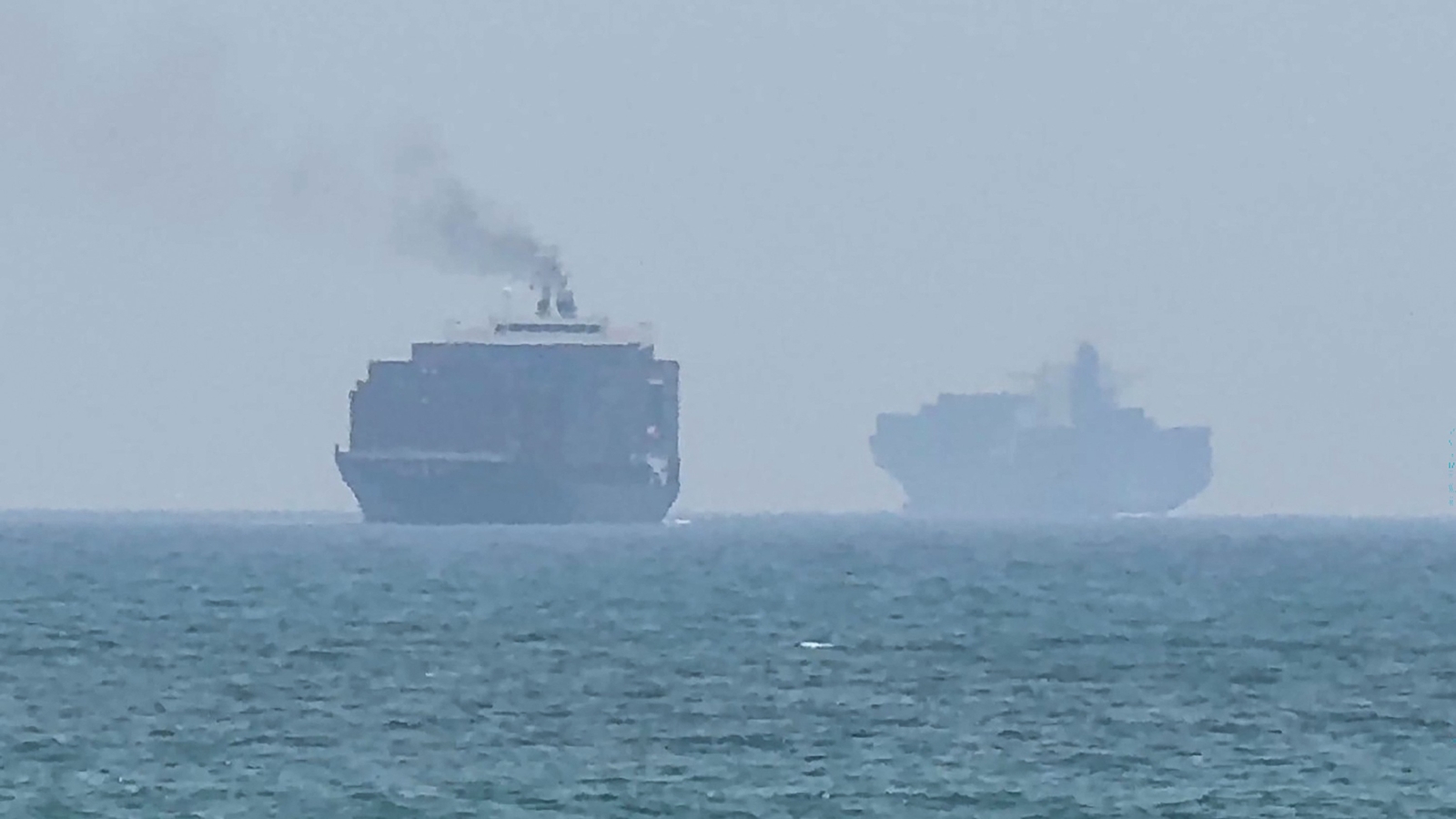
The unrest followed an Iranian attack on a Cyprus-flagged container ship in the Strait of Hormuz that left the vessel ablaze. The U.S. Military reported the ship suffered significant engine room damage
. While Oman's maritime authority rescued 23 crew members, one sailor remains missing; India's Ministry of External Affairs identified the missing person as an Indian national.
U.S. Offensive and Iranian Retaliation
The U.S. Central Command (CENTCOM) responded with three rounds of airstrikes against Iran during the week, including a wave on July 12. According to CENTCOM, U.S. Forces struck more than 300 targets in Iran at the direction of President Donald Trump. Other reports indicated a specific wave hit approximately 140 targets, including ammunition dumps, communication equipment, and missile and drone launch sites.
Iranian state media reported that "enemy projectiles" hit Qeshm Island and the island of Farur, where a telecommunications worker was killed and two others wounded. Explosions were also heard in Bandar Abbas, Hajiabad, Sirik, Jask, and within Khuzestan province. At least one Iranian army officer was reported killed in the strikes.
Iran retaliated by targeting nations hosting U.S. Military forces. The Islamic Revolutionary Guard Corps (IRGC) claimed to have destroyed a fighter aircraft maintenance center and a command-and-control center at the U.S. Al Udeid Air Base in Qatar, as well as a U.S. Military base in Kuwait. The IRGC further claimed to have destroyed refueling platforms and logistical support centers used by U.S. Aircraft carriers at the Port of Duqm in Oman.
Other regional impacts included:
- Qatar: The military intercepted Iranian fire, though the Interior Ministry reported three people, including a child, were wounded by shrapnel from the interceptions.
- Bahrain: Interior Ministry officials reported sirens sounding across the country.
- Jordan: State news agencies reported three Iranian missiles caused minor damage.
- United Arab Emirates: Air defenses intercepted Iranian missiles and drones for the first time since early May.
- Oman: Drones struck sites on the waterway. Oman summoned the Iranian ambassador to lodge a formal protest, calling the acts
irresponsible
.
The Battle for the Strait
The conflict hinges on the legal and physical control of the Strait of Hormuz. Iran has declared the strait closed until calm is restored and insists it alone must control the waterway. An adviser to Iran's supreme leader described the strait as more strategically significant than dozens of atomic bombs
.
Conversely, President Donald Trump and the U.S. Military assert the strait remains open. CENTCOM stated that U.S. Forces are postured to ensure freedom of navigation and explicitly claimed that Iran does not control the strait
. Over 140 ships transited the corridor in the past week, though a U.S. Navy-overseen body noted traffic is at reduced levels
compared to the nearly 140 vessels that transited daily before the war.
The tension has pushed a 60-day interim deal, signed roughly three and a half weeks ago to end the war, to the brink of collapse. The deal's fifth paragraph states that Iran will make arrangements, using its best efforts, for the safe passage of commercial vessels with no charge
for 60 days. Iranian parliament speaker Mohammad Bagher Qalibaf wrote that the era of one-sided deals is OVER
, suggesting the U.S. Must pay the price
for not keeping its word.
Diplomatic Crisis and Leadership
UN Secretary-General Antonio Guterres urged both nations to end the fighting and return to negotiations, warning that a return to full-scale hostilities would have catastrophic consequences
. Mediators from Pakistan, Egypt, and Qatar continue efforts to salvage the ceasefire.
The volatility comes amid a leadership transition in Tehran. The new supreme leader, Ayatollah Mojtaba Khamenei, issued a statement via state television vowing to avenge the blood
of his father, Ayatollah Ali Khamenei, who was killed on Feb. 28 during the war's opening strikes. Reports suggest Mojtaba Khamenei may have been seriously injured and disfigured in that same strike, as he remained unseen during his father's funeral.
The new supreme leader is expected to host a commemoration ceremony for his father on Tuesday.