
Emilia Clarke has publicly addressed long-standing salary rumors and the critical reception of her post-Game of Thrones career, confirming in a May 2026 interview that reports of massive per-episode earnings were wildly exaggerated. The actress, who played Daenerys Targaryen, also reflected on her lack of creative control during the HBO series’ final season.
Clarifying the Myth of Staggering Paychecks
For years, the industry narrative surrounding the cast of HBO’s fantasy juggernaut centered on astronomical paydays. Reports dating back to 2014 suggested that Clarke and her co-stars were earning $300,000 per episode, a figure that Variety reported in 2017 had climbed as high as $500,000. These numbers became a fixture of celebrity culture, painting a picture of a cast commanding top-tier salaries that rivaled the biggest stars on television.

According to Page Six, Clarke finally addressed these claims this week, offering a blunt reality check. When asked about the reported figures, she joked, “Can you imagine? I’d have been driving a couple of Porsches!” While she did not provide a specific dollar amount for her own contract, she maintained that the widely circulated estimates were significantly higher than what the actors actually took home.
The salary conversation highlights the discrepancy between public perception and the reality of television production contracts. Court documents from 2018—revealed during a legal dispute involving Nikolaj Coster-Waldau—confirmed that he earned $1.07 million per episode for at least six episodes of the final season, but Clarke’s own experience appears to have been more varied. She has previously insisted that she maintained pay parity with her male co-stars, noting that she was not discriminated against due to her gender.
The Creative Limits of the Mother of Dragons
Beyond the financial speculation, Clarke provided insight into the rigid environment of the show’s production. As IGN reports, the actress emphasized that she possessed no creative input regarding Daenerys Targaryen’s arc, including the character’s controversial transformation into a villain in the final season.

Clarke described showrunners David Benioff and D.B. Weiss as being fastidious about the script, requiring actors to deliver lines exactly as written. Retakes were common even for minor deviations, such as changing a single word. Despite the polarizing nature of the show’s ending, Clarke viewed her role as an executor of the writers’ vision rather than a collaborator in the storytelling process.
"Aside from what I brought as an actor, I didn’t have any creative input, nor did I want any. I was given the seasons, and I, to the best of my ability, empathized and understood and tracked every choice she made so it felt like mine. I felt like that was what my job was.
This perspective contrasts with the fan-driven discourse that often blamed the actors for the show’s narrative trajectory. Kit Harington, her former co-star, previously noted that the cast and crew were simply too exhausted by the end of the decade-long production to push for alternative directions, famously stating, "I think if there was any fault with the end of Thrones, is that we were all so f***ing tired, we couldn’t have gone on longer."
Moving Past the Franchise Missteps
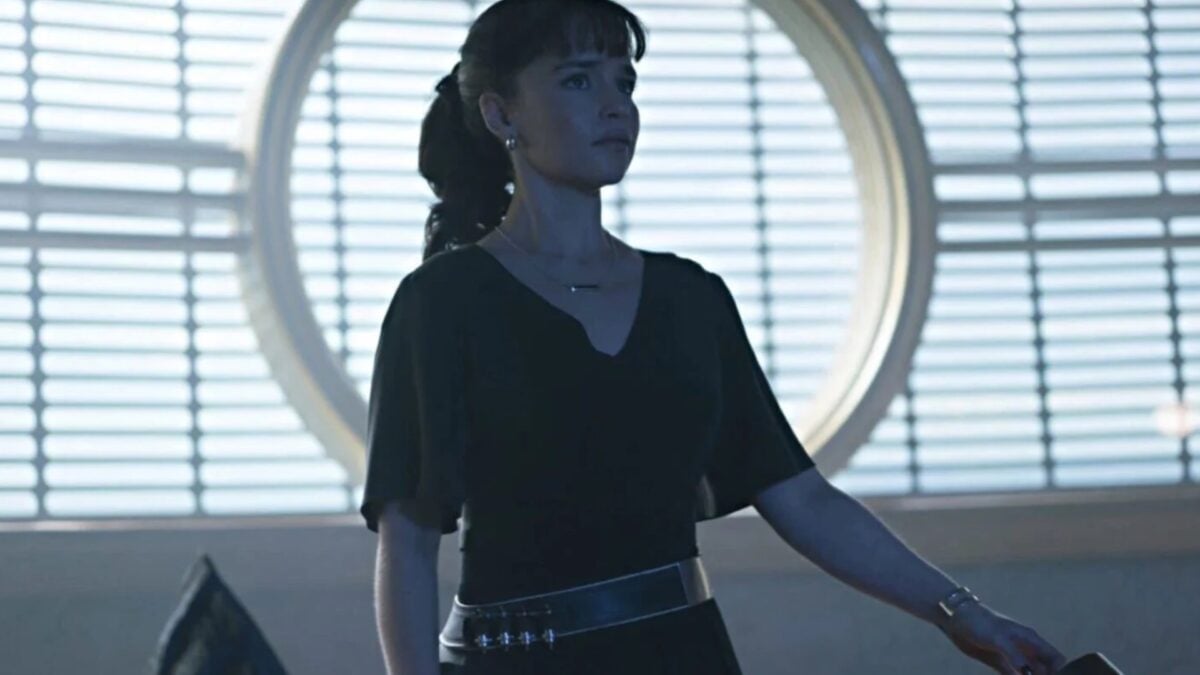
Clarke’s career trajectory post-Westeros has been marked by high-profile franchise attempts that struggled to find their footing. From the critical reception of Terminator Genisys (2015) to Solo: A Star Wars Story (2018) and the Marvel series Secret Invasion (2023), her big-budget efforts have frequently underperformed. Yet, as Gizmodo notes, she views these experiences with a sense of detachment, acknowledging that when an existing franchise fails, it is rarely a personal reflection on the actor’s performance.
Her reflection on the 2019 Emmy Awards serves as a turning point in this evolution. Despite the cultural phenomenon of Game of Thrones, she did not win for her final performance as Daenerys, a loss she admitted was “embarrassing” at the time. That moment of sadness prompted a shift in how she defines success, moving away from external validation and the pressures of being the face of massive intellectual properties.
She now describes herself as being on the "other side" of the Game of Thrones experience, expressing genuine gratitude for the role while no longer feeling trapped by the expectations that followed it. This shift in mindset appears to have informed her current approach to work, where she is now more selective about the projects she chooses to pursue.
As Clarke moves forward, her focus has clearly pivoted from the high-stakes world of blockbuster franchises toward more intentional, character-driven work. By letting go of the need to control the reception of her past projects or the narrative of her paychecks, she has carved out a space where she can separate her professional identity from the massive, often chaotic, machinery of Hollywood hits.
