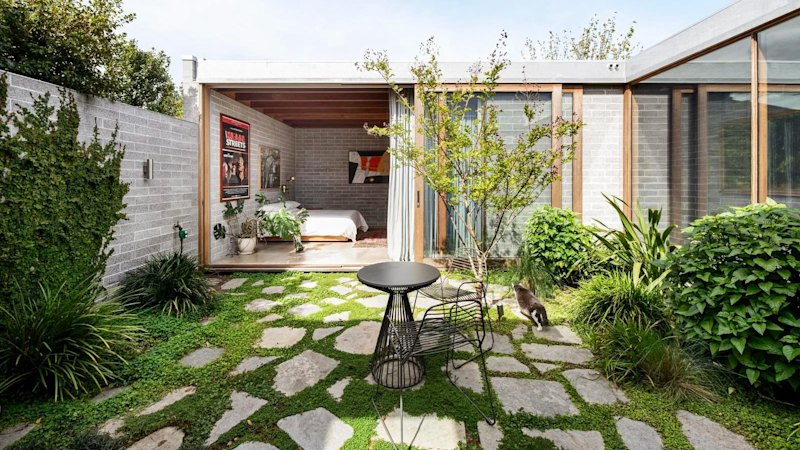
Innovative Architectural Renovation in Northcote Sets New Standard for Urban Living
A three-bedroom terrace house at 3 Dally Street, Northcote, Melbourne, recently sold for $2.7 million following a highly competitive auction. The property attracted intense interest due to its award-winning architectural renovation, which blends advanced manufacturing techniques with sustainable design principles tailored for compact urban living.
Technological and Sustainable Design Innovations
The renovation, led by Melbourne-based LLDS Architects, transformed a narrow, underutilized plot — measuring just 4.6 meters wide and 22 meters long — into a modern, eco-conscious family home. This project exemplifies how constrained urban spaces can be reimagined for contemporary lifestyles without sacrificing environmental responsibility.
Key technical innovations include the use of computer numerically controlled (CNC) milling and robotic cutting to craft bespoke architectural elements such as the irregularly shaped plywood roof and textured concrete walls. Over 70% of these custom components were fabricated by LLDS’s sister company, Power to Make, which utilizes advanced digital fabrication technologies, significantly reducing construction waste and increasing precision.
The design incorporates a green roof that contributes to improved thermal performance by reducing energy consumption and mitigating urban heat island effects. The roof also supports rainwater harvesting systems to irrigate native vegetation, aligning with sustainable urban ecology goals. Internally, the use of concrete vaulted soffits provides both structural support and thermal mass, enhancing energy efficiency and acoustic comfort.
Spatial Configuration and User-Centric Features
The home’s layout encourages fluid movement through three staircases connecting key living spaces. Interior design emphasizes openness and natural light, made possible by a central void that channels daylight deep into the residence. Notably, the absence of internal doors except for bathrooms permits an unrestricted flow within the home, reflecting an innovative approach to spatial design that adapts to diverse resident needs, including pets.
External façades feature trellises serving as structural supports for climbing plants, further integrating the building into its landscape and fostering biodiversity within an urban setting. This approach embodies a contemporary architectural ethos balancing aesthetics, technology, and environmental stewardship.
Market Impact and Business Insights
The property’s auction generated strong bidding momentum, starting from a reserve price of $2.3 million and closing $402,000 above that, underscoring high demand for architecturally significant, sustainable urban housing. Auctioneer Robert Enes noted the intense competition involved experienced buyers deeply invested in the home’s quality and design pedigree.
This transaction exemplifies a broader trend in Melbourne’s inner city where compact, high-design residences command premium valuations, demonstrating the market’s recognition of innovation and sustainability as value drivers in real estate.
Given the scarcity of such forward-thinking developments, this project confirms the viability of integrating advanced digital fabrication and eco-friendly features in residential construction, influencing regional architectural standards and urban planning policy discussions.
Broader Context and Technological Relevance
Northcote House represents a significant case study at the intersection of digital fabrication, sustainable architecture, and urban renewal. It highlights the potential for computer-aided manufacturing to optimize material use and design complexity, relevant in the global push for carbon-neutral building practices. The project’s emphasis on rainwater harvesting and urban greening aligns with internationally recognized climate adaptation strategies promoted by environmental policy frameworks.
Such innovations are increasingly important as cities worldwide grapple with densification challenges and look to leverage technology to deliver environmentally sound housing. Australian architecture firms have been notable in adopting robotics and CNC technology in residential design, positioning themselves at the forefront of next-generation construction methods.
For readers interested in the evolving role of technology in construction and urban ecological design, this project encapsulates how innovation can meet market demand while advancing sustainability—an essential balance in contemporary architecture and real estate development.
Read more on Globally Pulse Technology for in-depth coverage of architectural innovation and urban technology trends.
Further details on advanced fabrication techniques and green architecture can be found via Reuters Technology.
