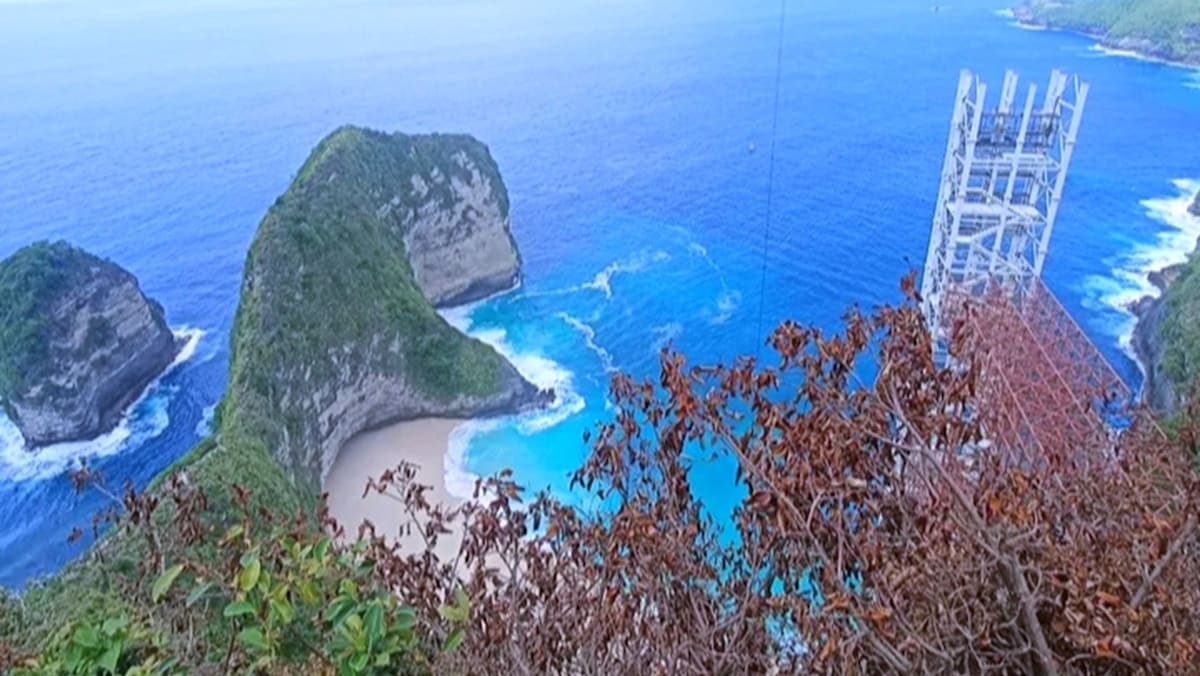
Construction Halted on Controversial Glass Elevator at Kelingking Beach
The construction of a 200 billion rupiah (approximately US$12 million) glass elevator project at Kelingking Beach on the island of Nusa Penida, Bali, has been temporarily suspended by local authorities. The project, managed by Indonesian developer PT Bangun Nusa Properti and backed by Chinese investment, began in July 2023 with the objective of improving safe access to the beach, a popular yet challenging tourist destination famous for its dramatic cliffs and treacherous descent.
Director I Komang Suantara has stated that the project complied with all required legal and technical regulations, including environmental impact assessments and soil stability studies. Suantara affirmed, “Our permits were issued under the latest regional spatial and building regulations, however, we will respect the authorities’ decision to pause construction.” At the time of suspension, the project was reported to be approximately 70% complete.
Project Overview and Local Response
The glass lift is designed to stand 182 meters tall, integrated into the cliff at Banjar Karang Dawa, Desa Bunga Mekar, featuring a 64-meter-long bridge and observation points at intervals along the structure. The lift is intended to operate as a paid facility and aims to increase accessibility for tourists who currently must undertake a steep and sometimes hazardous trek to reach the beach below. About 40% of the project’s workforce is reportedly sourced locally, aligning with community employment goals.
The project has sparked significant debate among visitors and locals alike. Many tourists see the rigorous climb as an intrinsic part of the Kelingking Beach experience; a Swiss visitor told the Kumparan news outlet, “Go with your own strength—don’t use a lift. It’s supposed to be a challenge.” Conversely, others like Eva, a 24-year-old visitor from Jakarta, described the climb as “almost unbearable,” welcoming the lift as a means of making the site safer and more accessible, especially for families and elderly visitors.
However, the elevator has also attracted criticism over its potential environmental impact and aesthetic intrusion. Social media and community forums have expressed concern that the elevator and associated construction disrupt the natural landscape and violate local environmental protections designed to preserve Bali’s unique coastal ecosystem.
Permit Dispute and Regulatory Intervention
Balinese authorities ordered the suspension after determining that the project lacked the appropriate permits for permanent structural development in a protected disaster-mitigation zone. I Dewa Nyoman Dharmadi, chief of Bali’s Civil Service Police (Satpol PP), emphasized that the area is governed by strict coastal setback rules, and the project’s scale exceeded the limited permissions granted for cliff usage. “The project sits within a protected zone and violates coastal setback rules,” Dharmadi said. Safety concerns were also highlighted, resulting in the site being cordoned off.
Klungkung Regent I Made Satria confirmed that the project had received prior approvals before his administration took office earlier this year. He noted, “Local residents told me there were several rounds of consultation, and they supported the project,” but his government is currently reviewing the documentation to ensure compliance with all regulations. There is growing apprehension among officials that continued violations could lead to permanent closure of the project.
Environmental and Cultural Implications
Kelingking Beach has long been valued not only for its scenic beauty but also for its challenging natural access, which is considered part of the authentic experience. Experts caution that infrastructure projects like the glass elevator must balance improving visitor safety and convenience with conserving the fragile coastal environment and local cultural values.
Infrastructure developments on Bali’s islands often raise broader debate over tourism expansion versus environmental conservation—an issue underscored by Bali’s provincial government closely monitoring projects like this one to ensure eco-compliance, as noted by Indonesia’s Ministry of Tourism. The lift has been criticized for clashing with Balinese architectural traditions and potentially eroding the island’s natural appeal, which is crucial to sustainably maintaining its tourism economy.
Reports indicate that construction activities such as land clearing have already visibly altered the cliff’s limestone landscape, leading to public outcry among Balinese residents and the broader Indonesian community wary of irreversible environmental damage. A local official remarked that the project’s presence in a disaster-mitigation zone adds further risk currently under review.
What’s Next for Kelingking Beach
Following the intervention, a provincial special committee conducted inspections of the site in late October 2025. Authorities also suspended another tourism-related activity—bungee jumping at Kelingking Beach—for lacking proper licenses and presenting safety concerns.
Going forward, all development at Kelingking Beach is contingent on strict adherence to regional spatial planning, environmental safety, and legal procedures. This pause offers an opportunity for improved dialogue between developers, local communities, and regulatory bodies to find a balanced solution that preserves Bali’s natural heritage while accommodating increasing tourism demand.
For travelers seeking the authentic Kelingking Beach experience, gear up for the steep hike but stay cautious of ongoing changes in the area. For more on Bali’s tourism and environmental policies, see reporting from Reuters and the local tourism board.
For detailed visitor guidelines and updates on alternative access methods and viewpoints at Kelingking Beach, see local resources at Globally Pulse’s travel section.
