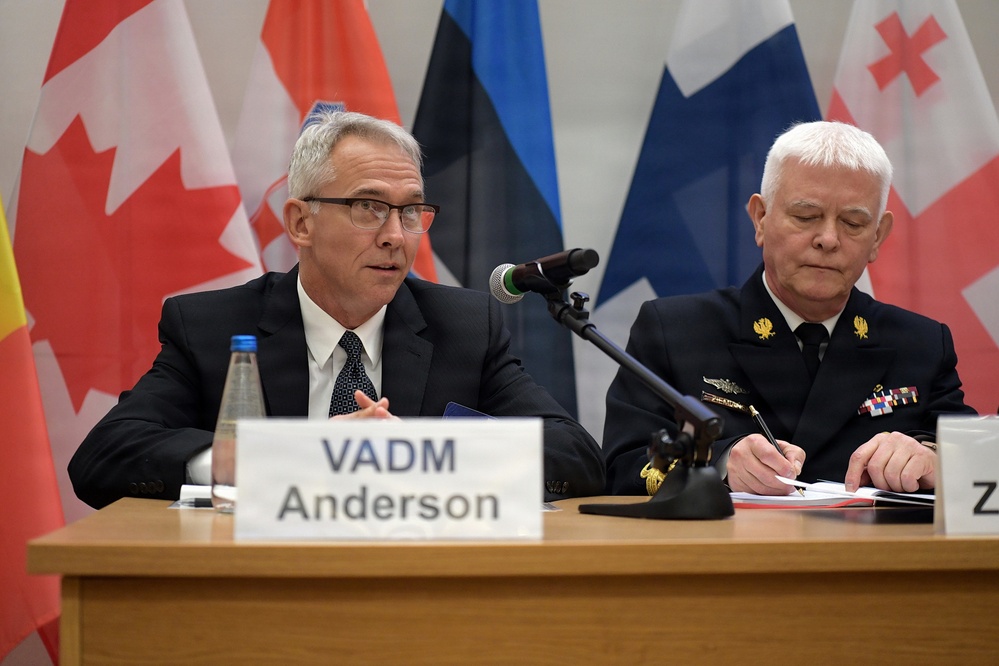
Naval Leaders Focus on Interoperability, Maritime Security in Baltic Sea
Gdynia, Poland – U.S. and European naval leaders convened at the U.S. Naval War College Regional Alumni Symposium in Gdynia, Poland, from March 29 to April 1, to address critical issues surrounding joint combined interoperability, the protection of critical maritime infrastructure, and the evolving landscape of naval warfare, as reported by DVIDS.
The symposium brought together high-ranking officials from various nations to discuss challenges in the Baltic Sea region, which has seen heightened geopolitical tensions following Russia’s invasion of Ukraine. Discussions centered on the need for increased collaboration and standardized procedures to effectively respond to potential threats.
Growing Concerns Over Baltic Sea Infrastructure
A key focus of the symposium was the vulnerability of critical underwater infrastructure in the Baltic Sea. Recent incidents involving damage to communication cables, such as the C-Lion1 and BCS cables, and disruptions to the Estlink 2 electricity connection between Finland and Estonia, have raised alarms about potential sabotage. These events underscore the region’s susceptibility to disruptions that could cascade across multiple sectors, according to Aleksander Olech of Defence24.com.

Leaders emphasized the importance of enhancing maritime monitoring technologies, including underwater sensors and sonar systems, to detect and deter malicious activity. The increasing frequency of vessels operating with their Automatic Identification System (AIS) transponders switched off has also heightened concerns, as these vessels could potentially be equipped for infrastructure manipulation or damage.
Poland’s Role in Regional Security
The symposium’s location in Gdynia, Poland, is significant, highlighting Poland’s growing role as a key player in regional security. Poland has been actively investing in its defense capabilities and strengthening its partnerships with NATO allies. The country is also home to the Aegis Ashore Missile Defense System, which recently completed its first maintenance availability at Naval Support Facility Redzikowo, further bolstering regional defense capabilities, as detailed by the U.S. Navy’s Naval Sea Systems Command.
Recent discussions, including the Baltic Security Talks hosted by the Casimir Pulaski Foundation, have also underscored Poland’s commitment to strengthening its strategic partnership with Sweden. The ORKA program, a joint procurement initiative between Poland and Sweden, was presented as a symbol of this deepening bilateral relationship. According to Swedish Minister for Defence Pål Jonson, “There are no other bilateral relations that have transformed as much as ours with Poland since we joined NATO,” as reported by the Casimir Pulaski Foundation.
NATO Integration and Interoperability
A recurring theme throughout the symposium was the need for deeper integration and interoperability among NATO countries bordering the Baltic Sea. A recent report, “Baltic 2035,” calls for a new security architecture in the region, emphasizing that the Baltic Sea is no longer simply a regional concern but a central pillar of European and transatlantic security. Experts at the event stressed the importance of strengthening defense infrastructure, developing joint technological capabilities, and forging closer economic ties.
The “Baltic 2035” report also highlighted the need for a common operating picture for Baltic maritime security, as outlined by the Center for Maritime Strategy. This would involve sharing intelligence and coordinating responses to potential threats in a more seamless and efficient manner.
U.S. Commitment to the Eastern Flank
The United States reaffirmed its commitment to the security of NATO’s eastern flank, with ongoing security cooperation with Poland being a key component of this strategy. The U.S. State Department confirmed that permanently stationed U.S. forces in Poland are designed to improve command-and-control capabilities, enhance interoperability, and manage prepositioned equipment, according to the U.S. Department of State.
The discussions in Gdynia reflect a broader trend toward increased military activity in the Baltic Sea region, including NATO’s annual Baltops exercise, which aims to enhance maritime security cooperation and operational coordination. These exercises, conducted since 1971, demonstrate NATO’s commitment to maintaining a strong presence in the Baltic Sea and deterring potential adversaries, as noted by the Observer Research Foundation. The symposium serves as a demonstration of the collaborative efforts underway to address the evolving security challenges in this strategically important region.
However, the Center for Maritime Strategy cautions that Poland’s new government may shift priorities, potentially impacting investments in maritime security in favor of climate and environmental protection initiatives.
