The Dow Jones Industrial Average surged past 37,000 on Friday, May 23, 2026, as AI-driven stocks like Tesla and Nvidia defied broader market volatility, while analysts flagged five high-conviction tech plays now trading at buy points.
After a week of AI sector sell-offs, futures markets rebounded sharply, with the Dow Jones Industrial Average (^DJI) climbing to its highest levels since late April. The shift came as Tesla shares rose 2.7% to $445.19—clearing a technical entry point that analysts say signals a potential breakout toward $498.83. Meanwhile, Nvidia’s earnings report revealed a $200 billion opportunity in the CPU market, even as the company’s stock slipped post-earnings for the fourth straight quarter. The contrast underscores a pivotal moment: AI stocks are no longer immune to profit-taking, but the underlying demand remains unshaken.
Nvidia’s $82 Billion Quarter: The Geopolitical Tightrope
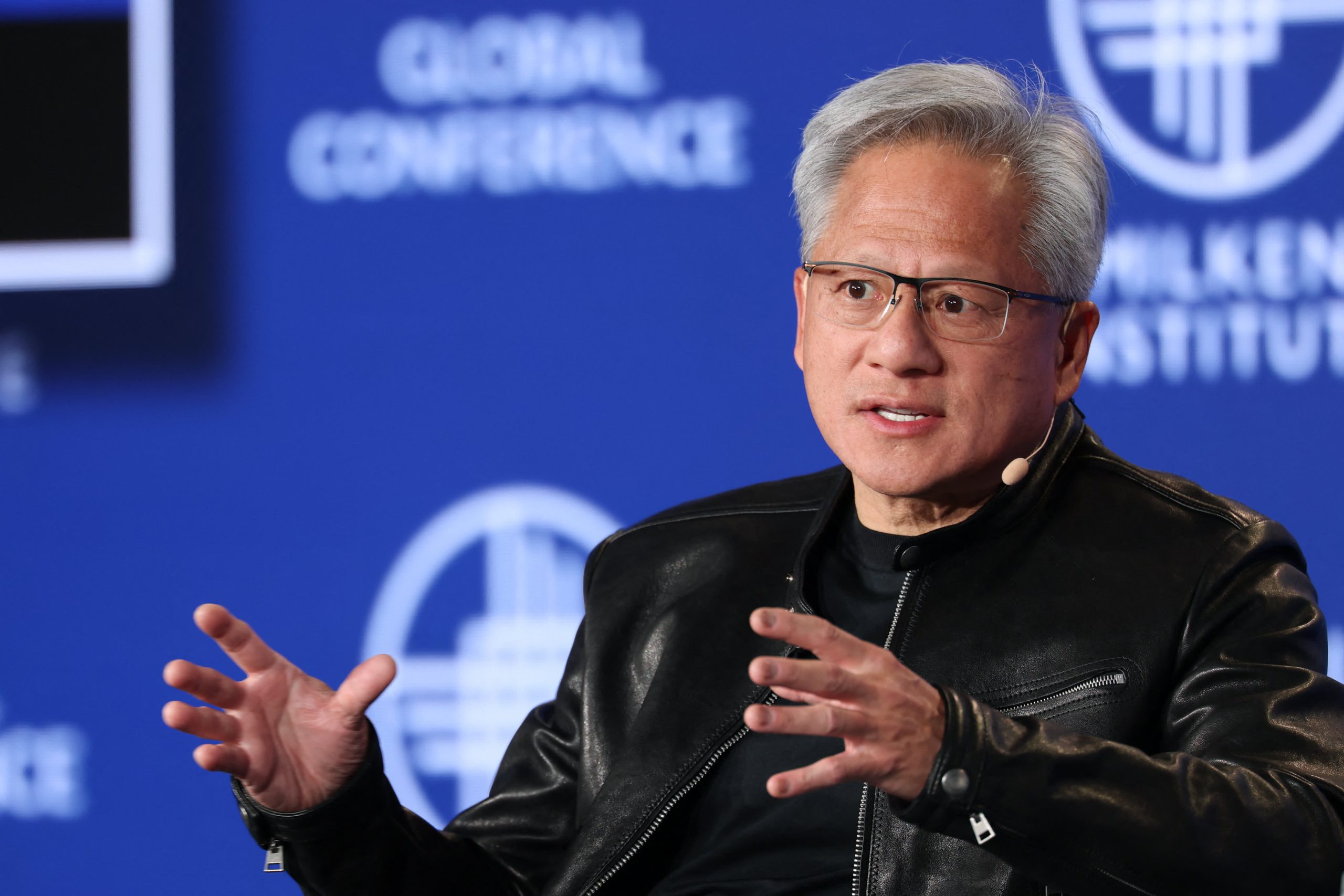
Nvidia’s latest earnings—revenue surging 85% to $82 billion—painted a picture of a company at the center of a geopolitical storm. The chip giant’s CEO, Jensen Huang, told CNBC in an interview that Nvidia has “largely conceded” China’s AI chip market to domestic rivals like Huawei. The admission came as Beijing intensified calls for local companies to abandon Nvidia’s GPUs in favor of homegrown alternatives, despite U.S. export controls allowing limited sales of certain chips to China. The move reflects a broader trend: while Nvidia dominates high-end AI training with its GPUs, Chinese firms are filling the mid-tier gap with competitive—but less advanced—solutions.
Nvidia’s pivot to CPUs—highlighted by its new Vera CPU targeting a $200 billion market—marks a strategic gambit. The company’s CFO projected $20 billion in CPU revenue this year, a fraction of its GPU dominance but a critical expansion into territory where it faces stiffer competition. The timing couldn’t be more delicate: while Nvidia’s data center business (hyperscalers and sovereign AI projects) remains its cash cow, edge computing—autonomous vehicles, robotics, and PCs—is where the next battle for AI infrastructure will be fought.
The Dow’s AI Buy Zone: Five Stocks at Critical Levels
The Dow’s rally wasn’t just about Tesla. Analysts at Business Insider scoured Wall Street’s latest price targets, identifying five stocks now trading at or near buy points—each tied to AI’s broader ecosystem. Nvidia itself remains a top pick, with targets ranging from $280 (Morgan Stanley) to $500 (Needham & Co.), despite its post-earnings dip. The divergence between analyst optimism and market reaction highlights a key tension: AI stocks are priced for perpetual growth, but the reality of execution risks is finally seeping in.

For more on this story, see Dow Jones Hits Record High of 50,600 as U.S. Stocks Rally on Easing Yields.
| Stock | Current Price (5/22/2026) | Analyst Target | Firm |
|---|---|---|---|
| Nvidia Corp. | $350 | $500 | Needham & Co. |
| Tesla | $445.19 | $498.83 (buy point) | Technical Analysis |
| Anthropic | N/A (private) | $10.9B (Q2 revenue) | CNBC |
| Quantum Computing Firms | Varies | $2B in U.S. grants | U.S. Government |
Anthropic’s projected $10.9 billion in Q2 revenue—double its 2025 annual total—underscores the AI arms race’s acceleration. Meanwhile, the U.S. government’s $2 billion in quantum computing grants to nine firms signals another frontier where AI and hardware convergence will define the next decade. The question for investors isn’t whether AI will grow, but which companies will capture the value as margins tighten.
Tesla’s Cup Base: A Technical Breakout or Another False Start?
Tesla’s 2.7% gain to $445.19 wasn’t just a blip—it was a technical confirmation. The stock has been carving out a “cup base” pattern, a formation that historically precedes breakouts. The $498.83 buy point, according to recent trading analysis, represents a 12% upside from current levels. But Tesla’s journey isn’t just about stock charts. The company’s AI-driven robotics and autonomous vehicle ambitions hinge on Nvidia’s chips—and Nvidia’s China struggles. If Beijing’s push for domestic alternatives gains traction, Tesla’s supply chain could face disruptions, testing its breakout narrative.

The broader market’s resilience—despite AI sell-offs—suggests investors are betting on diversification. While Nvidia and Tesla dominate headlines, stocks like UnitedHealth ($460 target from Loop Capital) and Walmart ($145 from UBS) reflect a hedging strategy. The Dow’s climb to 37,000 isn’t just about tech; it’s about the realization that AI’s impact is too broad to bet on a single sector.
What Comes Next: Three Scenarios for AI Stocks
The next 30 days will test whether AI stocks are due for a correction—or if the sell-off has run its course.
- Scenario 1: The Rotation Continues — Investors pivot from AI to other growth sectors (quantum, biotech, or even traditional manufacturing). The Dow’s recent rally suggests this is already happening.
- Scenario 2: The China Effect Intensifies — If U.S. export controls tighten further, Nvidia and Tesla could face supply chain headwinds, pressuring their stocks despite strong fundamentals.
- Scenario 3: The AI Narrative Reasserts — A single breakthrough—say, a new large language model or autonomous vehicle milestone—could reignite demand, lifting the entire sector.
The wild card? Macroeconomic data. Rising U.S.-Iran tensions—mentioned in recent market reports—could trigger volatility, but the AI sector’s resilience suggests its decoupling from geopolitical noise. For now, the Dow’s climb and Tesla’s technical setup point to one conclusion: the AI story isn’t over. It’s just getting more complicated.
One thing is clear: the days of AI stocks trading on pure hype are ending. The market is pricing in execution risk, and the companies that survive will be those that deliver—not just promise.
