
NASA and the SETI Institute currently provide public access to the “Eyes on Exoplanets” interactive visualization tool, which allows users to explore over 5,000 confirmed planets orbiting distant stars. Updated regularly with data from the Exoplanet Archive, the platform translates complex orbital mechanics and transit photometry into accessible, real-time 3D models.
How Eyes on Exoplanets Visualizes Scientific Data
The “Eyes on Exoplanets” tool functions as a bridge between raw astronomical data and public visualization. It pulls directly from the NASA Exoplanet Archive, a database hosted at the California Institute of Technology. The archive catalogs discoveries made by various missions, most notably the Kepler Space Telescope, the Transiting Exoplanet Survey Satellite (TESS), and the James Webb Space Telescope. These missions operate under the NASA Exoplanet Exploration Program, which manages the scientific workflow from raw photon detection to final confirmation.
When a user selects a specific system, the application renders the star and its orbiting bodies based on parameters like semi-major axis, orbital period, and planetary radius. For systems where direct imaging is unavailable, the tool uses artistic representations based on confirmed physical data. This allows users to compare the relative sizes of exoplanets to Jupiter or Earth, providing a sense of scale for systems located hundreds of light-years away. By utilizing WebGL technology, the tool provides an interactive experience that functions within standard web browsers, removing the need for specialized astronomical software to view the latest findings.
The Role of Transit Photometry in Discovery
The data powering these visualizations relies heavily on transit photometry. This method identifies planets by measuring the periodic dimming of a star’s light as a planet passes, or transits, in front of it. The depth of this dip in light, known as the transit depth, is directly proportional to the ratio of the planet’s area to the star’s area, allowing scientists to derive the radius of the orbiting body.
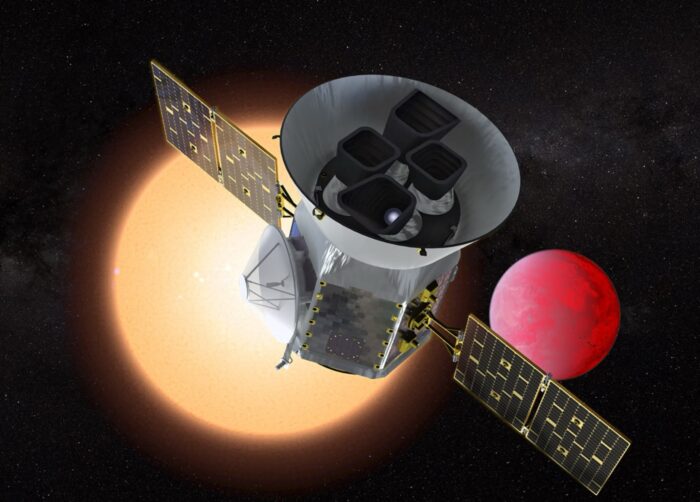
According to NASA’s Exoplanet Exploration program, this technique provides the primary means of determining a planet’s size. When combined with radial velocity measurements—which track the “wobble” of a star caused by a planet’s gravitational pull—astronomers can calculate a planet’s mass. The “Eyes on Exoplanets” interface integrates these variables to show users whether a planet is likely a gas giant, a rocky “super-Earth,” or a Neptune-like world. This dual-method approach is critical; transit photometry alone provides the size, while radial velocity provides the mass. Together, they allow researchers to calculate the bulk density of the planet, which is the key indicator of whether a world is composed primarily of rock, ice, or gas.
Institutional Collaboration and Data Integrity
The maintenance of the tool is a collaborative effort between NASA’s Jet Propulsion Laboratory (JPL) and the Exoplanet Science Institute. Because exoplanet discovery is an active field, the visualization is not a static map but a dynamic reflection of current peer-reviewed research. The data pipeline involves rigorous validation before an entry is added to the official archive.
For more on this story, see Parker Solar Probe Breaks Speed Record: 430,000 mph in Sun’s Corona.
The archive is the official NASA repository for exoplanet data, and it is essential that the public interface remains synchronized with the latest confirmed findings from the astronomical community.
Dr. Jessie Christiansen, Science Lead for the NASA Exoplanet Archive
This synchronization ensures that when a new planet is confirmed through the peer-review process, it appears in the visualization shortly thereafter. The platform distinguishes between confirmed planets and “candidates”—objects that show transit signals but require further observation to be officially classified as planets. This distinction is vital, as candidate lists often include false positives caused by eclipsing binary stars or instrumental noise in the telescope sensors.
Scientific Context and Evolution of the Archive
The Exoplanet Archive serves as a central repository for the global scientific community. Before the existence of such centralized tools, data was often siloed within individual research papers or institutional databases. The current standard requires that any discovery published in a peer-reviewed journal must be accompanied by the submission of the underlying data to the archive. This ensures that the global community, including the developers of “Eyes on Exoplanets,” can access standardized, high-precision parameters. The transition from early ground-based surveys to space-based missions like Kepler and TESS has increased the volume of data exponentially, necessitating the automated updates that keep the visualization tool accurate.

Future Developments in Exoplanetary Exploration
As of June 2026, the focus of exoplanetary research has shifted toward atmospheric characterization. While early missions focused on simply finding planets, current instruments like the James Webb Space Telescope are now analyzing the chemical composition of exoplanetary atmospheres. This is achieved through transmission spectroscopy, where the telescope observes the light filtering through a planet’s atmosphere during a transit, revealing the absorption lines of molecules such as water vapor, methane, and carbon dioxide.
The integration of this spectroscopic data into public tools remains a technical challenge. While “Eyes on Exoplanets” currently focuses on orbital positioning and physical dimensions, future iterations are expected to incorporate data regarding planetary temperatures and potential biosignatures. Users can monitor these updates through the NASA Exoplanet Exploration website, which serves as the primary portal for both the visualization tool and the underlying scientific datasets. As the field moves from discovery to detailed characterization, the role of public-facing tools like “Eyes on Exoplanets” will continue to evolve from simple planetary mapping to complex representations of alien environments.
Find more reporting in our Technology section.
