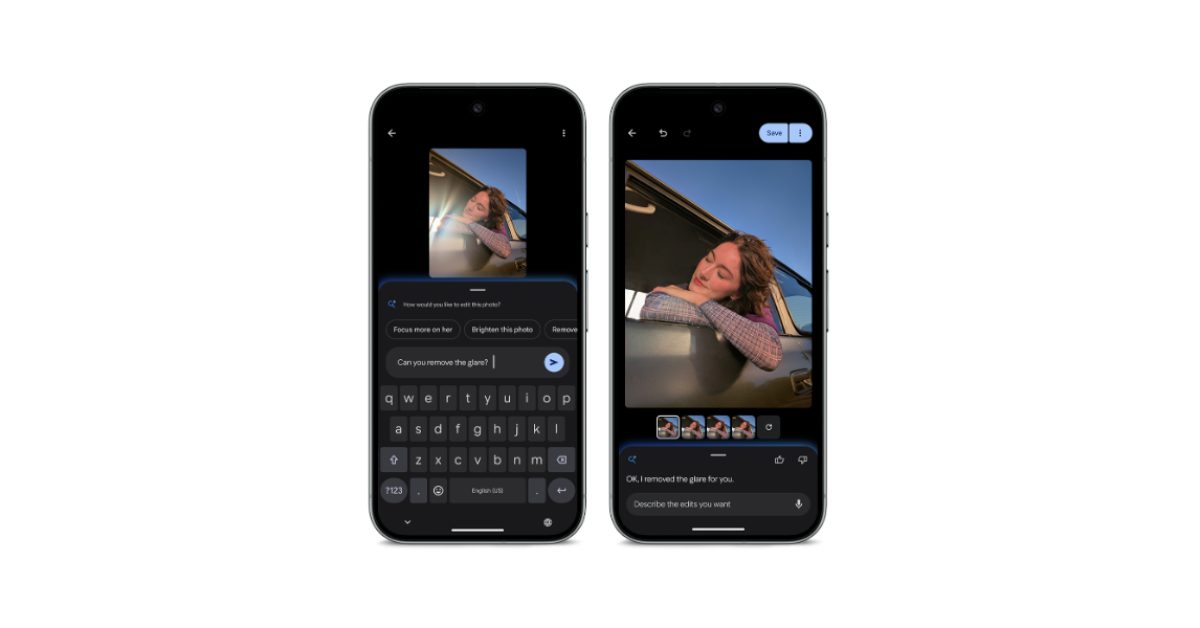
Google Photos is expanding its AI-powered editing tools globally, with "Edit with Ask Photos" now rolling out to five new countries and a secretive video-editing feature codenamed "Soba" emerging from internal tests. The moves mark Google’s push to turn its photo app into a full-fledged AI-powered creative hub—one that could soon rival standalone video editors.
Global Rollout of “Edit with Ask Photos” Expands to Five New Markets
Google has quietly expanded its AI-powered photo editing tools beyond the US, Australia, India, and Japan, adding support for "Edit with Ask Photos" in Germany, the United Kingdom, France, Spain, and Italy. The feature, which lets users adjust photos with natural language prompts like "remove glare" or "give this a sepia tone," is now available to Android users in these regions, though rollout timing may vary. Meanwhile, internal code leaks reveal Google is testing a new AI-powered video-editing tool codenamed "Soba," which could transform video clips using text commands—potentially leveraging its latest Gemini Omni model.
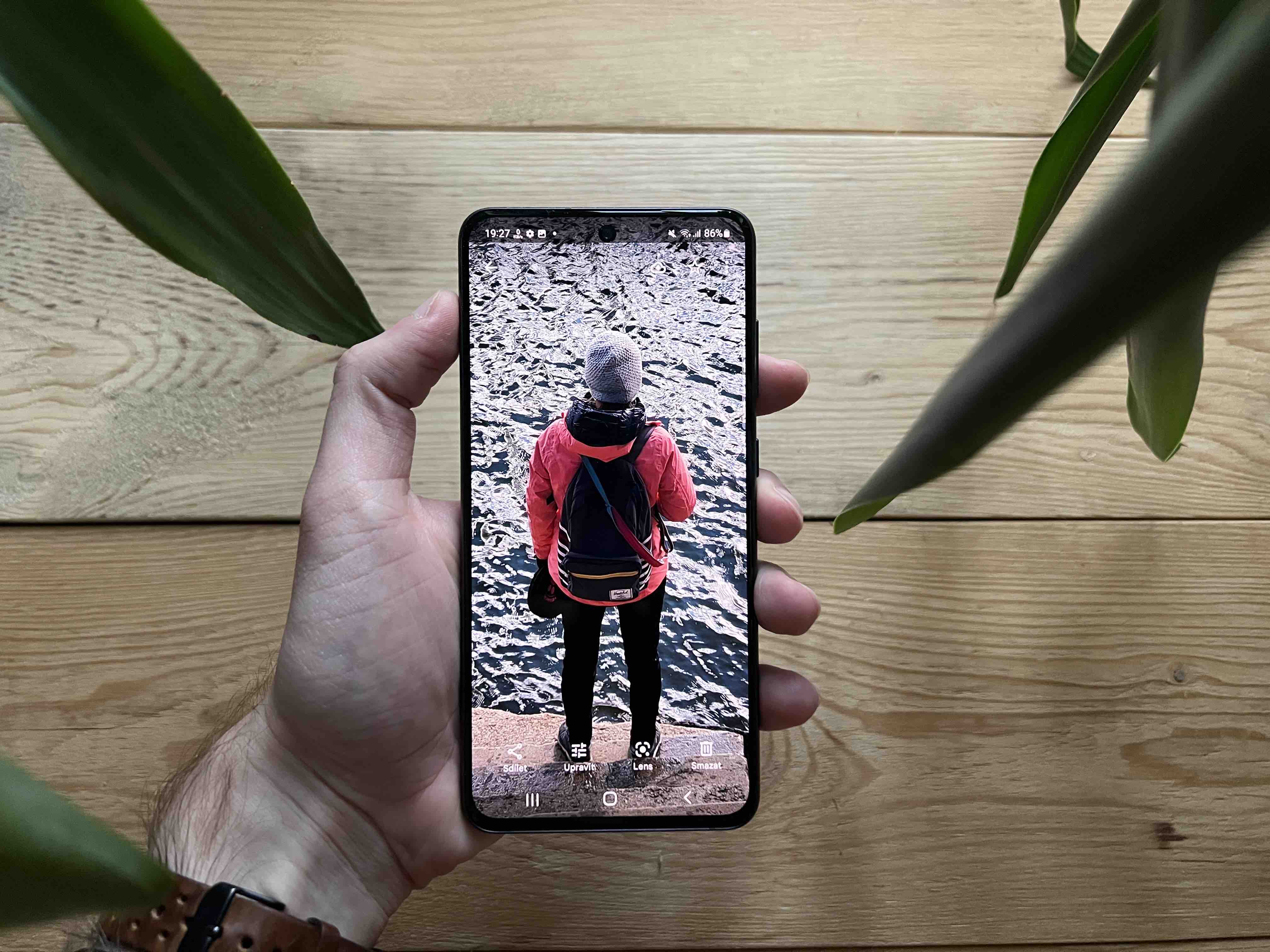
The expansion of "Edit with Ask Photos" follows a year of limited availability, with Google now prioritizing broader accessibility for its conversational editing tools. According to news.google.com, the feature remains Android-exclusive in these new markets, though iOS users in the US already have access. The rollout underscores Google’s strategy to democratize professional-grade editing for everyday users, a trend that has already seen success with its Remix feature for photos.
Hidden Video Editing Project “Soba” Emerges in Code, Hinting at AI-Powered Video Remix
Yet the most intriguing development may be hidden in plain sight. Code analysis by Android Authority and Android Authority reveals Google is developing "Soba," a video-editing counterpart to its existing photo tools. Unlike Google’s current "Photo to video" feature—which converts still images into clips—"Soba" appears designed to restyle and transform existing video footage. Internal test strings suggest users could soon edit videos with prompts like "cinematic relighting" or "immersive background swaps," with the tool potentially using Gemini Omni, Google’s latest multimodal AI model.
The feature’s existence was first spotted in Google Photos version 7.80.0.929302933, where a new button labeled "Video remix" was discovered alongside the existing "Photo remix" option. Yahoo Tech notes that the app’s code hints at a YouTube-like play button with Google’s signature "sparkle" logo, reinforcing the video focus. While the feature isn’t yet functional, the clues suggest Google is following a familiar playbook: first testing AI tools internally before rolling them out to the public.
How “Soba” Could Reshape Google Photos—and the Broader AI Editing Race
The expanded "Edit with Ask Photos" feature allows users to tweak photos using simple text commands. For example, prompts like "remove distractions in the background" or "adjust the lighting" can now be executed without manual sliders or complex menus. The tool, which launched in four countries last year, is now accessible in five additional markets—Germany, the UK, France, Spain, and Italy—though news.google.com notes the rollout may take time to reach all users.
The feature’s availability is currently limited to Android devices in these regions, while iOS users in the US already have access. This discrepancy suggests Google is prioritizing Android compatibility for now, possibly due to deeper integration with its cloud services or hardware partnerships. The tool’s expansion aligns with Google’s broader push to make AI editing more accessible, a strategy that has already paid off with its Remix feature, which lets users apply anime, manga, or 3D animation styles to photos.
Yet the most significant question remains: How will Google balance these new editing tools with its existing offerings? The company has already introduced features like "Photo to video" and "Wardrobe," which lets users virtually try on clothes from their photos. Adding video editing could further blur the line between Google Photos and standalone video editors like Adobe Premiere or CapCut—though the tool’s eventual capabilities remain unclear.
Unanswered Questions: Will “Soba” Deliver—or Become Another Half-Baked Google AI Experiment?
While "Edit with Ask Photos" is now publicly available, Google’s "Soba" project remains shrouded in mystery. The feature’s name was first uncovered in internal app code, where it appeared alongside a new button labeled "Video remix." According to Android Authority, the tool is designed to offer "cinematic relighting, immersive background swaps, and beautiful stylization for your video," with processing handled in the cloud.

The feature’s development follows a pattern Google has used before: testing AI tools internally before rolling them out to the public. For example, the original "Photo remix" feature was first spotted in app code months before its official launch. Similarly, "Soba" appears to be in early stages, with no functional UI or user-facing documentation yet available.
One key detail: The feature may rely on Google’s latest AI model, Gemini Omni, which was released earlier this year. Unlike earlier models, Gemini Omni supports "multimodal context," meaning it could understand and edit video footage based on both visual and textual input. For example, a user might ask the AI to "turn this clip into a claymation-style animation" while preserving specific scenes untouched—a level of precision not possible with earlier tools.
However, Yahoo Tech notes that Google may not unleash the full power of Gemini Omni in Photos. The original "Photo remix" feature, for instance, used a more limited model (Nano Banana) rather than the full Gemini capabilities. If Google follows the same approach, "Soba" could offer powerful but constrained video editing—enough to compete with basic tools like Adobe’s auto-enhance features, but not full professional-grade control.
Google’s expansion of AI editing tools in Photos reflects a broader industry shift: tech giants are racing to turn everyday apps into creative powerhouses. Apple’s recent updates to iPhone cameras with AI-powered editing, Microsoft’s integration of Copilot into Office apps, and Meta’s AI tools for Instagram all point to the same trend—companies want to keep users locked into their ecosystems by offering advanced features that were once reserved for paid software.
For Google, this strategy is particularly critical. While its search and ads businesses remain dominant, its consumer apps—like Photos—have long struggled to compete with Apple or Adobe. By embedding AI editing directly into Photos, Google is betting that users will see less reason to switch to third-party tools. The expansion into new countries also signals a global push, ensuring the feature isn’t just a US-centric experiment.
Yet the biggest question is whether Google can execute. The company has a history of promising AI features only to deliver them late—or not at all. For example, its "Photo to video" tool has been in development for years but remains relatively niche. If "Soba" follows a similar path, users may grow frustrated with half-baked features.
On the other hand, Google has already proven it can deliver on AI editing with Remix. The tool’s success—particularly among casual users who want quick, stylish edits—suggests there’s real demand for these features. If "Soba" lives up to the hints in its code, it could become the next big leap for Google Photos, turning it from a simple gallery app into a full-fledged creative studio.
With "Edit with Ask Photos" now rolling out globally and "Soba" in development, the next few months will be critical for Google.
-
Will "Soba" launch as a full video editor—or just a basic tool?
The internal code suggests powerful features, but Google may scale back capabilities to avoid overwhelming users. If the tool uses Gemini Omni, we could see advanced effects like AI-generated backgrounds or voiceovers—but if it’s limited like "Photo remix," users may be disappointed. -
When will "Soba" arrive—and will it be free?
Google typically rolls out AI features in phases, starting with limited testing before wider release. Given the tool’s current state (no functional UI, no public documentation), a launch could be months away. Pricing is another unknown—will it be free, or will Google introduce a subscription tier for advanced features? -
How will competitors respond?
Apple, Adobe, and even social media platforms like Instagram are all investing in AI editing. If Google’s tools become too powerful, they may force rivals to accelerate their own AI features—leading to a new arms race in consumer creativity tools. -
Will "Soba" work on iOS?
The current rollout of "Edit with Ask Photos" is Android-only in new regions, but iOS users in the US already have access. If "Soba" follows the same pattern, Apple users may get the feature later—or not at all, depending on Google’s priorities.
For now, Google is playing a long game. By expanding "Edit with Ask Photos" globally and teasing "Soba," it’s signaling that Photos isn’t just a storage app anymore—it’s becoming a creative hub. Whether that vision pays off depends on execution. If "Soba" delivers on its promises, Google could redefine what a photo app can do. If it falls short, users may keep looking elsewhere for their editing needs.
One thing is certain: The race for AI-powered creativity is on, and Google is betting big on Photos to stay ahead.
Find more reporting in our Technology section.
