
Federal Oversight and the 30-Day Review Framework
The recently signed executive order creates a structured process for the federal government to evaluate the security implications of advanced AI. Under the new policy, the government has a 30-day window to conduct risk assessments on the most advanced systems before they are deployed to the public.
According to reporting from AP News, this timeframe was specifically chosen to avoid excessive burdens on the competitive technology sector, as longer periods were viewed as potentially detrimental to the rapid pace of industry innovation. The policy explicitly positions these measures as a necessary response to the national security considerations introduced by advanced AI capabilities, aiming to coordinate action across various executive departments and agencies.
A Shift in Regulatory Philosophy

The current administration’s approach represents a distinct departure from the policy landscape of the previous administration. On January 23, 2025, President Trump issued an executive order titled “Removing Barriers to American Leadership in Artificial Intelligence,” which rescinded the prior administration’s Executive Order 14110.
According to analysis from Squire Patton Boggs, the Biden-era framework had emphasized oversight, risk mitigation, and equity, including mandates for red-teaming high-risk models and enhanced cybersecurity protocols. In contrast, the current administration’s policy focuses on deregulation and the promotion of private-sector innovation as the primary engine for maintaining United States global dominance in the AI sector. The administration has explicitly moved to halt federal agency collaborations that were previously focused on developing standardized safety and reliability best practices.
Confronting State-Level Regulation
Beyond federal oversight, the administration has signaled a firm stance against state-level regulatory efforts. In a recent presidential action, the administration argued that a “patchwork of 50 different regulatory regimes” creates significant compliance challenges, particularly for start-ups.
The administration has expressed specific concerns regarding state laws that it claims force AI models to embed ideological biases. As noted in the White House policy framework:
> A new Colorado law banning “algorithmic discrimination” may even force AI models to produce false results in order to avoid a “differential treatment or impact” on protected groups.The White House
To address these concerns, the administration is moving to establish an AI Litigation Task Force. Within 30 days of the order’s issuance, the Attorney General is directed to form this body, which will be tasked with challenging state AI laws that are deemed inconsistent with the federal objective of sustaining global AI dominance. The administration maintains that such state laws often impinge on interstate commerce and threaten to stifle the technological revolution.
National Security and Competitive Edge
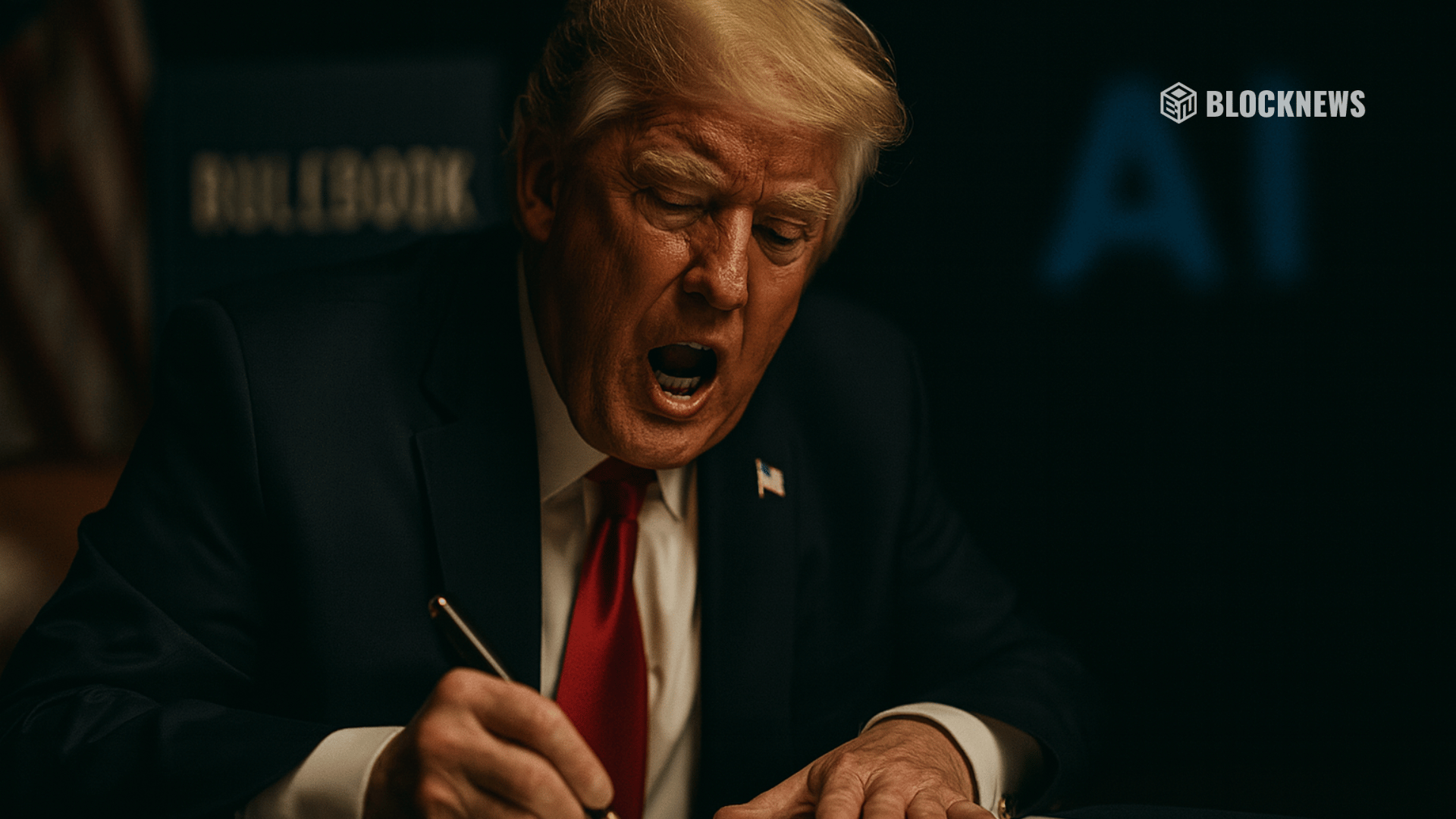
The administration’s rhetoric underscores a perceived race for supremacy against international adversaries. President Trump has repeatedly highlighted the necessity of maintaining a competitive lead in the technology sector. During a canceled Oval Office event with industry leaders, the President emphasized his reluctance to implement policies that might hinder American progress.
> We’re leading China, we’re leading everybody, and I don’t want to do anything that’s going to get in the way of that lead.President Donald Trump
While the new federal framework introduces voluntary vetting for frontier labs—such as Google, OpenAI, and Anthropic—the administration continues to prioritize the removal of federal oversight that it views as an impediment to innovation. The current strategy assumes that by minimizing regulatory friction, the private sector will naturally accelerate talent growth and technological development.
The future of this policy will depend on the effectiveness of the AI Litigation Task Force in navigating the conflict between federal authority and state-level legislative initiatives. As of early June 2026, the administration remains committed to a minimally burdensome national standard, aiming to ensure that children are protected and copyrights are respected while simultaneously preventing what it characterizes as the censorship of AI models.
