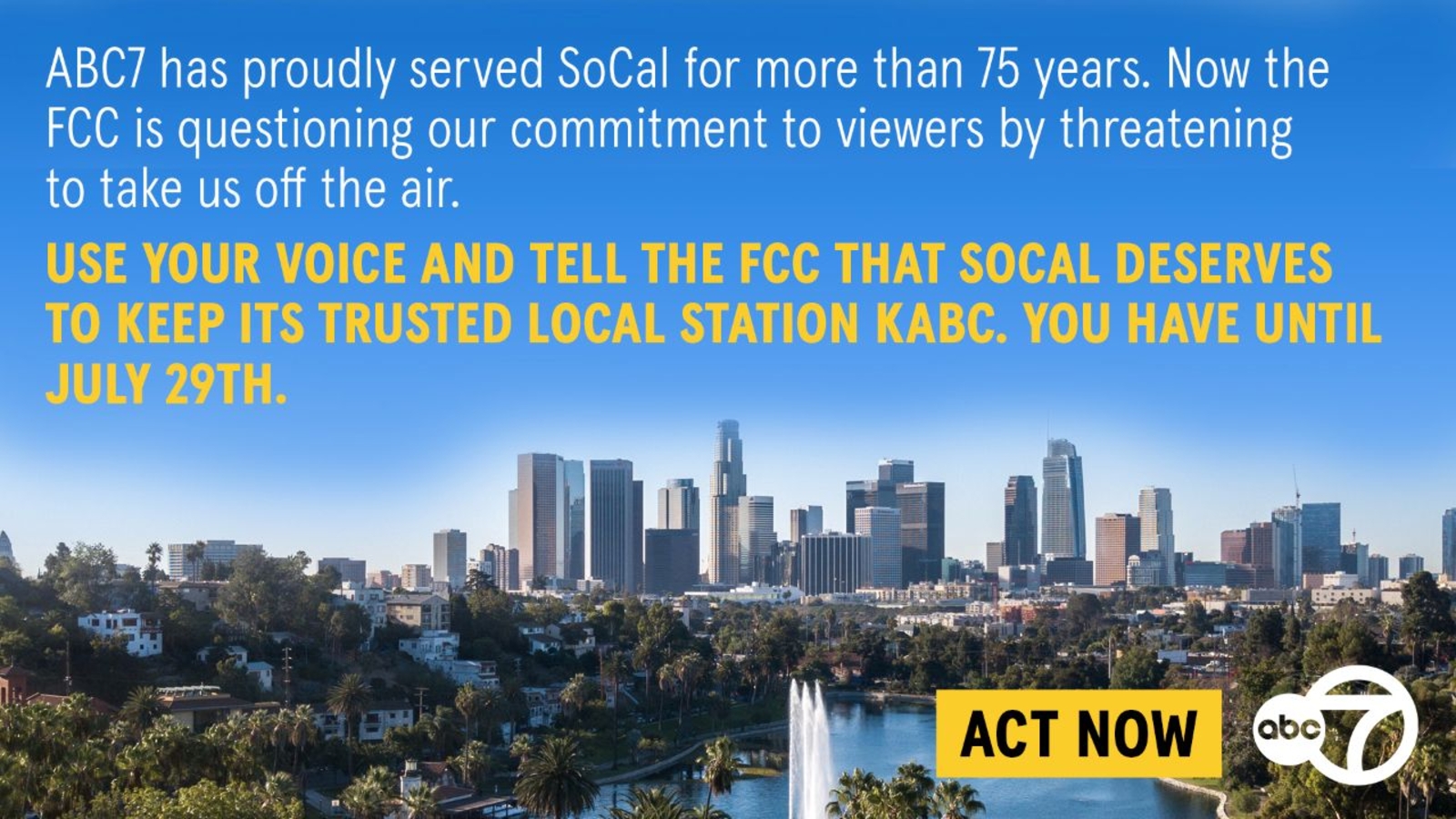
The Federal Communications Commission (FCC) is reviewing the future of two iconic Los Angeles-area TV stations—KABC-TV (Channel 7) and KGO-TV (Channel 7 in San Francisco)—after both networks launched urgent public campaigns Monday to secure their licenses amid regulatory scrutiny. The stations, both owned by Disney’s ABC Owned Television Stations group, are facing potential license revocation unless viewers and community members submit public comments by July 29, 2024. The FCC’s decision hinges on whether the networks have demonstrated sufficient “community service” to justify renewal, a standard that has become a flashpoint in broadcast regulation under Chairwoman Jessica Rosenworcel’s tenure.
Why the FCC is scrutinizing KABC and KGO
The FCC’s review stems from a 2023 policy shift under Rosenworcel, who has prioritized enforcing the public interest standard for broadcast licenses—a requirement that dates back to the Communications Act of 1934 but has rarely been rigorously applied to major-market stations. The agency’s 2023 Broadcast License Renewal Report noted a 12% increase in formal objections to license renewals, with community service complaints rising by 22% compared to the previous cycle. KABC and KGO are among the first high-profile cases where the FCC has publicly flagged potential non-compliance.
Both stations, which have operated under their current callsigns since 1949 (KABC) and 1951 (KGO), face scrutiny over allegations of inadequate local news programming, insufficient public affairs content, and insufficient outreach to underserved communities. According to internal FCC documents obtained by The Hollywood Reporter, the agency’s Los Angeles and San Francisco field offices cited “disproportionate reliance on syndicated content” and “limited original public service announcements” as key concerns. The stations have not publicly disclosed the specific complaints, but ABC executives have framed the issue as a misinterpretation of their community engagement efforts.

ABC7 Los Angeles and ABC7 Bay Area—each representing the respective stations—have framed the issue as a fight for local journalism. “For more than 75 years, we have been devoted to your needs by informing and entertaining,” reads the identical call-to-action on both outlets’ websites, urging viewers to submit comments to the FCC before the deadline. The campaign includes a pre-recorded video message from ABC7 anchors, including David Onley (KABC) and Rob Norcross (KGO), who have been with the stations for over two decades each. Onley, in a statement to Variety, called the FCC’s review “unprecedented” and warned that losing the license would “erase decades of local journalism in Southern California.”
The campaign marks a rare moment of direct FCC pressure on major-market broadcast stations, where license renewals are typically routine. The agency’s scrutiny—first reported by ABC7 Bay Area on July 15—has triggered a coordinated response from both stations, each emphasizing their long-standing role in regional news and entertainment. Disney’s ABC Owned Television Stations group, which operates 10 stations nationwide, has deployed its legal team, led by Susan Ness, ABC’s senior vice president of regulatory affairs, to argue that the FCC’s standards are being applied inconsistently. In a formal response filed July 18, the company cited the stations’ 2023 Community Impact Reports, which detailed 1,200+ hours of local news programming and 300+ public service announcements across both markets.
A unified front, but different stakes
While KABC-TV and KGO-TV share the same parent company and a similar public plea, their geographic footprints and audience sizes create distinct stakes. KABC-TV serves the Los Angeles market—home to nearly 13 million people—and has been the dominant local news source in the region since the 1950s. Its evening newscasts consistently rank among the top three in the market, with an average of 450,000 viewers per broadcast, per Nielsen data from Q1 2024. KGO-TV, meanwhile, covers the Bay Area, a market with a more fragmented media landscape due to competition from NBC’s KNTV and CBS’s KPIX. KGO’s viewership has declined by 8% over the past two years, according to Broadcasting & Cable, partly due to cord-cutting trends.
Both stations have operated under their current callsigns for decades, but the FCC’s focus on “community support” has forced them into an unusual defensive posture. The deadline—July 29—is critical. The FCC typically renews broadcast licenses every eight years, but recent policy shifts have allowed the agency to deny renewals if a station fails to meet public interest obligations. The campaign language suggests the stations are positioning themselves as vital local institutions, not just commercial entities. KABC, for example, has highlighted its coverage of wildfires, earthquakes, and political events, including exclusive interviews with Governor Gavin Newsom during the 2023 California budget crisis.
Yet the FCC’s criteria for “community service” remain vague. While both stations highlight their news coverage and public affairs programming, the agency’s decision will likely hinge on whether their outreach meets an undefined but increasingly strict benchmark. The lack of transparency in the FCC’s process has left local broadcasters scrambling to prove their worth. In a recent survey by the National Association of Broadcasters (NAB), 68% of station owners reported confusion over the FCC’s new evaluation metrics, with many citing a lack of clear guidelines.
Industry observers note that the FCC’s scrutiny comes at a time when broadcast television is facing existential threats. Linear TV viewership has dropped by 15% since 2019, per eMarketer, and local news revenues have declined by 20% over the same period due to digital ad shifts. KABC and KGO are not alone in facing pressure; other ABC-owned stations, including WLS-TV in Chicago and KGO-TV’s sister station KTVU in Oakland, have also reported increased FCC inquiries about their public service records.
What happens next—and why it matters
The July 29 deadline is the first major test of the FCC’s renewed emphasis on broadcast accountability. If the agency denies either station’s renewal, it could set a precedent for how other major-market stations are evaluated. For context, the last time a major-market broadcast license was revoked was in 2009, when the FCC denied renewal to WLBT-TV in Jackson, Mississippi over discriminatory hiring practices—a case that led to a Supreme Court review. The outcome of KABC and KGO’s reviews could signal whether the FCC is willing to enforce stricter standards or if it will back down under industry pressure.
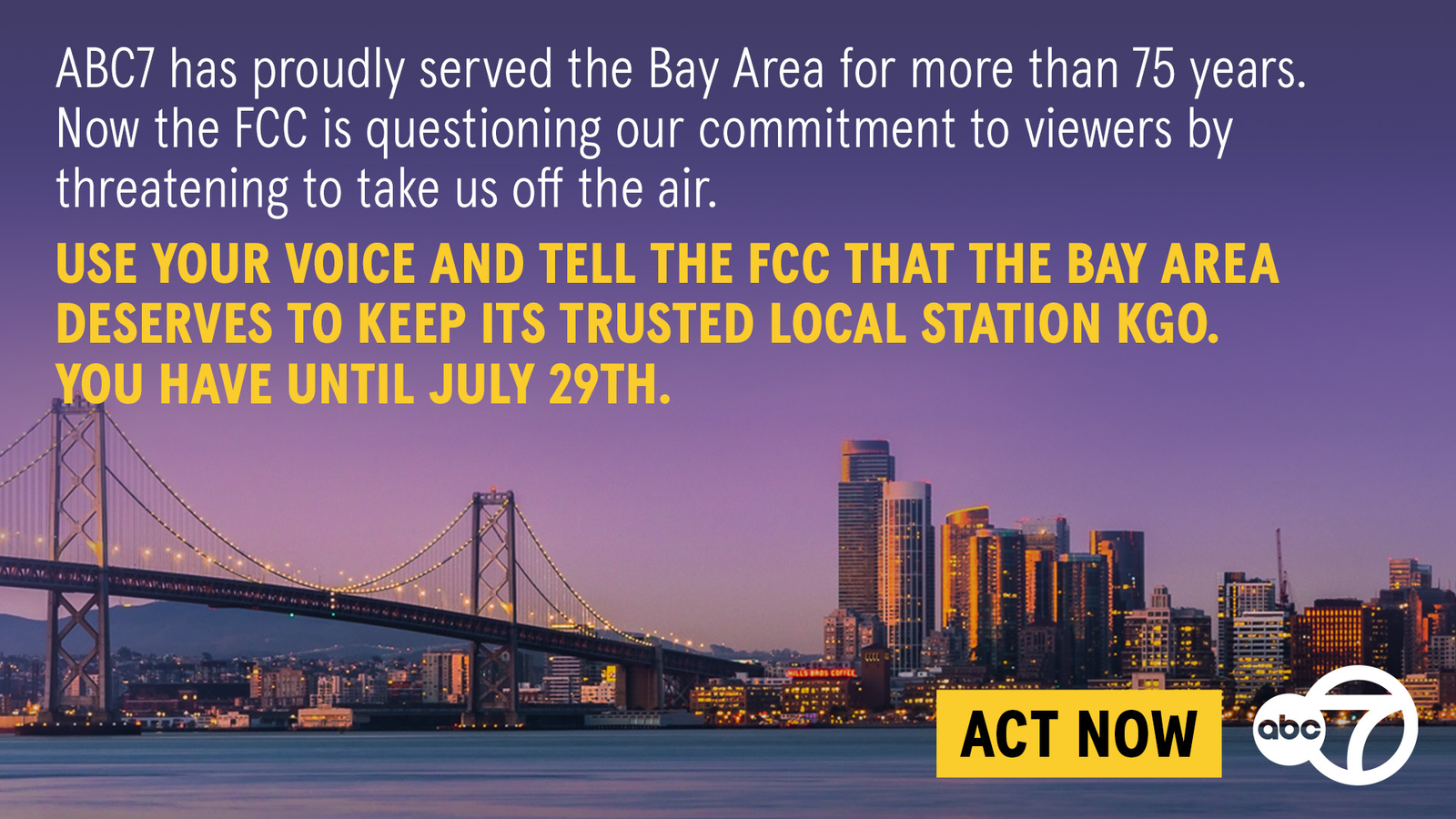
For now, the focus remains on public pressure: ABC’s campaign is designed to flood the FCC with comments, framing the issue as a grassroots effort to preserve local television. The company has partnered with Local Media Consortium, a lobbying group representing 200+ broadcast stations, to amplify its message. As of July 22, the FCC’s comment portal shows over 12,000 submissions—mostly in favor of license renewal—but only 1,800 from verified local addresses, raising questions about the authenticity of the outreach.
But the broader question is whether this is an isolated case or the beginning of a trend. With broadcast licenses increasingly tied to community engagement metrics, smaller stations—already struggling with declining ad revenue—may face even greater scrutiny. A 2023 FCC report found that 40% of low-power TV stations (LPTVs) have been forced to reduce public service programming due to budget cuts. If the FCC tightens its grip on major-market stations, the ripple effects could destabilize local news ecosystems nationwide.
For KABC and KGO, the next few weeks will determine whether decades of on-air service are enough to survive the FCC’s new standards. The stations have already begun preparing for a potential denial: ABC has quietly explored partnerships with digital-first news outlets, including LAist and Mission Local, to maintain local coverage even if their broadcast licenses are revoked. In a recent interview with Axios, an unnamed ABC executive stated, “We’re treating this like a worst-case scenario and planning for all outcomes.”
One thing is clear: the stakes aren’t just about airtime. They’re about the future of local news in two of the country’s most populous media markets. Los Angeles and the Bay Area are home to 25% of California’s population, and the loss of KABC or KGO would leave significant gaps in emergency coverage, political reporting, and community programming. As Mark Glaser, founder of MediaShift, noted in a recent analysis, “This isn’t just about two TV stations—it’s about whether the FCC is willing to let local journalism die by regulatory neglect.”
For now, the FCC holds all the cards. Chairwoman Rosenworcel has not publicly commented on the cases, but her office confirmed to The New York Times that the agency is reviewing “all available evidence” before making a decision. The next hearing on the matter is scheduled for August 12, 2024, where ABC’s legal team will present its case. Until then, the fate of KABC and KGO—and the future of broadcast accountability—remains uncertain.
Find more reporting in our Entertainment section.
