The U.S. Food and Drug Administration (FDA) is responsible for protecting public health by regulating the safety and efficacy of medical products, including statins. As of June 2026, the agency maintains that while statin medications offer significant benefits for heart disease prevention, they carry specific, known side effects that patients and physicians must monitor.
Regulatory Oversight of Statin Medications
The FDA, a federal agency within the U.S. Department of Health and Human Services, holds the legal authority to oversee the safety of pharmaceutical drugs, including those used to manage cholesterol. According to federal documentation, the agency’s mission includes providing science-based health information to the public regarding the risks and benefits of these treatments. The Center for Drug Evaluation and Research (CDER) specifically manages the post-market safety surveillance of these HMG-CoA reductase inhibitors, utilizing the Adverse Event Reporting System (FAERS) to track clinician and consumer reports of adverse drug experiences.

Statins are a class of prescription medications utilized alongside diet and exercise to lower low-density lipoprotein (LDL), commonly referred to as “bad cholesterol.” While these drugs are widely prescribed to prevent heart disease, the FDA has historically updated prescribing information to reflect potential risks. In a 2012 notification to healthcare professionals, the agency addressed specific concerns regarding interactions between statins and protease inhibitors, which are antiviral drugs used to treat HIV and hepatitis C. The clinical data supporting these label changes originated from pharmacokinetic studies demonstrating that protease inhibitors can significantly increase the systemic exposure (AUC) of certain statins like simvastatin and lovastatin, thereby elevating the plasma concentrations of the drug to levels associated with increased toxicity.
Understanding Reported Statin Side Effects
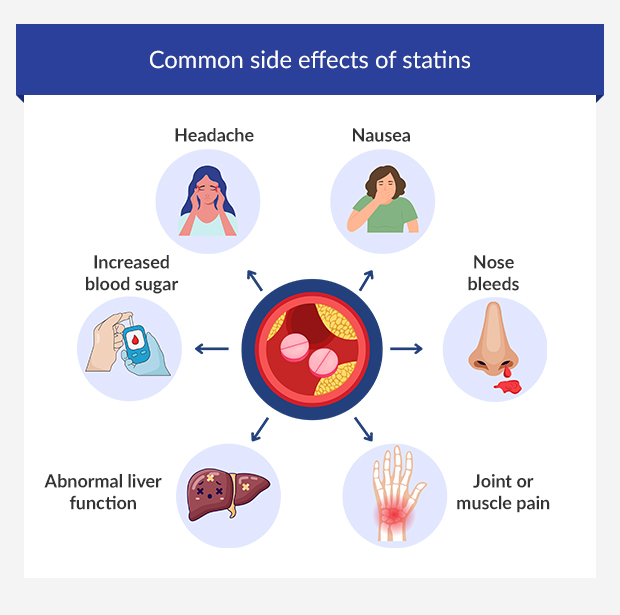
The FDA has identified several side effects associated with statin use that require clinical awareness. When taken in combination with certain protease inhibitors, statins may increase the risk of muscle injury, known as myopathy. In its most severe form, this condition can progress to rhabdomyolysis, a state that can lead to fatal kidney damage. Clinical guidelines from the American College of Cardiology (ACC) and the American Heart Association (AHA) suggest that clinicians should assess baseline creatine kinase (CK) levels in patients who are at higher risk for myopathy, though routine monitoring of CK levels in asymptomatic patients is not currently recommended by the FDA.
- Cognitive Impairment: Some users have reported experiences of memory loss, confusion, and forgetfulness. The FDA’s review of clinical trial data, including the JUPITER study (Justification for the Use of Statins in Prevention: an Intervention Trial Evaluating Rosuvastatin), which involved approximately 17,802 participants, did not find a causal link between statin use and cognitive decline. However, the agency requires manufacturers to include this as a potential post-marketing observation in labeling to account for individual patient reports.
- Blood Sugar Levels: There is an associated risk of elevated blood sugar levels and the potential development of Type 2 diabetes. A meta-analysis published in the journal The Lancet, involving over 91,000 participants across multiple randomized trials, confirmed a modest increase in the risk of new-onset diabetes among statin users, particularly in those with pre-existing metabolic risk factors.
- Liver Monitoring: The agency has noted that routine monitoring of liver enzymes, previously considered a standard procedure, is no longer deemed effective for predicting or preventing rare instances of serious liver injury. The FDA concluded that serious liver injury is extremely rare and that routine testing often yields false positives that may lead to the unnecessary discontinuation of life-saving cardiovascular therapy.
Despite these risks, medical experts emphasize the established value of these medications. Regarding the update to statin labels, Jack Lewin, M.D.
For more on this story, see Trump Says Iran Talks Progressing as Tehran Warns of Remaining Obstacles.
The updated FDA statin label serves as an appropriate reminder to patients and physicians about the relatively rare and reversible known side effects associated with these important medications. While it is important to recognize the side effects sometimes associated with statins, it is also important to emphasize that the powerful benefits of statins far outweigh the risks for the vast majority of patients.Jack Lewin, M.D.
Balancing Benefits and Clinical Knowledge
The FDA’s approach to drug labeling is intended to provide clear, actionable information for healthcare providers. Amy G. Egan, M.D., deputy director for safety in the FDA’s Division of Metabolism and Endocrinology Products, highlighted the necessity of informed usage, noting that the value of statins in preventing heart disease is clearly established and their benefit is considered “indisputable.” However, she emphasized that these medications must be taken with careful knowledge of their potential side effects. Dr. Egan’s assessment aligns with data from the Cholesterol Treatment Trialists’ (CTT) Collaboration, which analyzed data from 27 randomized trials and concluded that for every 1 mmol/L reduction in LDL cholesterol, there is a corresponding 22% reduction in the incidence of major vascular events over five years.

The FDA maintains that label updates, which appear in the package inserts accompanying prescription medications, serve as a critical communication tool between the agency and the medical community. These inserts detail side effects and drug interactions that clinicians should consider when prescribing therapies. Regulatory status is maintained through the FDA’s Risk Evaluation and Mitigation Strategy (REMS) programs when deemed necessary for certain high-risk medications, though statins are generally considered to have a favorable safety profile that does not require a formal REMS mandate.
Patients currently taking statins or other heart medications should consult their healthcare provider regarding any new symptoms or concerns about their specific treatment plan. It is critical that patients do not discontinue prescribed statin therapy without first consulting a qualified cardiologist or primary care physician, as abrupt cessation may increase the short-term risk of myocardial infarction or stroke. Clinicians are encouraged to review the current FDA-approved labeling for specific dosage adjustments, especially when co-administering statins with other medications known to inhibit the cytochrome P450 3A4 (CYP3A4) enzyme system. The FDA continues to oversee the safety of these products as part of its broader mandate to ensure the efficacy and security of human drugs in the United States.
