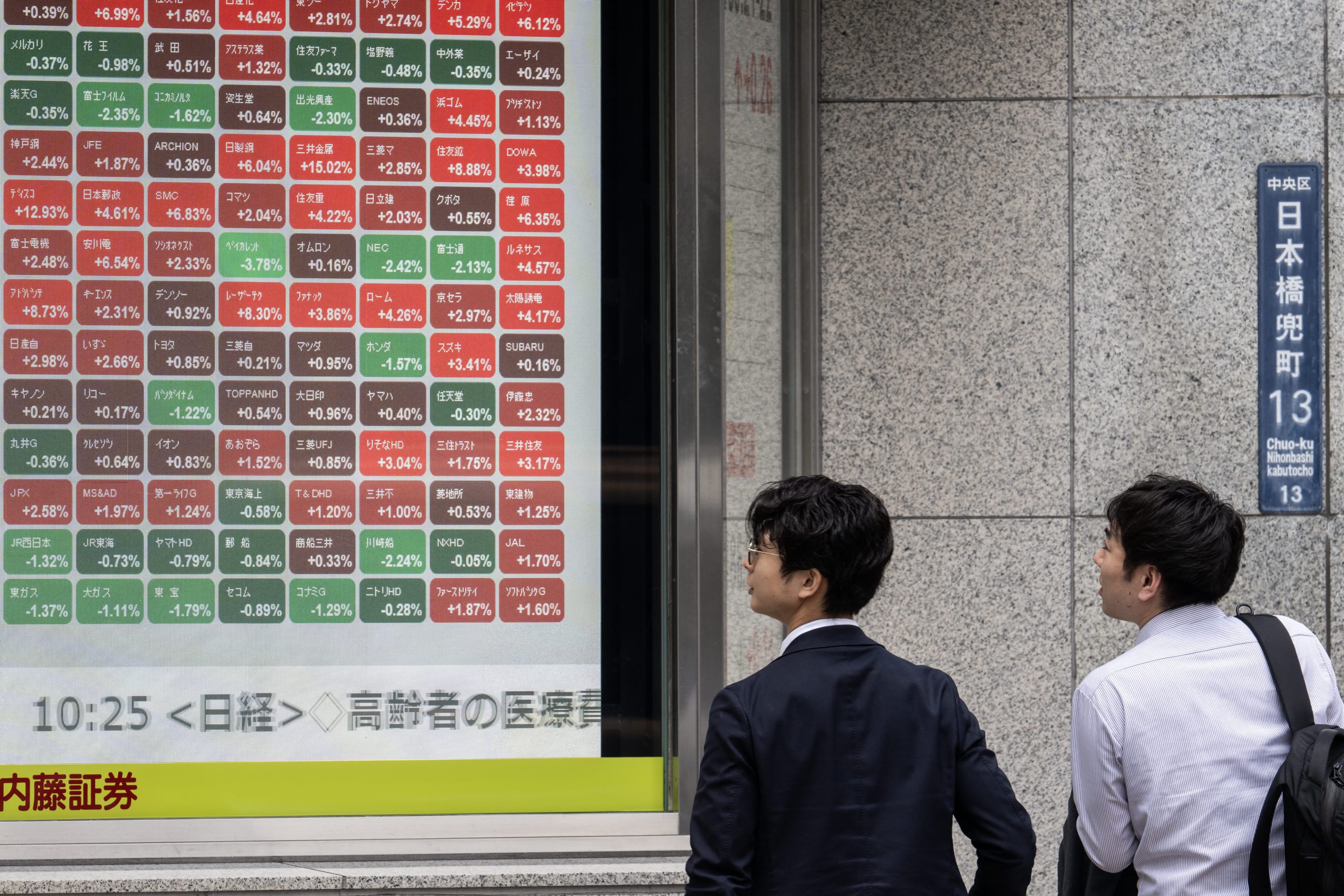
The U.S. and Iran signed an interim peace deal on June 12, 2026, easing tensions in the Strait of Hormuz and triggering mixed stock market reactions as investors weighed the agreement’s durability against lingering geopolitical risks.
Market Reactions: A Divided Global Response
Global stock markets opened mixed on Friday, June 19, as traders assessed the U.S.-Iran deal’s potential to stabilize oil prices and reduce geopolitical uncertainty. While the agreement—brokered by President Donald Trump—has sparked cautious optimism, analysts warn that implementation risks and Iran’s nuclear program remain major hurdles.
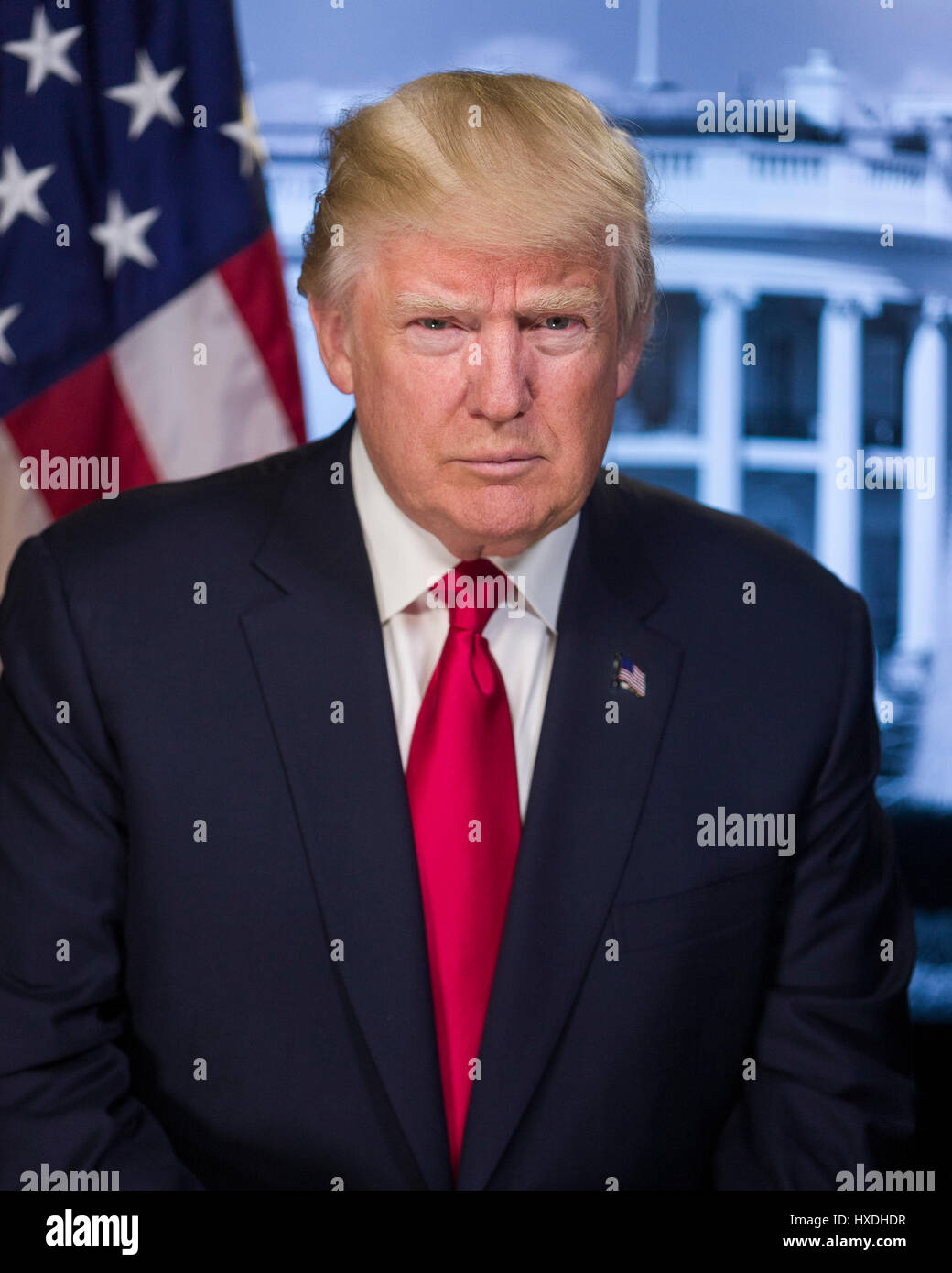
Asia-Pacific markets largely closed lower, with Japan’s Nikkei 225 rising 0.28% to 71,250.06 after hitting a record high the prior day, while South Korea’s Kospi dropped 0.13% and Australia’s S&P/ASX 200 fell 0.92%. U.S. stock futures were also weaker, with the S&P 500 futures down 0.6% and Nasdaq futures losing 0.9%, according to CNBC.
The pan-European Stoxx 600 was down 0.1%, though gains in energy and healthcare stocks limited losses. In the U.S., the Federal Reserve’s shift toward potential interest rate hikes this year—amid persistent inflation—added pressure, with the S&P 500 closing at 7,500.58 on Thursday after a 1.1% gain the day before.
Oil prices, a key barometer of the deal’s success, showed mixed signals. Brent crude settled 0.4% higher at $79.85 per barrel, while U.S. benchmark crude fell 0.2% to $75.85, according to the AP. Prices remain volatile, hovering above $70—a level that has weighed on markets since the war began—but well below the $100-plus peaks seen weeks earlier.
What the Deal Actually Says—and What It Doesn’t
The agreement, announced by President Trump, includes a waiver of some sanctions against Iran in exchange for Tehran’s compliance with terms related to the Strait of Hormuz—a critical waterway where a fifth of the world’s oil supply transits. However, the deal does not address Iran’s nuclear program, leaving that as a separate negotiation.
Vice President JD Vance clarified that “the United States isn’t giving up a cent of money to Iran,” adding that any economic relief would require full compliance. Iran’s Supreme Leader, Ayatollah Mojtaba Khamenei, echoed this conditional stance, approving the memorandum only after guarantees that Iran’s “resistance front” would be protected, as reported by CNBC.
For more on this story, see U.S.-Iran peace talks spark oil surge, but key hurdles stall markets.
Yet the deal’s scope remains narrow. While it opens the Strait of Hormuz to oil tanker traffic and allows Iran to sell oil freely, it does not lift all sanctions or resolve broader disputes, including Iran’s ballistic missile program. Adam Turnquist, chief technical strategist at LPL Financial, captured the cautious sentiment: “While investors are welcoming the agreement as a constructive step for geopolitical risk, uncertainty remains elevated around potential flare-ups, the pace of shipping normalization, control of the waterway, and the path forward for Iran’s nuclear program,” according to the AP.
“The only way the Iranians get any of these resources … is if they comply fully.”
— JD Vance, U.S.
Who Wins? Who Loses?
The deal’s impact varies sharply by sector. Technology stocks surged on Thursday, with Intel up 10.6% after Trump announced the company would manufacture chips for Apple in the U.S. Semiconductor giants like Nvidia and Micron also gained, while SpaceX—Elon Musk’s rocket maker—fell for the second straight day, according to the AP.
This follows our earlier report, U.S. strikes Iran: Markets swing as oil plummets 11% after Trump’s policy shift.
Airlines and cruise lines benefited from lower oil price volatility, with American Airlines rising 3.7% and Carnival up 3.2%. Conversely, energy companies like Exxon Mobil and Chevron declined 2.1% and 2.2%, respectively, as investors bet on reduced near-term oil price spikes.
The broader market’s reaction hinges on two competing forces: relief over reduced geopolitical risk and unease over the deal’s limited scope. The Federal Reserve’s pivot to potential rate hikes—driven by inflation concerns—has overshadowed the Iran deal’s immediate market impact. Gasoline prices in the U.S. have dipped below $4 a gallon but remain 25% higher than a year ago, reflecting persistent inflationary pressures.
The Fed’s Dilemma: Inflation vs. Stability
The Federal Reserve’s decision to consider rate hikes this year—despite a strong jobs market—highlights the tension between curbing inflation and supporting economic growth. The central bank’s shift, noted by James McCann of LPL Financial, reflects concerns that inflation remains “hotter” than anticipated, with shipping costs and energy prices still elevated.

“This shift in the risk distribution helps explain why around half of the committee thought that an interest-rate hike this year might be needed,” McCann told investors, as reported by CNBC. The move could dampen market enthusiasm for the Iran deal, as higher borrowing costs weigh on corporate earnings and consumer spending.
Read also: U.S.-Iran talks spark Dow jump as markets balance hope, risks.
What Happens Next?
The next 30 days will test the deal’s durability.
- Sanctions relief timeline: Iran must demonstrate compliance with the Strait of Hormuz terms before any broader economic benefits materialize.
- Oil price stabilization: If crude remains above $70, inflation pressures will persist, complicating the Fed’s rate decisions.
- Nuclear negotiations: The deal does not address Iran’s nuclear program, leaving that as a separate, contentious issue.
- Market sentiment: Investors will watch for signs of flare-ups in the Strait of Hormuz or delays in shipping normalization.
For now, the deal has bought time—but not resolved the underlying conflicts. The U.S. and Iran remain divided over nuclear ambitions, regional influence, and sanctions. As Adam Turnquist noted, “uncertainty remains elevated” around the agreement’s long-term viability. The market’s mixed reaction reflects that reality: relief at the ceasefire, but wariness about what comes next.
One thing is clear: the Strait of Hormuz deal is not the endgame. It’s a pause—a fragile one—amid a broader struggle for influence in the Middle East.
Find more reporting in our Business section.
