
Global stock markets opened mixed on Friday, June 19, 2026, as investors weighed the durability of a U.S.-brokered peace deal with Iran against fresh fears of a Federal Reserve rate hike and delayed follow-up talks. Asia-Pacific markets closed lower overall, with South Korea’s Kospi and Australia’s ASX 200 both falling amid uncertainty over the agreement’s implementation and central bank policy. Meanwhile, Japan’s Nikkei hit a record high before settling modestly higher, reflecting divergent regional reactions.
Why the U.S.-Iran Peace Deal Is Already Under Pressure
U.S. Vice President J.D. Vance’s abrupt cancellation of a planned trip to Switzerland to sign a memorandum of understanding (MOU) with Iran has thrown the agreement into question. The White House cited “logistical and practical issues,” but anonymous U.S. officials suggested deeper tensions—specifically, Iran’s objections to Israel’s recent attacks in Lebanon. “Tehran’s claim that Israel violated the ceasefire agreement in Lebanon could be the reason the talks did not take place,” one official told Axios, underscoring how regional conflicts remain entangled with the broader diplomatic effort.

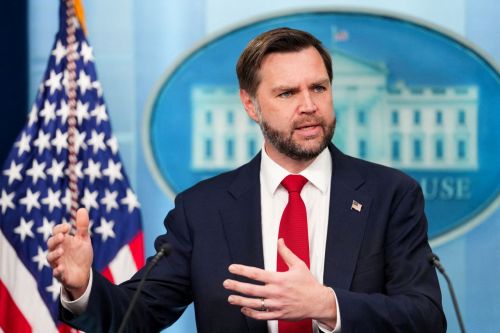
The agreement itself, announced earlier this week, formally ended hostilities between the U.S. and Iran and reopened Iranian oil exports—a move that has already sent international crude prices tumbling. Brent crude, the global benchmark, fell to $80.33 per barrel on Friday, while WTI traded at $77.82, according to CNBC. Yet the lack of clarity on sanctions relief and Iran’s compliance with nuclear restrictions has left markets cautious. “The only way the Iranians get any of these resources… is if they comply fully,” Vance emphasized in a Thursday briefing, framing the deal as conditional rather than a unilateral U.S. concession.
Iran’s Supreme Leader, Ayatollah Mojtaba Khamenei, mirrored this stance, approving the memorandum only after securing guarantees for Iran’s “resistance front”—a reference to its regional allies, including Hezbollah and proxy groups in Lebanon and Yemen. His approval, while conditional, signals Tehran’s willingness to engage, but the postponement of working-level talks raises questions about whether the deal can survive its first major test. Analysts warn that without immediate progress on nuclear inspections and sanctions relief, the agreement risks becoming a hollow ceasefire rather than a lasting resolution.
Market Reactions: Asia’s Mixed Signals
Asia-Pacific markets reacted sharply to the uncertainty, with most indices closing lower despite the peace deal’s potential long-term benefits. South Korea’s Kospi dropped 0.13% to 9,052.42, pulling back after briefly crossing the 9,000 mark—a psychological threshold—while Australia’s ASX 200 fell 0.92%. Japan’s Nikkei, however, buckled the trend, rising 0.28% to 71,250.06 after hitting a record high the previous day, reflecting stronger domestic sentiment and the Bank of Japan’s recent rate hike to 1.0%, its highest level in over three decades.
The divergence highlights how regional markets are parsing the news differently. Japan’s resilience stems from its focus on domestic inflation and monetary policy, while South Korea and Australia remain more sensitive to global risk factors, including the Fed’s hawkish signals. “Investors are reducing risk exposure ahead of the weekend market closures,” noted Bloomberg News, pointing to thinner liquidity as U.S., Chinese, and Hong Kong markets remained closed for holidays.
European markets also opened weakly, with the pan-European Stoxx 600 down 0.1% as energy and healthcare stocks struggled to offset broader losses. The U.K. saw 10-year gilt yields rise to 4.8078% after data showed government borrowing hit £23.3 billion ($30.8 billion) in May—the highest deficit since 2019—a reminder that fiscal pressures are overshadowing geopolitical optimism in some regions.
For more on this story, see Trump Warns Netanyahu Against Iran Strike.
What the Fed’s Shift Means for Markets
The Federal Reserve’s latest signals of potential rate hikes have emerged as the dominant market driver, overshadowing even the Iran deal. While the Fed left rates unchanged this week, policymakers’ comments revived fears of tighter monetary policy, prompting a sell-off in U.S. stock futures. The S&P 500 futures and Nasdaq 100 futures were down 0.6% and 0.9%, respectively, as investors reassessed expectations for future borrowing costs.
This shift comes as global central banks grapple with persistent inflation. Japan’s core inflation remained stable, but economists expect further price pressures from higher energy costs—a dynamic playing out in other economies as well. The combination of higher rates and softer growth expectations has dampened risk appetite, particularly in equities that had surged in the first half of 2026. “The relief generated by the peace deal continues to support markets, but concerns over the path of global interest rates are increasingly becoming the dominant theme,” observed Share Talk.
What Happens Next: Three Key Uncertainties
The next 30 days will be critical in determining whether the U.S.-Iran agreement holds.

- Working-level talks: The postponed negotiations in Switzerland must resume to clarify sanctions relief and nuclear inspections. Without progress, the deal risks collapsing under Iran’s demands for full compliance guarantees.
- Fed policy: The market’s focus on rate hikes suggests the Fed’s next move will dictate short-term sentiment. If officials signal further tightening, equities could face additional pressure.
- Regional stability: Israel’s continued operations in Lebanon and Yemen remain a wild card. Any escalation could derail the Iran deal and reignite tensions in the Red Sea and Gulf.
For now, the markets are in a holding pattern—waiting for clarity on both the diplomatic front and central bank policy. The Iran deal’s success hinges on whether Tehran and Washington can deliver on their commitments, while investors remain hyper-sensitive to any hint of monetary tightening. As one anonymous U.S. official put it: “The only way this deal works is if everyone sticks to the script.” The script, however, is still being written.
Why This Matters: The Bigger Picture
The U.S.-Iran agreement is more than a ceasefire—it’s a test of whether diplomacy can outpace proxy wars and sanctions. If successful, it could unlock Iranian oil exports, easing global energy markets and reducing pressure on prices. But if it fails, the region risks sliding back into conflict, with ripple effects on oil markets, shipping routes, and global security.
Historically, such agreements have been fragile. The 2015 nuclear deal collapsed under U.S. sanctions and regional tensions, showing how easily diplomatic progress can unravel. This time, the stakes are higher: Iran’s oil exports are a wildcard for global supply, and the Fed’s policy moves are reshaping financial markets. The coming weeks will reveal whether the U.S. and Iran can navigate these challenges—or if the markets’ “Fearful Friday” is just the beginning of a longer correction.
One thing is clear: the world is watching. And for now, the markets are waiting.
Find more reporting in our News section.
