Google has reimagined its search box for the first time in 25 years, merging AI and traditional web search in a move that transforms the company’s core product from a passive query tool into an active, agentic assistant. The changes, announced this week, introduce AI-powered information agents that work in the background, multimodal search capabilities, and custom dashboards—all designed to make search more dynamic and personalized. But the shift also raises questions about transparency, user control, and the future of digital agency in an AI-driven world.
Technical Architecture: Gemini 3.5 Flash and the Agentic Search Shift
Google’s overhaul of its search interface marks the most significant update to the company’s flagship product since its launch in the late 1990s. At the heart of the change is Gemini 3.5 Flash, the latest iteration of Google’s AI model, which now powers not just answers but actions—turning search from a static query tool into a proactive assistant. The new system, unveiled during Google I/O 2026, introduces information agents that operate 24/7, multimodal search for files and media, and even custom dashboards for tracking tasks. For the first time, Google is blending its search engine with agentic AI, creating what Liz Reid, who oversees search at Google, calls "the best of web and the best of AI together."
But the shift isn’t just cosmetic. Behind the scenes, Google is restructuring how it processes queries—moving from keyword-based matching to natural language understanding. "Users have started to ask longer questions, with more natural language," Reid noted in an interview with NPR. "They’re asking the question that they really have." This shift aligns with a broader industry trend: AI is no longer just answering questions but doing things—booking tickets, monitoring sales, or even synthesizing meeting notes. For Google, this represents a calculated gamble: turning its search engine into a platform that doesn’t just retrieve information but acts on it.
Feature Rollout and Monetization Strategy
The implications are vast. If successful, this could make Google’s search experience more sticky than ever—tying users deeper into its ecosystem through persistent agents and personalized dashboards. But critics warn of a trade-off: less transparency, more opacity. "A chatbot is likely to return a summary with only a few links to further information," NPR observed, "unlike a web search that returns many pages of links." The risk? Users may lose control over how information is curated and presented.
The changes roll out in phases, starting this summer.
- Information Agents: Personalized AI agents that work in the background, triggered by user queries. Example: Set an agent to monitor theater ticket prices and notify you when they drop. These will launch first for Google AI Pro and Ultra subscribers (the latter costs $100/month).
- Multimodal Search: Users can now drop videos, photos, or files directly into the search box, enabling what Google calls "multimodal" queries. Think: Uploading a product photo and asking, "Where can I buy this?"
- Agentic UI: Search results will include dynamic layouts and interactive visuals, built using Google’s Antigravity framework. These features will be free for all users but will roll out gradually.
- Persistent Dashboards: For complex tasks (e.g., tracking a job application), users can create custom dashboards that update in real time. These will start with Google AI Ultra subscribers in the U.S. before expanding.
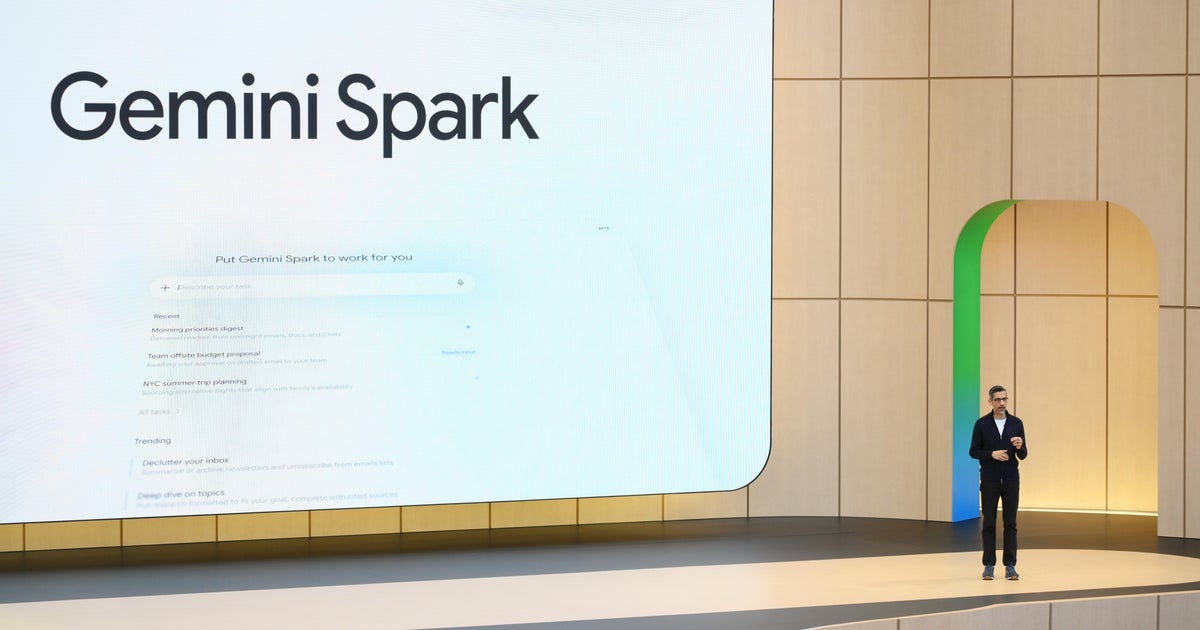
The rollout prioritizes paid tiers first—a strategic move to test functionality while monetizing early adopters. "Spark represents a big shift for Gemini," Google’s blog post stated, "transforming it from an assistant that can answer your questions into an active partner that does real work on your behalf."
Ecosystem Integration and Contextual Intelligence
But the real innovation lies in contextual integration. Gemini Spark isn’t just a standalone AI—it’s deeply embedded in Google’s ecosystem. "It knows more about you than many others because it connects to Gmail and other apps," Karan Girotra, a professor at Cornell University, told CBS News. "Personal intelligence will come through in the agent." This means your AI assistant could flag a deadline from your calendar, summarize a meeting from your notes, or even book a restaurant reservation—all without leaving Google’s tools.
Google’s move isn’t just about search. It’s a paradigm shift in how we interact with digital tools—one that could reshape not just search but the entire internet.
Broader Implications: Privacy, Competition, and Regulation
-
The Death of the "Neutral" Search Engine
For decades, Google’s strength was its claim to neutrality: a tool that returned results based on algorithms, not bias. But AI agents introduce a new layer of subjectivity. "There is a paradigm shift happening right now where AI is going from a chat interface to actually being able to do things for you," Clarence Lee, a tech entrepreneur, told CBS News. If agents prioritize certain actions (e.g., booking a hotel through Google’s partners), users may lose visibility into how decisions are made.
cluster (priority): NPR -
The Privacy vs. Convenience Trade-Off
Agents that access your Gmail, Calendar, and other apps gain unprecedented insight into your habits. "The more tasks AI completes for people, the more information it can access," CBS News noted—a potential risk in an era of rising cyber threats. Google hasn’t detailed how it will secure these agents, but the trade-off is clear: more convenience for more data exposure. -
A Race to Build the "Digital Concierge"
Google isn’t alone in this push. Competitors like Microsoft (with Copilot) and startups (like OpenClaw) are also developing agentic AI. But Google’s advantage lies in its data moat: search history, location data, and app integrations give its agents a deeper understanding of user intent. "You give it an objective, and it takes actions to accomplish that on your behalf," Girotra said. "For it to be good, it needs intelligence, context, and information relevant to those actions." -
The Advertising Implications
Reid’s comment to NPR hints at a darker side: "If you start using more natural language… you’ve sort of indicated [your intent]. And so we can put better ads because we understand what that is." In other words, Google’s AI may not just serve answers—it could serve hyper-targeted ads based on inferred intent. For users, this could mean fewer surprises in search results… and more tracking.
Google’s changes are bold, but they’re not without risks.
-
Transparency Concerns
Critics argue that AI-generated summaries could obscure the original sources. If users rely on agents for decisions (e.g., medical advice, financial moves), they may not realize they’re acting on synthesized—not verified—information. Google has yet to outline how it will label AI-generated content vs. traditional search results. -
Adoption Hurdles
Not everyone will embrace agentic search. Older users or those wary of AI may prefer the simplicity of traditional search. Google’s rollout strategy—prioritizing paid tiers—could also limit early access, raising questions about equity. -
The Agentic AI Arms Race
If Google succeeds, expect competitors to follow. Microsoft’s Copilot and others will likely add similar agentic features, turning search into a battleground for who can build the most capable digital assistant. The winner may not be the one with the best algorithms—but the one that earns user trust. -
Regulatory Scrutiny
As AI agents handle more sensitive tasks (e.g., financial transactions, health queries), regulators may step in. The EU’s AI Act and other frameworks could impose rules on transparency, accountability, and user consent—challenges Google hasn’t addressed yet.
For now, Google’s move is a calculated bet: that users will trade some control for convenience. But whether this shift will empower users—or further entrench Google’s dominance—remains to be seen.
One thing is certain: the internet’s next chapter isn’t just about searching. It’s about delegating.
"It’s like having a team that you can delegate things to.
