Ebola epidemic deaths exceed 300 in DR Congo
A deadly Ebola epidemic driven by the rare Bundibugyo strain has claimed over 300 lives in the Democratic Republic of Congo. Response efforts are hindered by regional conflict and the absence of approved vaccines or treatments.
- Headline Dispatch: Ebola epidemic deaths exceed 300 in DR Congo
- Core Takeaway: A deadly Ebola epidemic driven by the rare Bundibugyo strain has claimed over 300 lives in the Democratic Republic of Congo. Response efforts are hindered by regional conflict and the absence of approved vaccines or treatments.
- Source Synthesis: Continuous live monitoring aggregated across major news wires and independent bureaus.
Ebola epidemic deaths exceed 300 in DR Congo
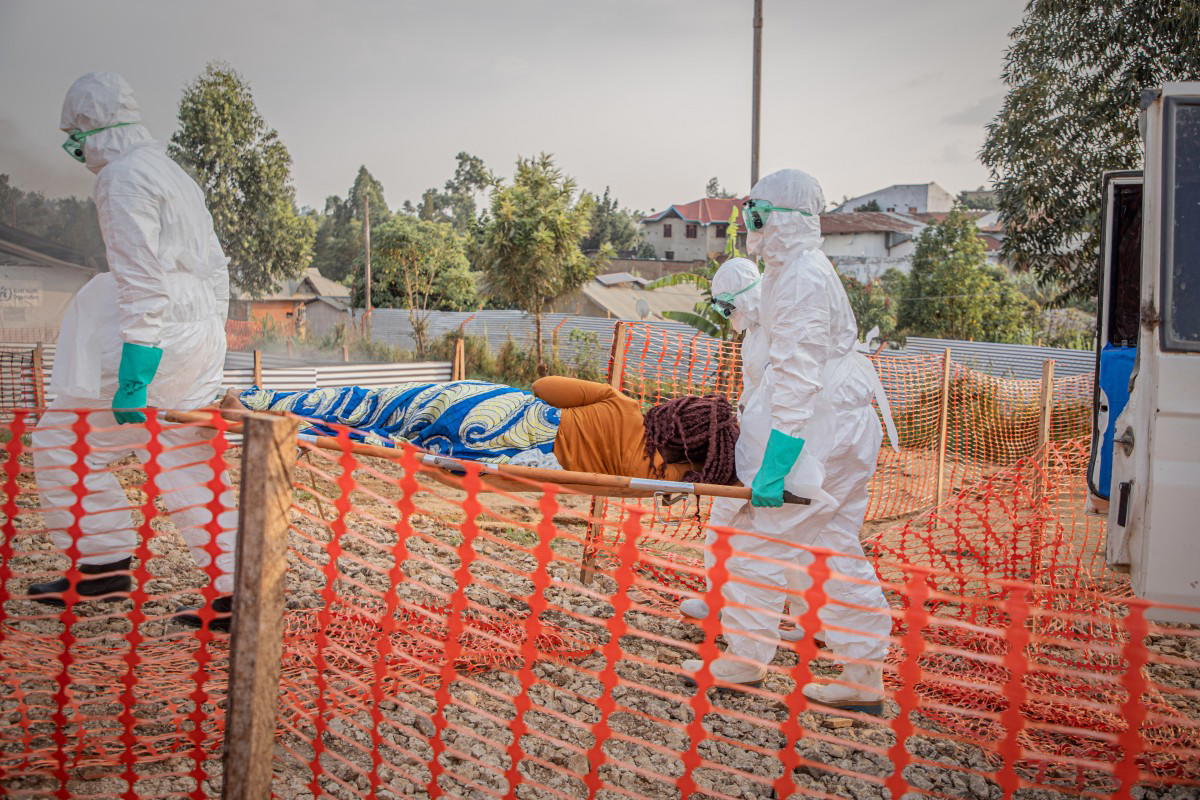
A deadly Ebola epidemic has claimed more than 300 lives in the Democratic Republic of Congo (DRC) just over one month after its declaration, according to health authorities. The National Public Health Institute (INSP) reported that 304 people have died from 1,115 confirmed infections since the outbreak was first detected on May 15. This represents a mortality rate of 26.3 percent.
The toll shows a rapid increase from June 18, when the African Union’s health agency confirmed 202 deaths from 875 infections, a mortality rate of 23 percent. The Red Cross warned last week that the hemorrhagic fever has not yet peaked and could take up to a year to contain. The Africa Centres for Disease Control and Prevention (Africa CDC) also warned that this outbreak, which struck both the DRC and Uganda in May, may become one of the largest and deadliest since the virus was first discovered in Africa in 1976.
This current epidemic is the 17th to hit the DRC. Unlike previous outbreaks caused by the "Zaire virus," this instance is driven by the rare Bundibugyo strain. According to reports, no approved vaccines or treatments currently exist for the Bundibugyo strain.
Regional Impact and Global Spread
The outbreak is primarily concentrated in the eastern DRC provinces of Ituri, North Kivu, and South Kivu. Ituri, a mineral-rich region, accounts for more than 90 percent of the cases. Specifically, the provincial capital of Bunia has registered more than 91 percent of all infections and more than 82 percent of all deaths.
The virus has crossed borders into Uganda. Since May 15, Kampala has reported 20 confirmed cases nationwide and two deaths, noting that most infected individuals are Congolese nationals who traveled to Uganda. WHO Director-General Dr. Tedros Adhanom Ghebreyesus stated during a visit to Uganda that patients can recover if they receive the necessary medical support.
On Wednesday, France reported the first confirmed case of Ebola outside Africa: a Congolese doctor working for the international medical aid NGO ALIMA. While the World Health Organization stated there is minimal risk of the virus spreading in Europe and no need for travel restrictions, Air France suspended all flights to Kinshasa for several days following the doctor's flight to France.
Operational Challenges and Conflict
Response efforts are severely hindered by three decades of conflict and mass displacement in eastern DRC. The U.N. Humanitarian office reports nearly a million people have been displaced in Ituri. Frequent population movements, including those by artisanal miners moving between remote sites, facilitate the spread of the disease.
Health workers face extreme danger. At least 78 healthcare workers have been infected, with 18 deaths. Beyond the virus, responders face aggression; Marie Roseline Darnycka Belizaire, WHO’s emergency director for Africa, reported more than 520 incidents impacting health professionals since mid-May. Front-line workers have been attacked by angry residents and are often unable to reach communities cut off by rebels, including groups with links to the extremist Islamic State.
Medical facilities lack basic supplies such as chlorine and personal protective equipment, and the country's public health agency noted that many WHO and aid agency clinics are nearly full. International aid has arrived, including a group of Chinese medical experts who landed in the capital for a three-month mission, according to Minister of Communication and Media Patrick Muyaya Katembwe.
Community Resistance and Containment
Deep mistrust within local communities has complicated containment. Officials said some families refuse post-mortem examinations and demand the return of deceased bodies, unaware that touching the victims risks contamination. These factors have led to an underestimation of total cases.
In Bunia, health protocols have disrupted daily life. Justin Abekani, a motorcycle taxi driver, noted that he is now only allowed to carry one customer per motorbike.
Outside the immediate region, the outbreak has caused political tension in Kenya. The U.S. Planned to build a 50-bed quarantine center at Laikipia Air Base to treat Americans exposed to Ebola abroad. However, a Kenyan court suspended construction and barred the arrival of foreign patients following a legal challenge by the Law Society of Kenya and a constitutional watchdog group over transparency and the state of Kenya's health system. This led to protests in Nanyuki, where police used tear gas to disperse crowds.
How significant is this development?
Participate in our community survey on the trajectory and real-world impact of this news.