Scientists Just Unlocked an Endless Army of Cancer-Fighting Cells
Researchers have developed a method to scale immune cell precursors, allowing for a sustained supply of engineered macrophages to combat tumors and infectious diseases.
- Headline Dispatch: Scientists Just Unlocked an Endless Army of Cancer-Fighting Cells
- Core Takeaway: Researchers have developed a method to scale immune cell precursors, allowing for a sustained supply of engineered macrophages to combat tumors and infectious diseases.
- Source Synthesis: Continuous live monitoring aggregated across major news wires and independent bureaus.
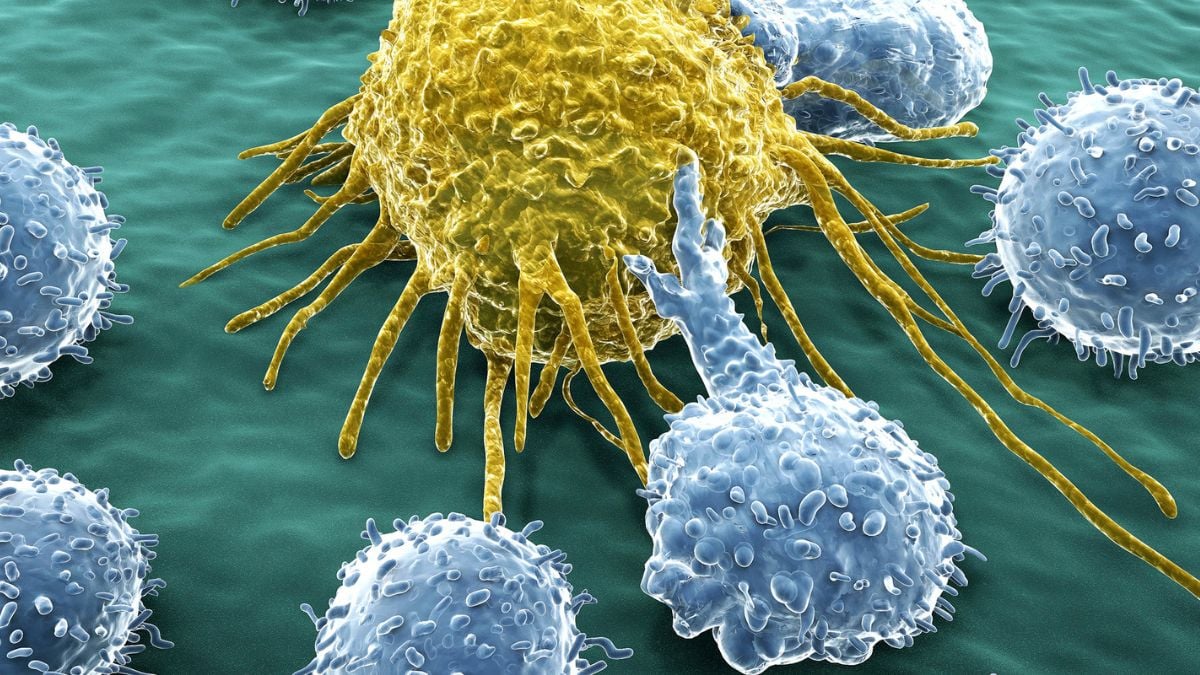
Scientists Just Unlocked an Endless Army of Cancer-Fighting Cells
Researchers have developed a method to create a renewable and expandable supply of immune cell precursors, potentially overcoming the primary obstacles that have limited macrophage-based cancer therapies. The study, published in the journal Cell, focuses on granulocyte-monocyte progenitors (GMPs), which are the cells that eventually give rise to macrophages.
Macrophages, named for the Greek words for big
and eater
, are white blood cells with a fierce appetite for cancer. They naturally enter tumors, consume cancerous cells, and can signal other immune players, such as T cells, to join the attack. Despite their potential, mature macrophages have proven difficult to use in clinical settings because they are challenging to genetically engineer, hard to grow in large numbers outside the human body, and often fail to spread widely, instead accumulating in the liver and lungs.
A team led by Qi-Long Ying, a professor of stem cell biology and regenerative medicine at the Keck School of Medicine of USC, found a way to bypass these issues by targeting the progenitor stage. The researchers discovered that under specific conditions, GMPs can self-renew—a capability previously thought to belong primarily to hematopoietic stem cells.
"The prevailing view has been that long-term self-renewal in the blood system is primarily a property of the … stem cells that can generate any type of blood or immune cell,"
Qi-Long Ying, biologist at USC, via sciencealert.com
By feeding these cells a complex mix of chemicals at specific stages, the team succeeded in maintaining and expanding GMPs over long periods in the laboratory. This process allows the cells to divide extensively while keeping their identity and their ability to produce functional immune cells. This scalability provides a starting point for therapies targeting cancer, infectious diseases, and other conditions.
Engineering a Sustained Response
The researchers equipped these lab-grown GMPs with a chimeric antigen receptor (CAR), allowing the cells to recognize specific markers on cancer cells. To strengthen the response, they added a second signal designed to activate nearby immune cells and stimulate tumor-fighting T cells. This additional signal remained effective even when donor and recipient cells were immunologically mismatched, suggesting the possibility of creating "off-the-shelf" therapies that do not require a custom treatment for every individual.
When these engineered GMPs were injected into mice with solid tumors and blood cancers, they settled into blood-forming tissues and the bone marrow. From this base, they generated a steady, ongoing supply of engineered macrophages. This approach avoided the rapid loss of cells typically seen in mature macrophage therapies. In these mouse models, the CAR-engineered GMPs stalled cancer progression, with the strongest benefits observed in cells carrying both the CAR and the immune-activating signal.
The utility of the platform extended beyond oncology. In tests involving mice with chronic granulomatous disease, an inherited immune disorder, the GMP treatment restored the animals' ability to fight bacterial infections.
Comparing Immunotherapy Approaches
The current gold standard for certain blood cancers is CAR-T therapy. This process involves extracting a patient's T cells, engineering them in a lab, and infusing them back into the body. While effective for blood cancers, CAR-T has struggled against solid tumors. The USC research suggests that targeting progenitors rather than mature cells may be a more successful route.
Parallel research from UC San Francisco has explored a different frontier: reprogramming these cells directly inside the body. Using a two-particle system involving CRISPR-Cas9 gene-editing machinery, researchers led by Justin Eyquem successfully treated aggressive leukemia, multiple myeloma, and a solid sarcoma tumor in mice. This in vivo method eliminates the need to ship cells to specialized facilities, which currently costs between $400,000 and $500,000 per treatment.
While the UCSF method focuses on the delivery of genetic instructions to T cells already in the body, the USC approach focuses on the scalability and durability of the cells that produce macrophages. Both strategies aim to improve the treatment of solid tumors, which have historically resisted CAR-T therapy.
Ravi Majeti, a collaborator from Stanford University and Director of the Institute for Stem Cell Biology and Regenerative Medicine, noted that the expansion and engineering of GMPs opens the door to numerous translational applications. Ying concluded that the future of the field may depend on choosing the right developmental stage of the cell, rather than simply designing better receptors.
The findings from the GMP study remain preclinical. Future steps will include clinical trials to assess the safety and efficacy of the platform in humans.
How significant is this development?
Participate in our community survey on the trajectory and real-world impact of this news.