Non-Invasive Brush Biopsy Test Detects Oral Cancer Within an Hour
Researchers have validated a non-invasive brush biopsy test that identifies oral squamous cell carcinoma, potentially preventing over 90% of unnecessary scalpel biopsies.
- Headline Dispatch: Non-Invasive Brush Biopsy Test Detects Oral Cancer Within an Hour
- Core Takeaway: Researchers have validated a non-invasive brush biopsy test that identifies oral squamous cell carcinoma, potentially preventing over 90% of unnecessary scalpel biopsies.
- Source Synthesis: Continuous live monitoring aggregated across major news wires and independent bureaus.
Non-Invasive Brush Biopsy Test Detects Oral Cancer Within an Hour
Researchers have validated a non-invasive brush biopsy test capable of detecting oral cancer within one hour. The test, known as qMIDS-V3, could prevent over 90% of unnecessary scalpel biopsy procedures that are often painful and can cause infection or damage to underlying bone and tooth structures.
The study, published in the Nature journal Biomarker Research, represents the largest of its kind, utilizing 1090 oral brush biopsies from 545 patients. The cross-University team was led by researchers from Queen Mary University of London, with contributions from the All India Institute of Medical Sciences, Modern Dental College and Research Centre in India, and King George’s Medical University in India.
Molecular Triage and Detection
The qMIDS-V3 test was adapted from a previous microbiopsy-based multigene assay called qMIDS-V2. While the predecessor required a 1mm tissue sample and was validated using more than 530 samples across China, India, and the UK, the new version requires only a brush swab of the mouth with no tissue removal.
To determine cancer risk, the test uses qPCR to quantify mRNA levels of four specific genes: INHBA, S100A16, YAP1, and POLR2A. An algorithm then generates a malignancy index for risk stratification. In the validation study, the test distinguished oral squamous cell carcinoma (OSCC) from oral lichen planus (OLP) and oral leukoplakia (OL) with the following metrics:
- Overall Accuracy: 95.5%
- Sensitivity: 95.7%
- Specificity: 95.1%
- AUC: 0.975
- False-positive rate: 4.9%
- False-negative rate: 4.3%
Muy-Teck Teh, PhD, a professor of molecular oral oncology at Queen Mary, stated that the team was genuinely astonished
that the brush swab performance was comparable to a microbiopsy.
Addressing Diagnostic Inefficiencies
The development of the tool comes as oral cancer becomes a rapidly increasing cause of early death globally, according to Global Burden of Disease data. Worldwide, the disease affects 650,000 people annually. In the UK, the charity Mouth Cancer reports that over ten thousand people were diagnosed last year, and 3637 died. Risk factors include sun damage, alcohol, tobacco use, and HPV infection, particularly HPV type 16.
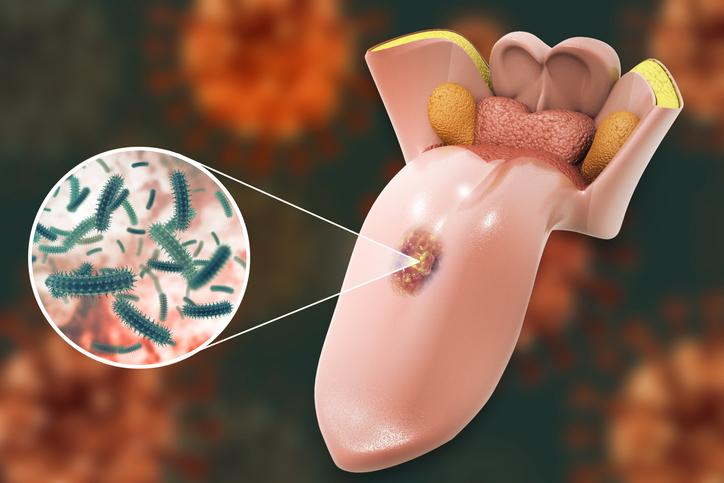
A critical challenge in current care is that 53% of mouth cancers are not diagnosed until stage IV. While early diagnosis is vital for survival, many patients with oral potentially malignant disorders (OPMDs) undergo invasive scalpel biopsies for lesions that are actually benign. Such procedures can be especially painful when performed on the tongue, the most common cancer site.
This "blunt" diagnostic pathway has contributed to system inefficiencies. A 10 year audit in the UK revealed a 450% rise in two-week wait referrals, yet the cancer detection rate dropped by 50%. Further audits showed 92.5–99.5% of those referred were cancer-free, with 96–98% remaining cancer-free at a 5-year follow-up.
Future Clinical Application
Because the qMIDS-V3 test is non-invasive and repeatable, it allows for long-term surveillance of high-risk patients. Clinicians can systematically monitor those with persistent pre-malignant lesions to identify malignant transformations earlier than previously possible.
Queen Mary University of London is currently seeking a commercial partner to bring the inexpensive test into clinical use. With a partner, the test could be implemented within two years.
How significant is this development?
Participate in our community survey on the trajectory and real-world impact of this news.