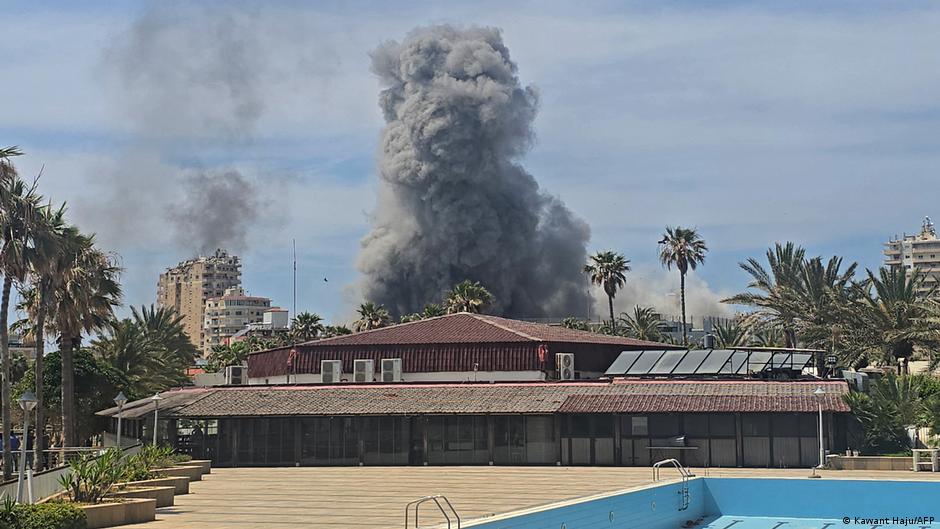
U.S. President Donald Trump claimed on June 1, 2026, that Israeli Prime Minister Benjamin Netanyahu and Hezbollah representatives had agreed to halt attacks, but Iran warned of escalating tensions by blocking the Strait of Hormuz, citing U.S. and Israeli violations of a ceasefire. The conflicting statements underscored a fragile diplomatic landscape as Israeli forces advanced in Lebanon and oil prices surged.
Trump’s Diplomatic Claims vs. Iran’s Escalation
Trump asserted on social media that he had secured commitments from both Netanyahu and Hezbollah to cease hostilities, stating, “There will be no troops going to Beirut, and any troops that are on their way, have already been turned back.” This came after Netanyahu ordered strikes on Hezbollah-controlled areas in Beirut, including the Dahieh district, according to Reuters. However, Iranian state media reported that Tehran had suspended indirect negotiations with the U.S. and threatened to fully block the Strait of Hormuz, a critical global trade route, in response to Israeli military actions in Lebanon and Gaza.
Iranian Foreign Minister Abbas Araghchi reiterated that the U.S.-Iran ceasefire applied to all fronts, including Lebanon, and warned, “Its violation on one front is a violation of the ceasefire on all fronts. The US and Israel are responsible for the consequences of any violation.” This stance directly contradicted Trump’s claims, as reported by CNBC, which noted that Iran’s Tasnim news agency cited Israeli strikes as a reason to halt talks.
Lebanon’s Partial Ceasefire and Ongoing Violence
Lebanon announced a partial ceasefire between Hezbollah and Israel on June 1, aiming to limit strikes on Beirut’s southern suburbs while allowing continued Israeli military operations in southern Lebanon. The agreement, brokered by Trump, did not end the broader conflict, and hostilities persisted. Hezbollah lawmaker Hassan Fadlallah called for a full ceasefire across Lebanon as a precursor to Israeli troop withdrawals, but the group did not confirm halting attacks on Israeli territory, per Yahoo.

Israeli forces reached their deepest incursion into Lebanon in 26 years, advancing toward the Zaharani River. Netanyahu later stated Israel would continue operations, despite Trump’s assertions. This divergence highlighted the challenges of enforcing a ceasefire amid competing interests, with Hezbollah’s involvement in the talks raising questions about the U.S. president’s engagement with a group designated as a terrorist organization by the U.S. government.
For more on this story, see Iran Accuses US of “Grave Violation” of Ceasefire.
Strait of Hormuz Blockade and Global Implications
Iran’s threat to block the Strait of Hormuz—already partially closed due to previous tensions—sent oil prices soaring. The Strait, which handles about 20% of global oil supply, saw exports drop to prewar levels after Iran’s initial blockade, according to CNBC. The move risked further economic disruption, with analysts warning of potential supply shocks if the chokepoint remained closed. Iran’s Revolutionary Guards Quds Force chief, Esmaeil Qaani, also threatened to expand the blockade to the Bab al-Mandeb Strait, another critical maritime route connecting the Red Sea to the Gulf of Aden.
The U.S. and Israel faced mounting pressure to de-escalate, but Trump’s delayed decision on a broader ceasefire—initially slated for a White House meeting on May 28—left the situation in flux. The U.S. Central Command declined to comment on Iran’s latest threats, while the White House remained silent, as reported by CNBC.
Conflicting Narratives and Regional Tensions
The conflicting narratives revealed deepening mistrust between Tehran and Washington. Iran accused the U.S. of noncompliance with the ceasefire, citing Israeli strikes in Lebanon and a naval blockade, while Trump framed his interventions as successful in curbing violence. Hezbollah’s willingness to engage with the U.S. president, albeit through intermediaries, marked an unusual diplomatic shift, though the group’s status as a designated terrorist organization complicated the legitimacy of the talks.

Al Jazeera reported that Iran’s chief negotiator, Mohammad Bagher Ghalibaf, condemned the “naval blockade and escalation of war crimes in Lebanon by the genocidal Zionist regime,” reinforcing Iran’s stance that any Israeli military action in Lebanon violated the ceasefire. Meanwhile, Lebanese authorities sought to expand the partial ceasefire in talks with Israel, aiming to create a pathway for broader U.S.-Iran peace efforts, as noted in Al Jazeera.
What’s Next for the Ceasefire?
The immediate focus remains on whether Iran will follow through on its Strait of Hormuz blockade and how Israel’s military advance in Lebanon will evolve. Trump’s role as a mediator—despite the lack of direct U.S.-Iran dialogue—has drawn scrutiny, with critics questioning the efficacy of his approach. The U.S. faces a delicate balancing act: addressing Israeli security concerns while preventing the conflict from spilling into broader regional instability.
Lebanon’s ability to broker a lasting agreement will depend on its capacity to mediate between Hezbollah, Israel, and the U.S. Meanwhile, global markets remain vulnerable to disruptions in oil supply, with prices fluctuating based on geopolitical developments. As the situation unfolds, the stakes for regional and global stability have never been higher.
