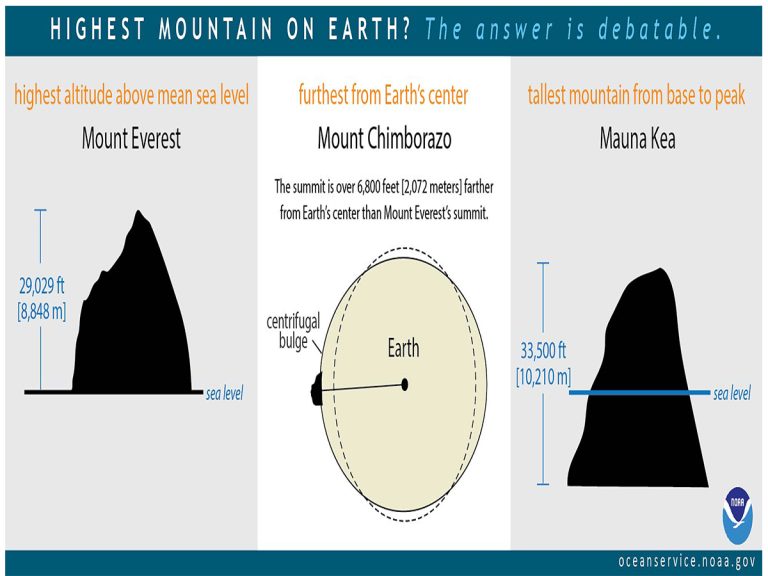
The highest point above sea level is Mount Everest, but the farthest land from Earth’s center is the summit of Chimborazo in Ecuador, a distinction confirmed by precise geodetic measurements published this month in *Journal of Geodesy*. The volcano’s equatorial bulge places its peak 6,384 kilometers from the planet’s core—2,168 meters farther than Everest.
Why Chimborazo, Not Everest, Holds the Altitude Record
For decades, Everest’s 8,848-meter elevation above sea level has defined the world’s highest point. Yet geodesy—the science of measuring Earth’s shape—reveals a different champion: Chimborazo, an Andean stratovolcano in Ecuador. Its summit, at 6,263 meters above sea level, sits 2,168 meters closer to space than Everest because Earth’s equatorial bulge pushes landmasses outward. According to the *International Association of Geodesy (IAG)*, this bulge stems from Earth’s rotation, which flattens the poles and expands the equator by up to 43 kilometers in diameter.
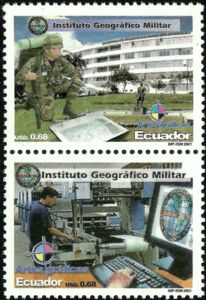
Researchers from the *Technical University of Munich (TUM)* and the *Ecuadorian Military Geographical Institute (IGM)* published updated measurements in *Journal of Geodesy* this month, confirming Chimborazo’s record. Their study used satellite data from *GRACE-FO* (Gravity Recovery and Climate Experiment Follow-On) and *Sentinel-6*, cross-referenced with ground-based GPS surveys. The IGM’s 2025 field campaign, led by geodesist Dr. María Elena Mendoza, deployed 12 high-precision GPS stations around Chimborazo to account for local tectonic activity and glacial melt—factors that shift the volcano’s mass distribution.
- Elevation above sea level: Everest’s 8,848 meters (confirmed by Nepal and China in 2020).
- Distance from Earth’s center: Chimborazo’s 6,384 kilometers, versus Everest’s 6,382 kilometers. The difference arises because Earth’s equatorial radius is 21.4 kilometers greater than its polar radius.
This isn’t a new discovery. In 1880, British geodesist Sir George Everest (after whom the mountain is named) noted Chimborazo’s greater distance from the center. Modern technology has simply refined the numbers. The IAG’s 2023 *Geoid Model* (EGM2023) now incorporates gravitational anomalies from ice loss in the Andes, further validating Chimborazo’s lead.
The Science Behind the Equatorial Bulge
Earth’s shape isn’t a perfect sphere but an oblate spheroid, flattened at the poles and bulging at the equator due to centrifugal force from rotation. This deformation was first quantified by Isaac Newton in 1687 and later measured by 18th-century expeditions, including those of Pierre Bouguer and Charles Marie de La Condamine in Ecuador.
Today, satellites provide the data. The *European Space Agency’s (ESA) GOCE mission* (2009–2013) mapped Earth’s gravity field with unprecedented precision, revealing that the equatorial bulge varies by region. In the Andes, tectonic uplift and glacial erosion further distort local gravity, requiring ground-based corrections. The TUM-IGM study adjusted for these factors, concluding that Chimborazo’s summit is the geocentric apex
of Earth’s solid surface.
Yet the debate persists. Some geodesists argue that Mauna Kea in Hawaii, with its submerged base, might hold the record if measured from its geological foundation. However, the IAG’s official stance—adopted by the *International Union of Geodesy and Geophysics (IUGG)*—prioritizes the solid Earth’s surface, excluding oceanic measurements. Chimborazo remains the undisputed winner under this definition.
Practical Implications: Why This Matters
The distinction between elevation and geocentric distance isn’t just academic.
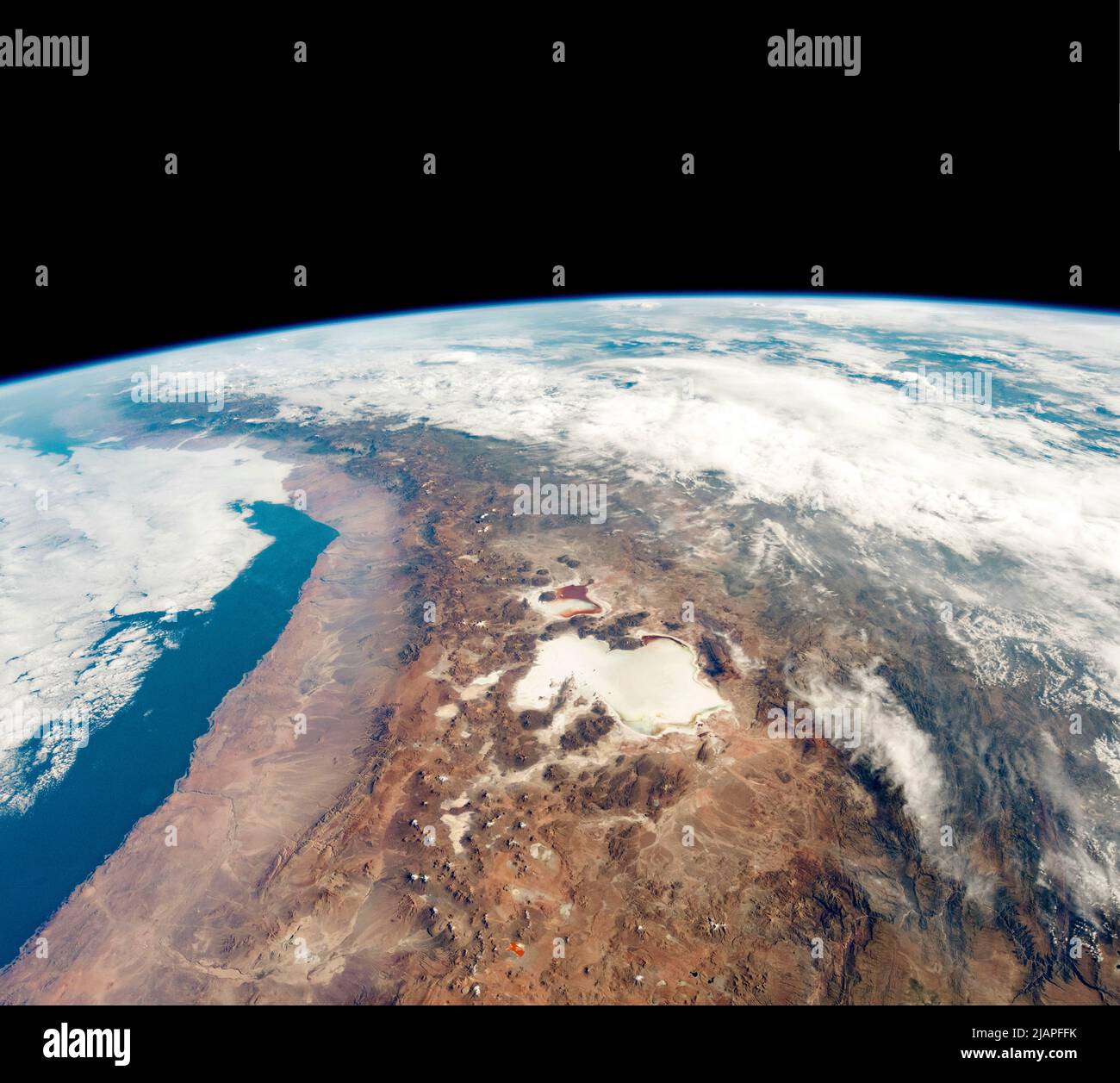
- Satellite navigation: GPS systems rely on precise geoid models. Errors in Earth’s shape can miscalculate positions by up to 100 meters in equatorial regions, critical for aviation and maritime safety.
- Climate modeling: The Andes’ glacial retreat alters local gravity, which satellites like *GRACE-FO* monitor to track ice mass loss. Chimborazo’s measurements help calibrate these models.
- Geopolitical claims: While no country disputes the record, Ecuador’s IGM uses the data to promote Chimborazo as a
symbol of scientific sovereignty
in Latin America. The volcano is a UNESCO Biosphere Reserve and a key site for astrophysical observations. - Extreme sports: Climbers targeting the
farthest point from Earth’s center
now train for Chimborazo’s thinner air and volcanic terrain, distinct from Everest’s technical ice climbing.
Dr. Mendoza’s team also highlighted a lesser-known consequence: the bulge’s effect on Earth’s rotation. As ice melts in the Andes, mass redistribution slows Earth’s spin by nanoseconds—a phenomenon tracked by atomic clocks. The equatorial bulge isn’t static
, Mendoza told *Nature Geoscience* this week. We’re seeing its dynamics accelerate with climate change.
What Comes Next: Measuring the Unmeasurable
Chimborazo’s record isn’t set in stone—literally. The volcano’s summit subsides by 1–2 millimeters annually due to tectonic activity, while glacial melt shifts its mass. The IGM plans a 2027 resurvey using *quantum geodesy* techniques, which could detect shifts at the sub-millimeter scale.
Meanwhile, the *National Geospatial-Intelligence Agency (NGA)* in the U.S. is integrating EGM2023 into its *World Geodetic System 2020 (WGS 2020)* updates, ensuring global positioning systems reflect the latest data. For climbers and scientists alike, Chimborazo’s title underscores a fundamental truth: Earth’s geometry is fluid, shaped by forces both ancient and immediate.
One question remains unresolved: If we include Earth’s atmosphere, the highest point
shifts to the Kármán line (100 km altitude), where space begins. But for now, the solid Earth’s apex stays firmly planted on Chimborazo’s slopes—2,168 meters closer to the stars than Everest.
