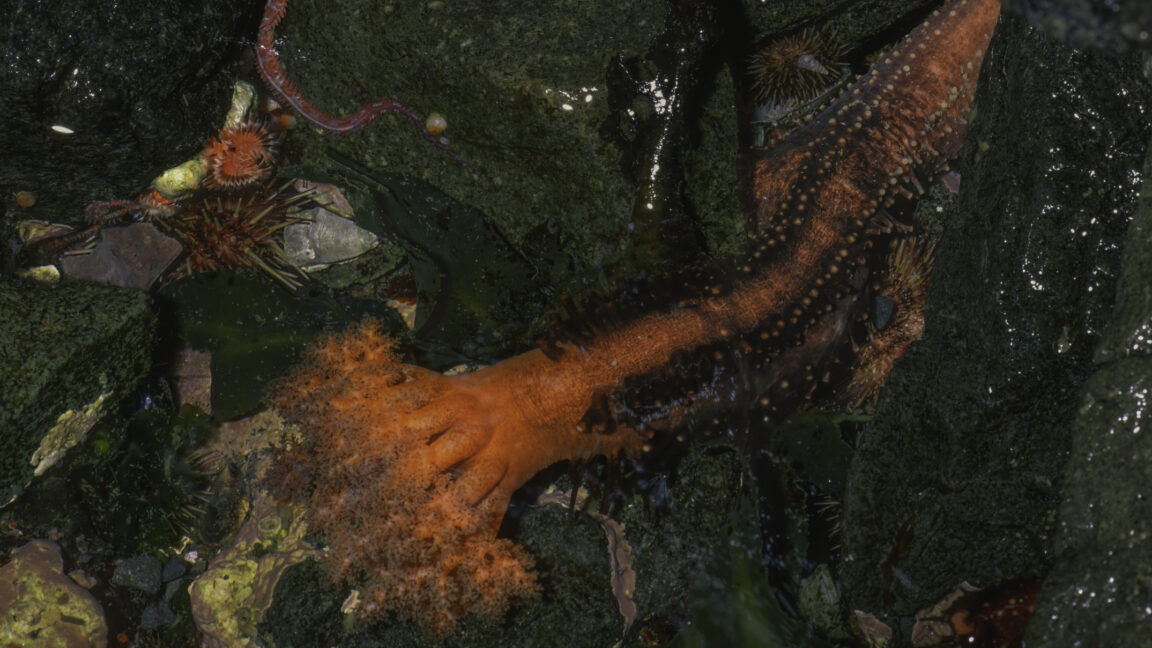
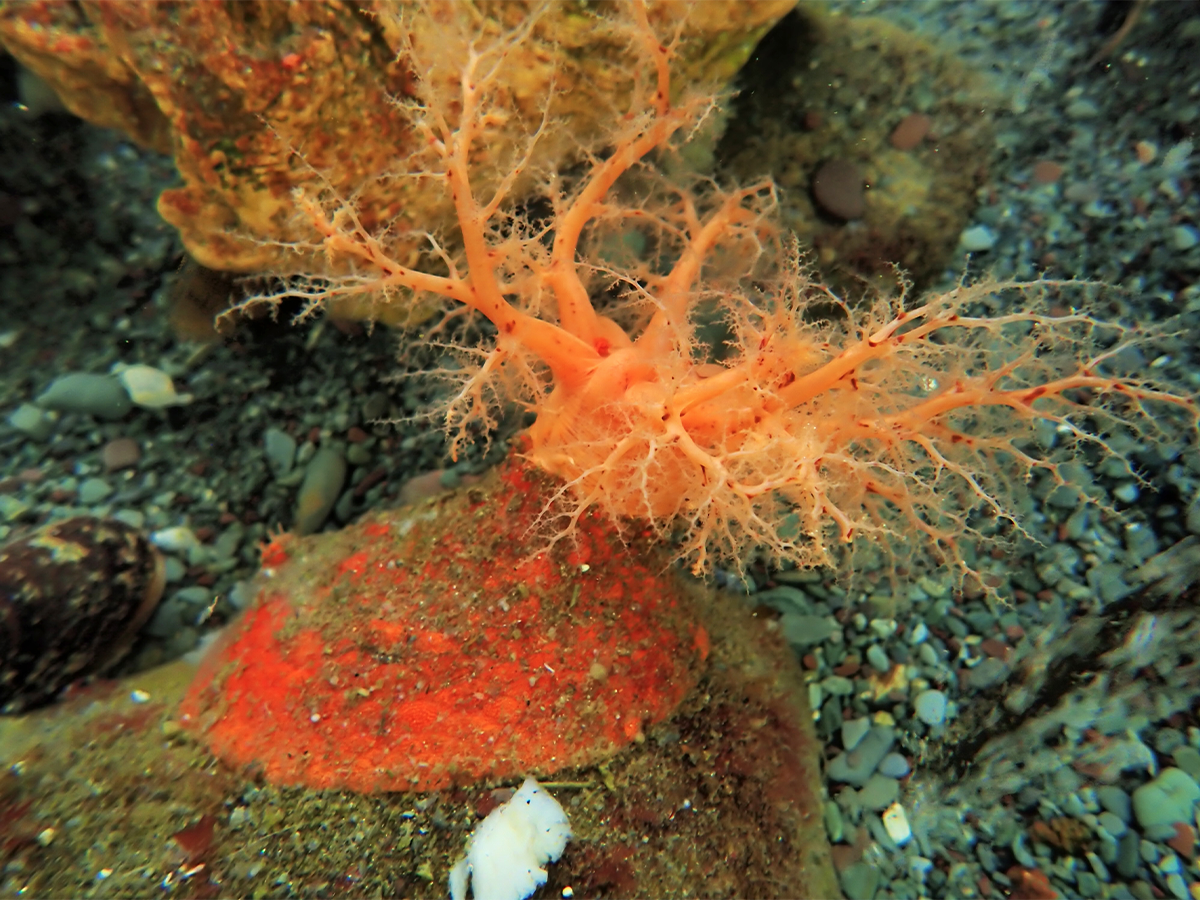
A team of marine biologists has discovered that severed tissue from the cold-water sea cucumber Psolus fabricii survives, heals, and reorganizes itself for years after being detached—defying fundamental assumptions about tissue decay. The findings, published in Science Advances this month, describe a phenomenon so radical that researchers have dubbed the surviving tissue “zombies,” challenging what it means for cells to be alive.
What the Tissue Actually Does (And Why It’s Not Dead)
cluster (priority): Nautilus | Science
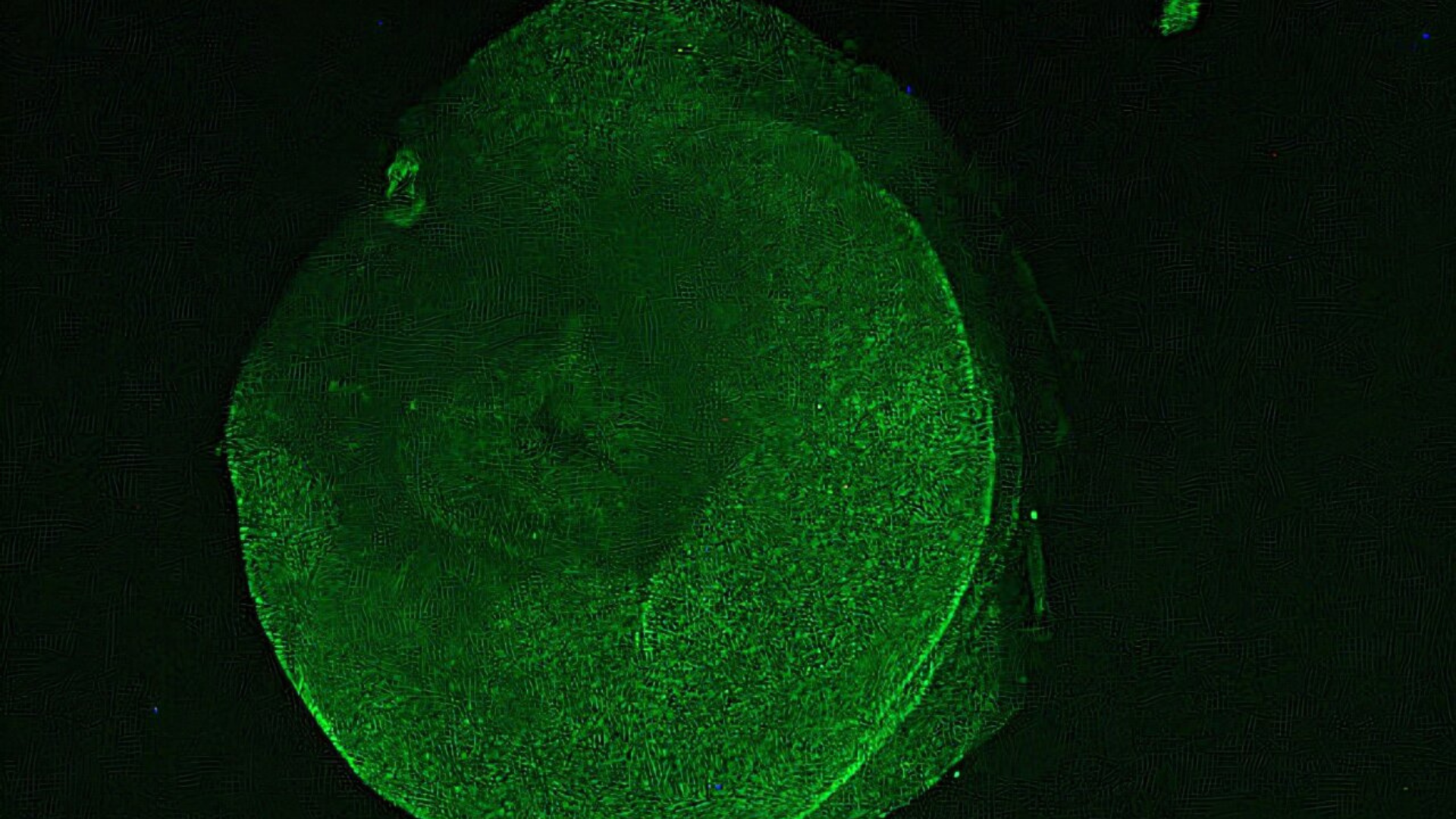
The severed tissues of Psolus fabricii don’t just survive—they thrive. When researchers at Memorial University of Newfoundland and the Bigelow Laboratory for Ocean Sciences cut off sections of the sea cucumber’s tube feet, body walls, and tentacles, they expected the tissue to wither within days. Instead, the fragments healed their wounds within three days, reorganized their cellular structure, and continued functioning for over three years in ordinary, non-sterile seawater. According to Interesting Engineering, the tissue even absorbed nutrients directly from the water, bypassing the need for a digestive system entirely.
The discovery isn’t just about longevity—it’s about transformation. The tissue doesn’t regenerate into a new sea cucumber, but it does restructure itself into a new form, what researchers call “LiPfe” (Living Immortal P. fabricii Explants). “They’re not growing into a new sea cucumber but restructuring into a form that best suits them in their current state,” said Sara Jobson, a lead researcher, in an interview with Ars Technica. “So, they seem to be functioning as a whole new entity.”
This behavior is so unusual that it forces scientists to rethink the definition of life. The tissue exhibits key traits of living systems—nutrient absorption, immune response, and cellular diversification—but lacks reproduction, one of the traditional hallmarks of life. Jobson’s team affectionately refers to them as “zombies” because they’re neither fully alive nor dead. “The question we get a lot is ‘are these tissues actually alive?’ and this is where it becomes kind of philosophical,” Jobson told Ars Technica. “We lovingly call them zombies.”
The implications are staggering. Unlike traditional cell cultures—like the infamous HeLa cells, which were derived from Henrietta Lacks in 1951 and have been used in medical research for decades—the LiPfe tissue maintains its complex structure, immune activity, and even limited movement. This makes it a far more realistic model for studying wound healing, tissue regeneration, and even aging. As Nautilus reports, the tissue’s ability to survive in non-sterile conditions—filled with microbes and organic debris—suggests it may hold secrets for developing more resilient medical implants or even bioengineered tissues that don’t require sterile environments.
A Breakthrough with Deep Evolutionary Roots
cluster (priority): Interesting Engineering
The sea cucumber’s ability to defy decay isn’t entirely new in the animal kingdom. Echinoderms—including sea stars, sea urchins, and brittle stars—are famous for their regenerative powers. Some can regrow lost limbs, while others can eject and regenerate internal organs. But what makes Psolus fabricii unique is that its severed tissue doesn’t just regenerate—it persists. While other sea cucumbers wither or die when detached, P. fabricii tissue continues to function, heal, and even adapt for years.
Researchers initially stumbled upon this phenomenon by accident. During routine experiments, they noticed that discarded tube foot tissue from P. fabricii hadn’t decayed after several weeks. Curious, they designed long-term studies, placing tissue samples in flowing seawater—no sterile conditions, no artificial nutrients. The results were nothing short of revolutionary. “We haven’t grown a new, complete sea cucumber yet, but we are seeing pretty stunning growth and diversification of cells literally years after this tissue was removed,” Rachel Sipler, a senior research scientist at Bigelow Laboratory, told Earth.com. “It’s like a lizard that loses its tail. We know some lizards can grow new tails; we’re talking about whether the tail can grow a new lizard.”
The evolutionary purpose of this ability remains a mystery. Some scientists speculate it could be a defensive mechanism—perhaps the tissue detaches to distract predators, sacrificing itself to protect the main body. Others suggest it might be an evolutionary byproduct of the sea cucumber’s extraordinary regenerative capacity. Whatever the reason, the discovery forces a reevaluation of what’s possible in tissue biology.
One thing is clear: Psolus fabricii is not alone in its regenerative prowess. Echinoderms as a group are known for their ability to repair and regrow damaged parts, but this is the first time scientists have observed detached tissue surviving and thriving independently. The question now is whether other species possess similar abilities—or if P. fabricii is truly one of a kind.
Why This Matters for Medicine (and Beyond)
Sea Cucumbers: Rotting and Regenerating Zombies of the Sea | E.O. Grundset Lecture Series
The potential applications of this discovery are vast. Traditional tissue cultures, like HeLa cells, have been invaluable in medical research, but they lack the complexity of real tissue. They don’t heal, move, or interact with their environment in meaningful ways. LiPfe, on the other hand, offers a living, breathing model that could revolutionize wound healing research, drug testing, and even bioengineering.
Consider the challenges of keeping human tissue alive outside the body. Organs for transplantation must be kept in sterile, nutrient-rich conditions to prevent decay. Even then, they often fail due to immune rejection or structural degradation. LiPfe tissue, however, survives in ordinary seawater—filled with microbes and organic matter—and continues to function. This resilience could lead to breakthroughs in developing more durable medical implants or even artificial organs that don’t require sterile environments.
The discovery also raises profound philosophical questions. If tissue can survive and function independently without reproducing, does that still qualify as life? Jobson’s team acknowledges the ambiguity, noting that LiPfe tissue blurs the line between organism and cell. “They’re not growing into a new sea cucumber but restructuring into a form that best suits them in their current state,” Jobson explained to Ars Technica. “So, they seem to be functioning as a whole new entity.”
This challenges our understanding of what it means to be alive. Are these tissues truly alive, or are they in a state of suspended animation? The answers could reshape not just biology, but our entire understanding of life itself.
What Comes Next: The Unanswered Questions
cluster (priority): news.google.com
Despite the groundbreaking nature of this discovery, researchers are still grappling with fundamental questions. The first is howPsolus fabricii tissue achieves immortality. Is there a unique molecular pathway at play? Are there specific genes or proteins that prevent decay? The team is already investigating these mechanisms, but the answers remain elusive.
Another critical question is why this ability exists. Is it an evolutionary adaptation, or is it simply a byproduct of the sea cucumber’s regenerative capacity? Understanding the purpose could unlock even greater possibilities—perhaps even insights into human aging or tissue repair.
Finally, there’s the question of longevity. How long can LiPfe tissue survive? The current record is over three years, but researchers don’t yet know if there’s a limit. “Unfortunately, there are very few tools that work for aging sea cucumbers,” Jobson admitted to Ars Technica. “That’s a great question.”
The next steps involve deeper genetic and cellular analysis. Researchers plan to sequence the genomes of P. fabricii and compare them to other sea cucumbers to identify what makes this species unique. They also hope to develop lab-grown LiPfe tissue, which could accelerate medical research without harming live animals.
But perhaps the most exciting possibility is the development of bioengineered tissues inspired by Psolus fabricii. If scientists can replicate this immortality in human cells, it could lead to breakthroughs in organ transplantation, wound healing, and even anti-aging research. For now, though, the focus remains on understanding the natural phenomenon—before attempting to harness its power.
One thing is certain: the discovery of LiPfe tissue is more than just a scientific curiosity. It’s a paradigm shift. As the researchers noted in Science Advances, this finding “challenges assumptions of what’s possible for tissue immortality and opens up exciting possibilities in the biomedical field.” The question now is whether we’re ready to redefine what it means to be alive—and what we might achieve by doing so.
Leo Andersson covers innovation, AI, and cybersecurity. A former engineer turned journalist from Stockholm, Leo has contributed to major tech outlets across Europe. His analytical style and deep understanding of technology trends define Globally Pulse’s forward-looking reporting.