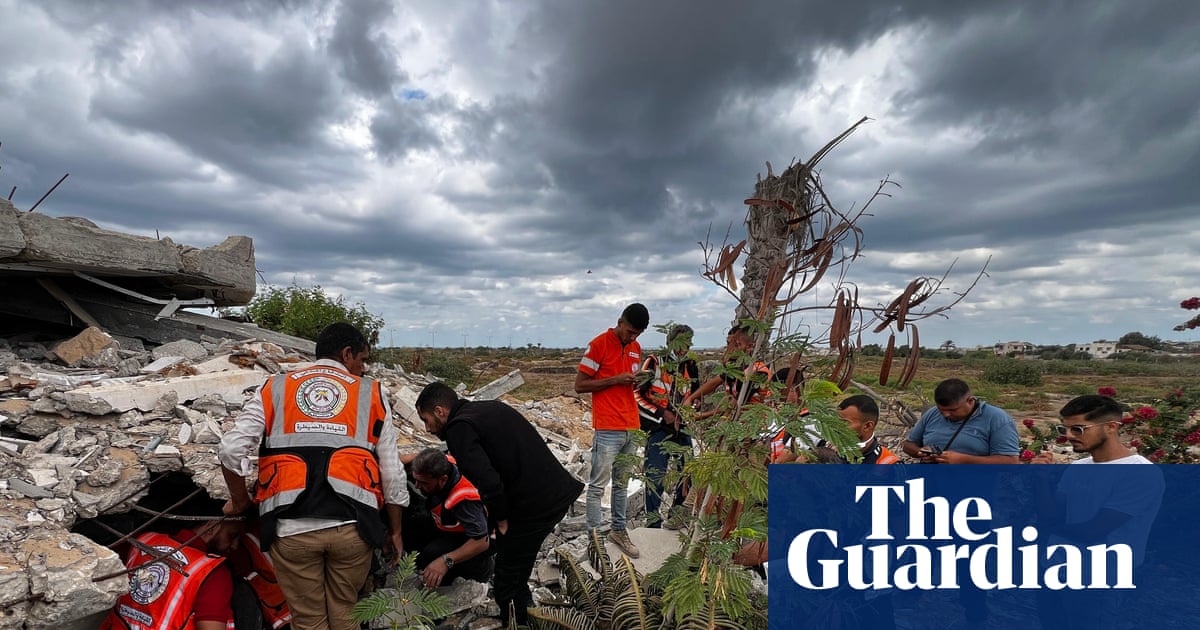
After Gaza Ceasefire, Families Face Grim Search for Missing Loved Ones Amid Devastation
Following the recent ceasefire in Gaza on October 10, 2025, thousands of Palestinians are confronting the heartbreaking reality of searching through the ruins of their homes to find relatives killed in Israel’s military offensive. Ghali Khadr, a 40-year-old resident of Jabaliya in northern Gaza, epitomizes this tragic scene. After urging his parents to flee to southern Gaza, a plea his father refused, an Israeli airstrike destroyed their home, burying them beneath rubble. Only fragments of their remains have been recovered, highlighting the brutal toll of the conflict.
The Gaza civil defense agency estimates that around 10,000 bodies remain trapped under the debris caused by Israeli bombardments, which have pulverized roads, homes, and infrastructure across the territory. Rescue workers are tasked with the extraordinary challenge of sifting through an estimated 60 million tonnes of rubble, often armed only with hand tools, as heavy machinery is limited by ongoing restrictions on equipment access imposed by Israel. This has slowed recovery efforts dramatically, with many victims’ remains still unaccounted for.
Emergency responders also face additional hazards, including unexploded ordnance and stray dogs posing threats to exposed bodies. Khaled al-Ayoubi, civil defense chief for northern Gaza, indicated that their immediate priority is collecting bodies found in the streets to prevent further decay or loss. Yet, excavations beneath collapsed multistory buildings, where many victims likely lie, have yet to seriously begin due to the lack of equipment and safety concerns.
Human Toll and Broader Context of the Gaza Conflict
The humanitarian crisis in Gaza stems from the devastating war that began with a Hamas surprise attack on Israel on October 7, 2023, triggering a prolonged and intense military campaign by Israel in Gaza. According to Gaza’s Ministry of Health, more than 70,000 Palestinians have been killed since the conflict began, with women and children comprising nearly half of the casualties. Estimates vary, but the scale of destruction and loss dwarfs previous conflicts in the region in both duration and intensity. The United Nations and independent assessments confirm extensive damage to Gaza’s infrastructure, including health facilities, water, energy services, and housing, generating a deepening humanitarian emergency for the 2.1 million residents still in the Gaza Strip.
The Israeli military offensive, which included a ground invasion beginning in late October 2023 and continuing with successive offensives in places like Khan Yunis and Gaza City, aimed at dismantling Hamas infrastructure and recovering hostages taken during the initial assault. Yet the operation created massive civilian suffering, with a high proportion of civilian casualties attributed to airstrikes and artillery bombardments. According to independent researchers, over 80% of those killed in Gaza have been civilians, a proportion unprecedented in modern warfare.
This level of civilian harm has led to international calls for accountability and humanitarian access. The United Nations has repeatedly urged all parties to respect international humanitarian law and to facilitate the delivery of aid and recovery equipment. Restrictions on heavy machinery entering Gaza continue to hinder reconstruction and victim recovery efforts, exacerbating grief for families like those of Ghali Khadr and Yahya al-Muqra, who search fruitlessly for their missing relatives amid the ruins.
Rescue Efforts and International Implications
Despite these challenges, Gaza’s civil defense personnel and volunteers have resumed recovery operations, desperate to provide grieving families with closure. Fadi al-Salibi, a civil defense worker, expressed that recovering bodies is crucial for families to honor their deceased and find spiritual solace amid the chaos.
While some families have begun returning to their destroyed homes to search independently, the scale of destruction means professional rescue and recovery remains critical. Experts estimate that with adequate heavy equipment, all bodies trapped in the rubble could be recovered within six months to a year. However, current restrictions on equipment importation and ongoing security concerns maintain a fragile environment for humanitarian work.
The conflict and humanitarian crisis in Gaza have significant regional and international ramifications. The destruction of Gaza’s infrastructure threatens long-term instability in the Middle East, amplifying refugee flows and complicating diplomatic efforts led by the United States and other global actors to negotiate durable peace. Following the latest ceasefire, global and regional stakeholders emphasize the urgent need for sustained humanitarian access and reconstruction support to prevent further deterioration in Gaza’s living conditions.
Personal Tragedies Illustrate Broader Humanitarian Catastrophe
Stories like those of Khadr and Muqra, who lost contact with their family members during airstrikes and now face uncertain futures without graves to bury their dead, underscore the human cost behind diplomatic and military calculations. The destruction of local cemeteries forces families to consider alternative burial options that defy traditional customs, reflecting the profound social disruption caused by the conflict.
Such personal losses have galvanized international attention on Gaza’s crisis. According to Reuters, the UN Secretary-General has called for immediate actions to protect civilians and facilitate humanitarian deliveries, recognizing the conflict’s impact not only on Gaza’s population but also on regional security dynamics.
This conflict highlights the intersection of military strategy, civilian vulnerability, and the urgent need for multilateral responses to prevent further loss of life and rebuild war-torn communities. The path to recovery in Gaza will depend on coordinated diplomatic efforts, adherence to international law, and sustained humanitarian engagement.
For comprehensive data on casualties and ongoing humanitarian efforts, consult the United Nations Office for the Coordination of Humanitarian Affairs at OCHA Gaza Data.
